

The Orobie Biennial puts art into the Bergamasque Prealps
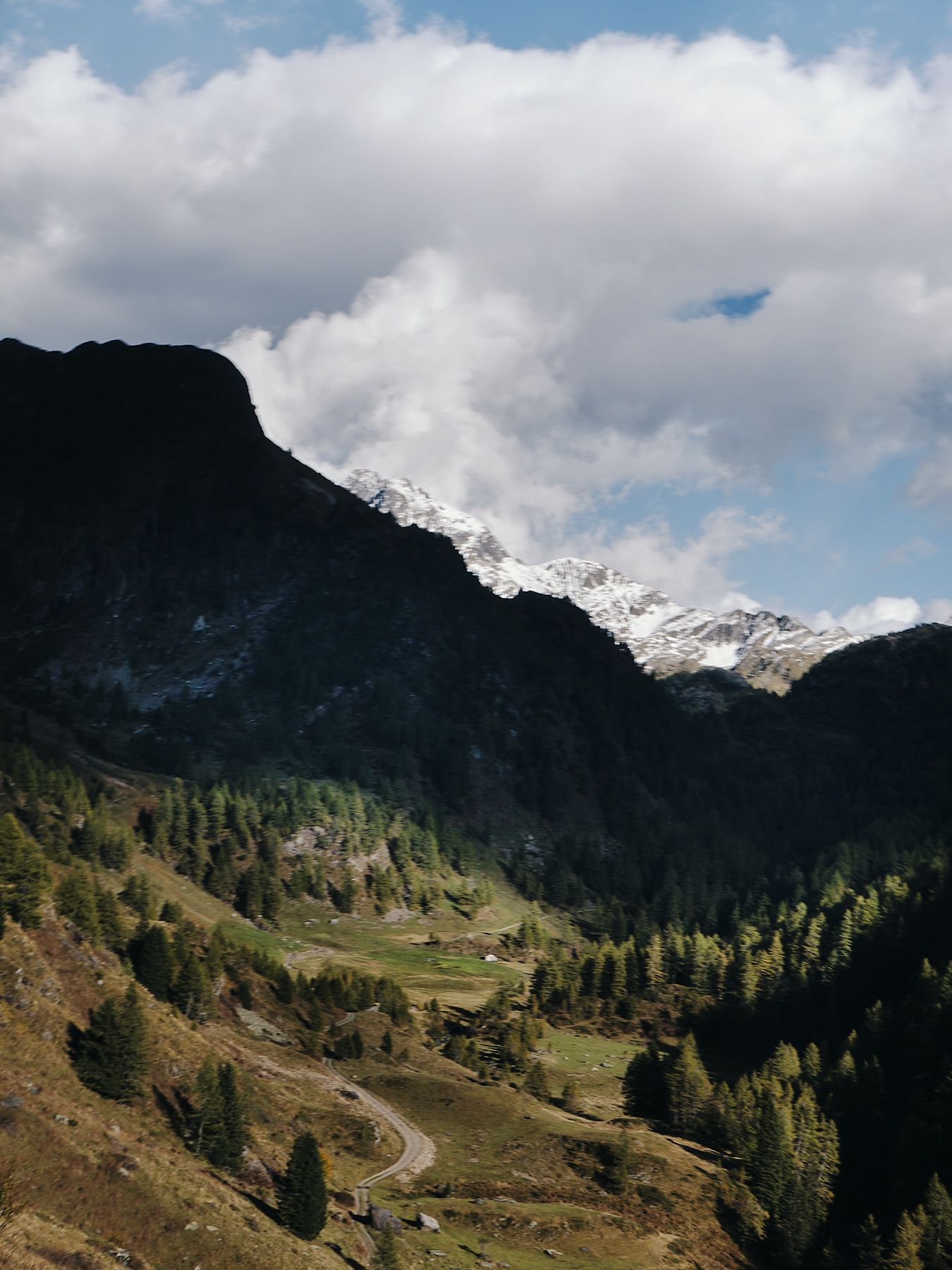
Turning the idea of an art biennial on its head, GAMeC’s two-year long cycle of cultural activity spreads creative responses to the local all across the Prealps region around Bergamo. Will Jennings visited the closing projects of the durational event, which include a range of responses including a Maurizio Cattelan urban intervention, a transformed cave & even a tiny architectural project on a mountaintop.
Last summer, recessed.space visited Bergamo and the
surrounding landscape to explore the artworks presented as part of The Orobie
Biennial (see 00208). It was exciting to see a project, subtitled Thinking
Like A Mountain, that didn’t simply put art into a white-walled gallery, but
was meaningfully embedded into the rich landscapes, towns, and communities
across the pre-Alpine region. It was so great, in fact, that we thought we
would return a year later.
![]()
![]()
![]()
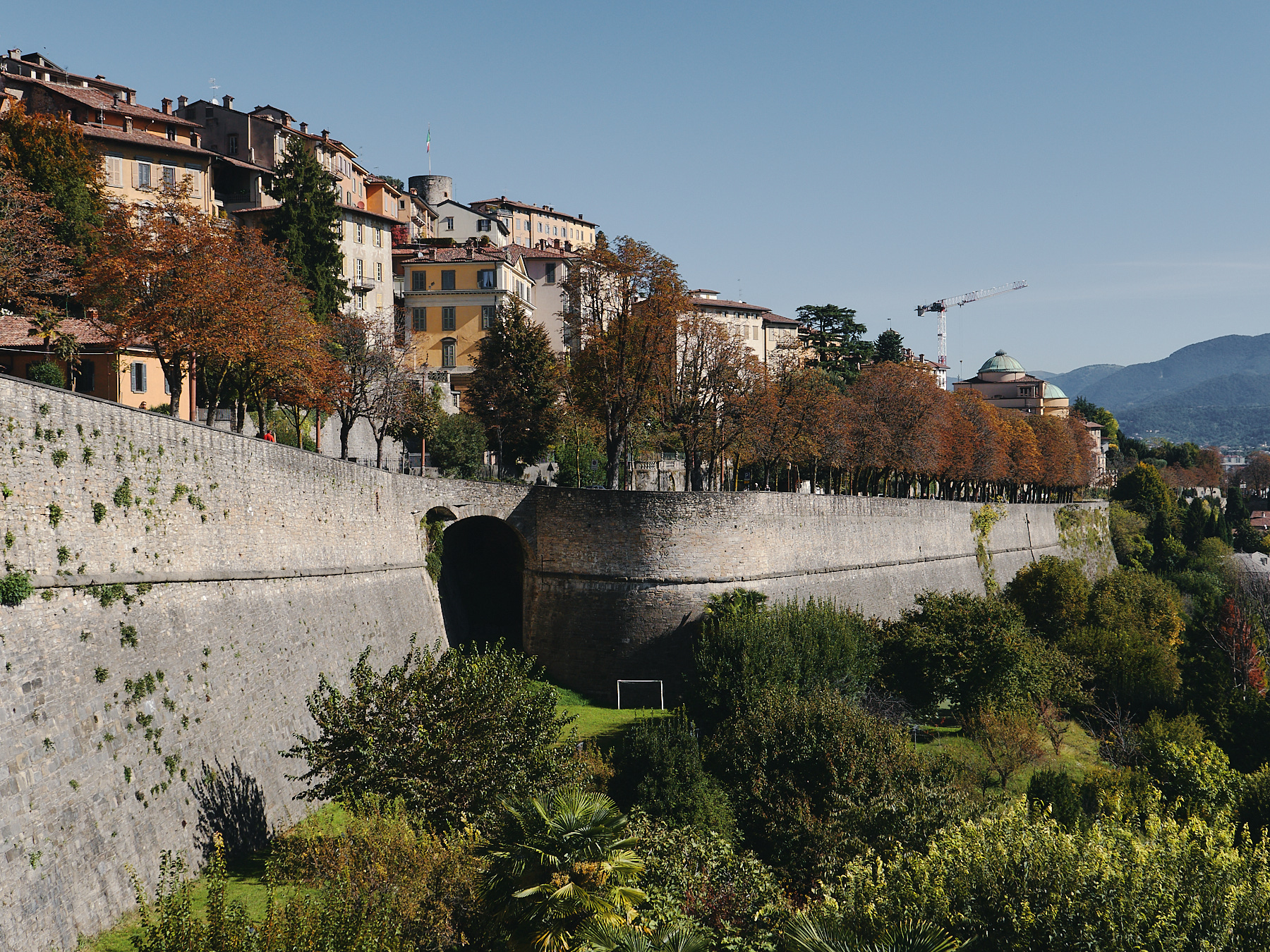
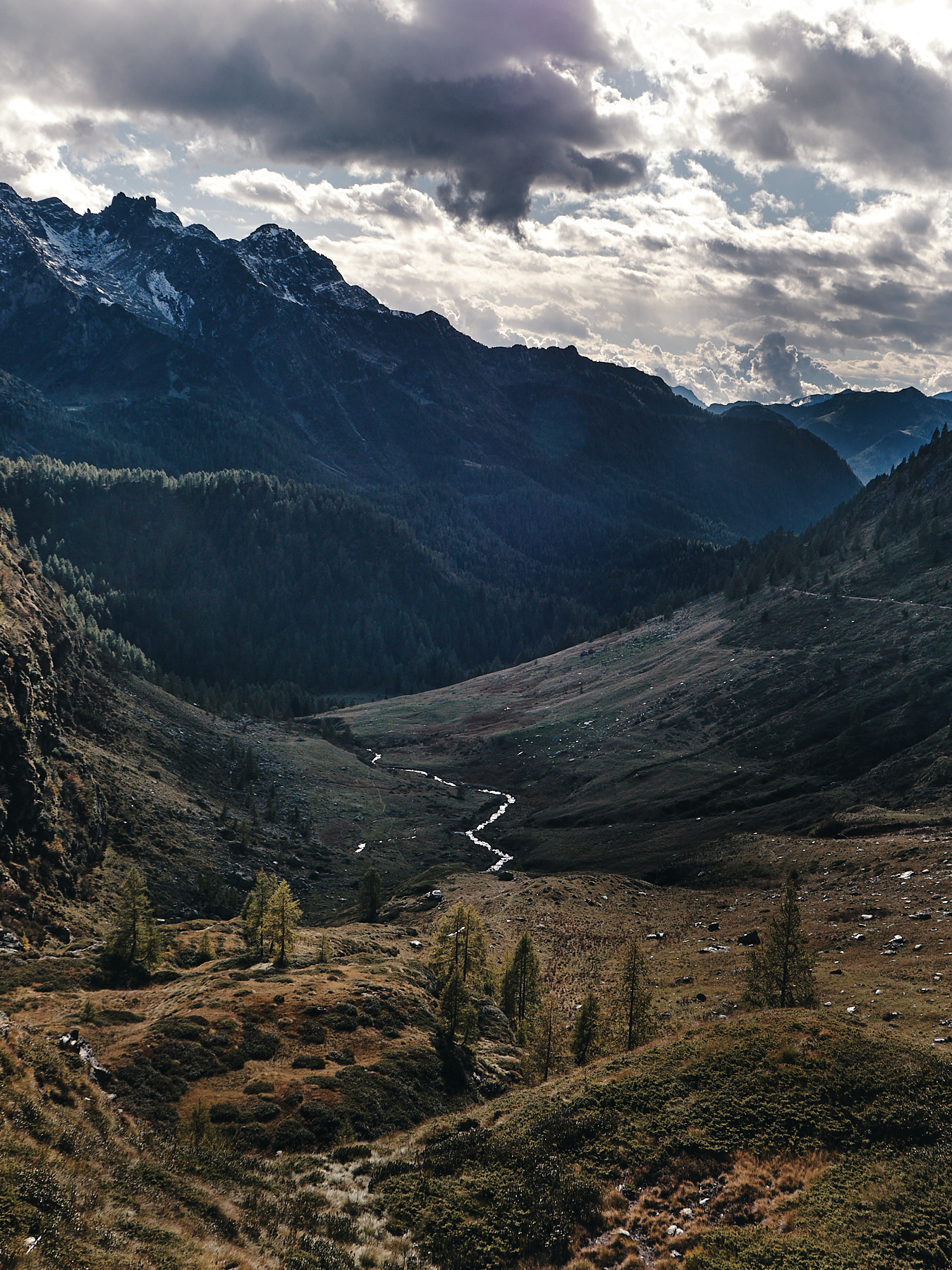
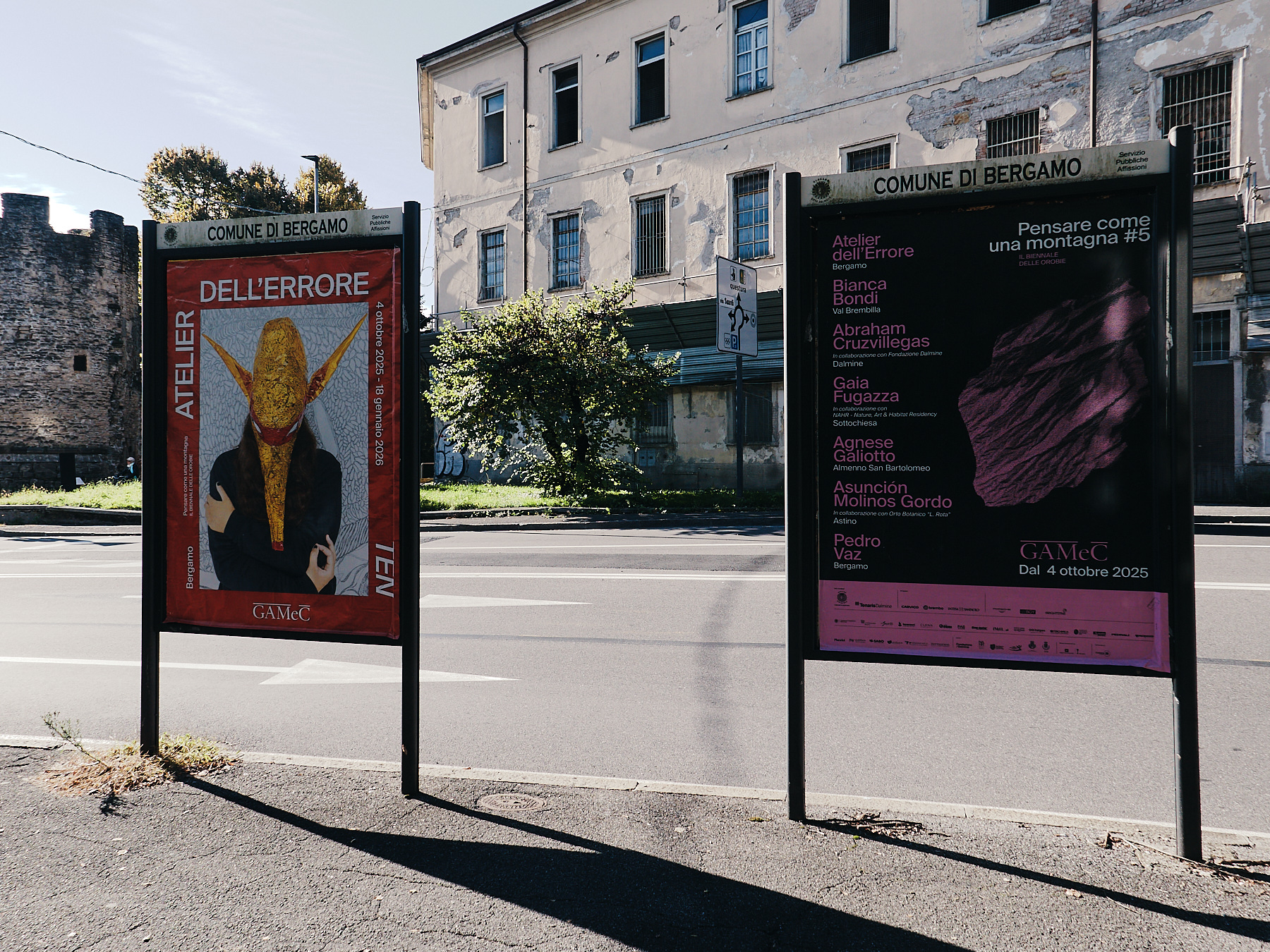
“A biennial in consecutive years?” you may ask? Fair, but this isn’t a normal Biennale – instead of popping up once every two years, curator Lorenzo Giusti instead created an event that lasts for two years, comprising a series of overlapping cycles that allow the time and space to explore the wide terrain across the various municipalities that make up the Province of Bergamo in Lombardy. Designed to explore issues of sustainability and community through works that respond to the sites rather than simply helicoptering in existent pieces (though there is some helicoptering, more of that later), Giusti hopes that the event presents a new kind of biennial, one less focussed on flashy one-off events and more rooted in a developmental relationship between institution and context.
![]()
![]()
![]()
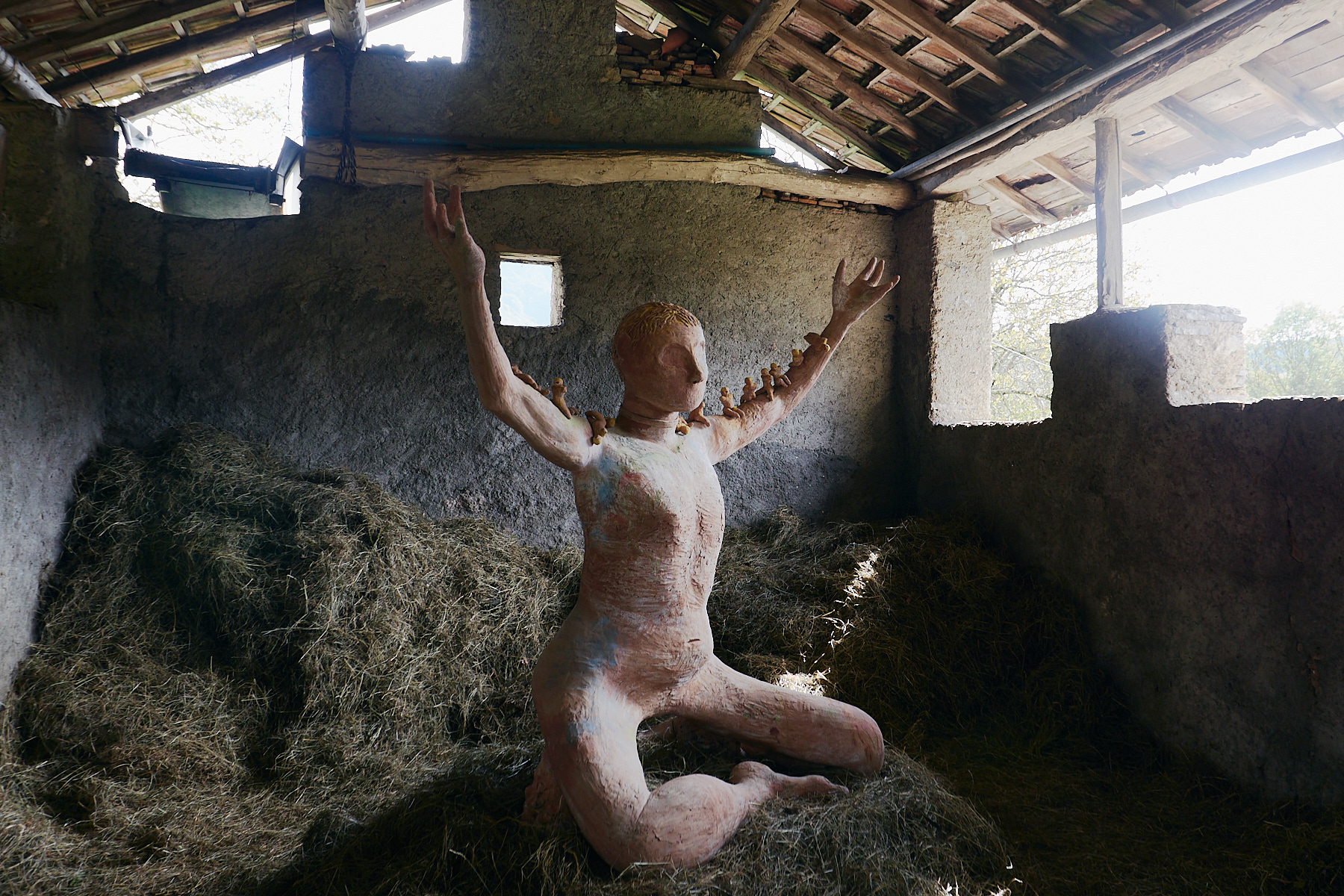
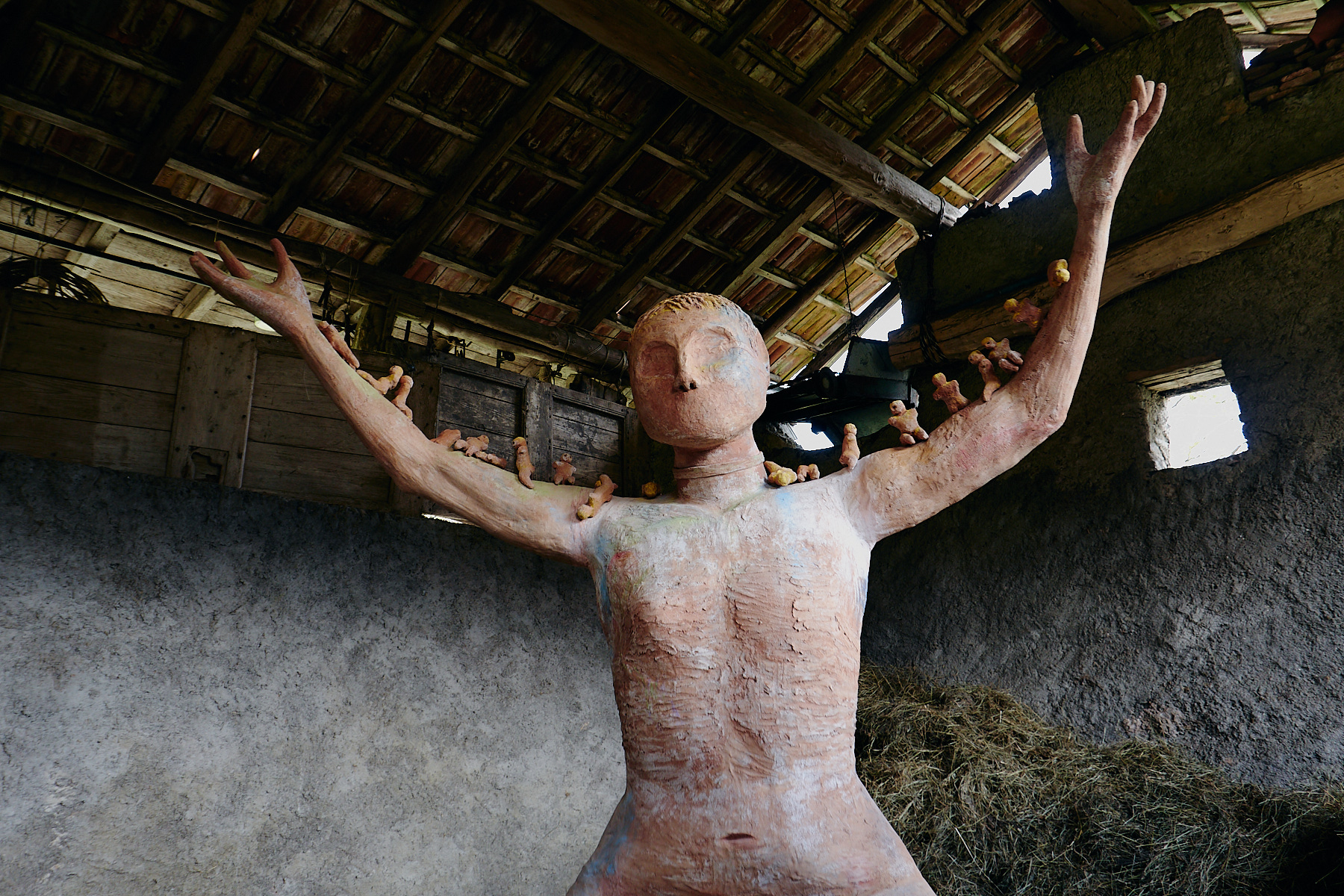
The fifth and final cycle takes in some sublime landscape and majestic locations of the Bergamasque Prealps, but also the humble. Milanese artist Gaia Fugazza’s Mother of Millions is remote and requires beautiful drive through the Val taleggio then a short walk to what first appears as an abandoned agricultural shed. Inside, Fugazza’s hand-made clay figure serenely sits in hay, arms open to the misty mountain light in an offer of embrace to both visitor and observed landscape. Inspired by the Mother of Millions plant, a succulent that reproduces asexually through the generation of clones along its leaves, the sculpture too appears to be crawling with offspring, ready to leap off and plant themselves into an unknown future.
It's one of many fascinating and richly enticing locations selected by curator Lorenzo Giusti, the Director of GAMeC – Gallery of Modern and Contemporary Art in Bergamo, who is behind the project to expand the institution outside of its Bergamo HQ and take itself across the land. In 2024, he was also curator of the 9th edition of Biennale Gherdëina (see 00216) and some of the artists presented there have continued the relationship to work on the Orobie Biennial.
![]()
![]()
![]()
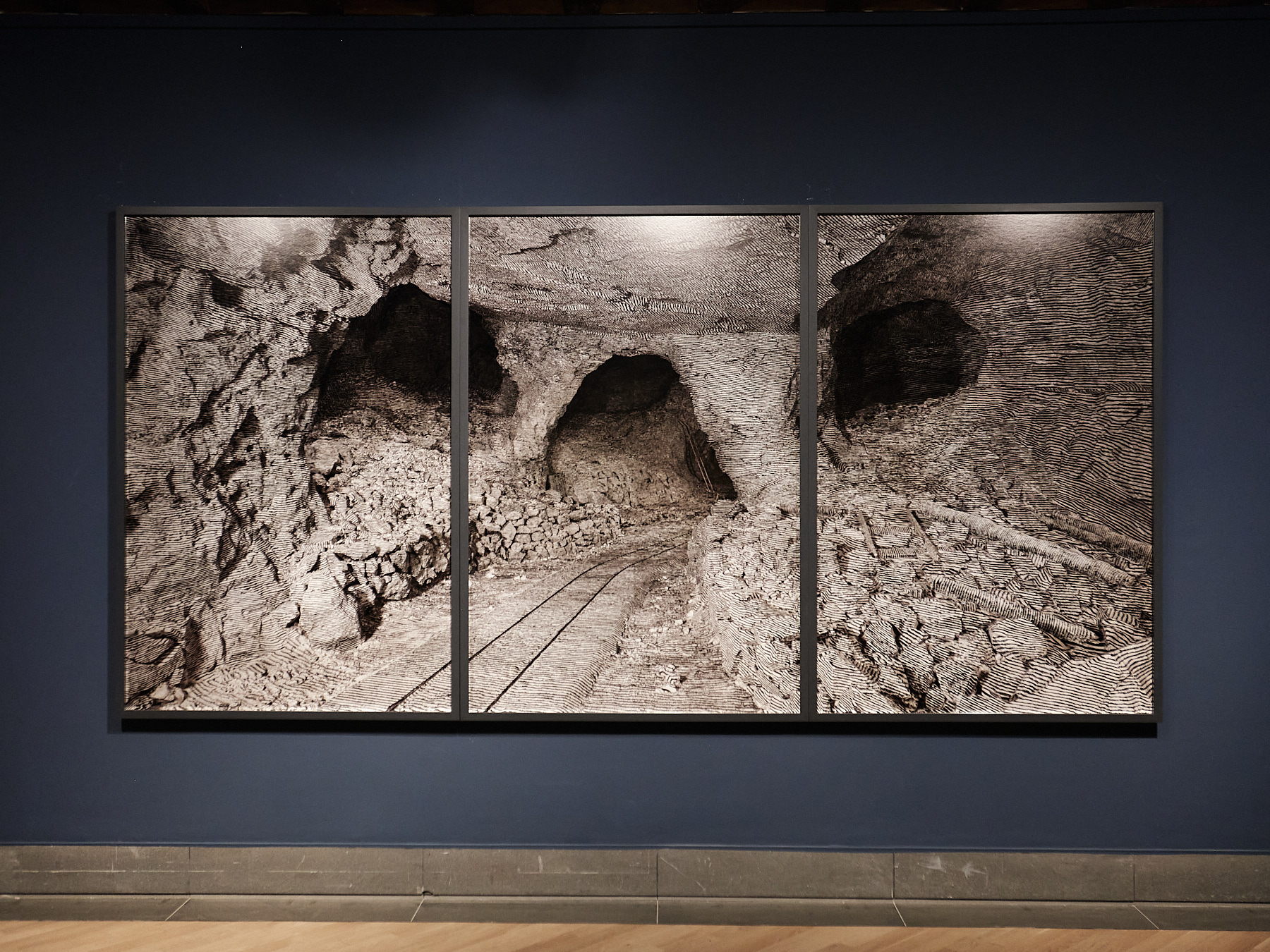
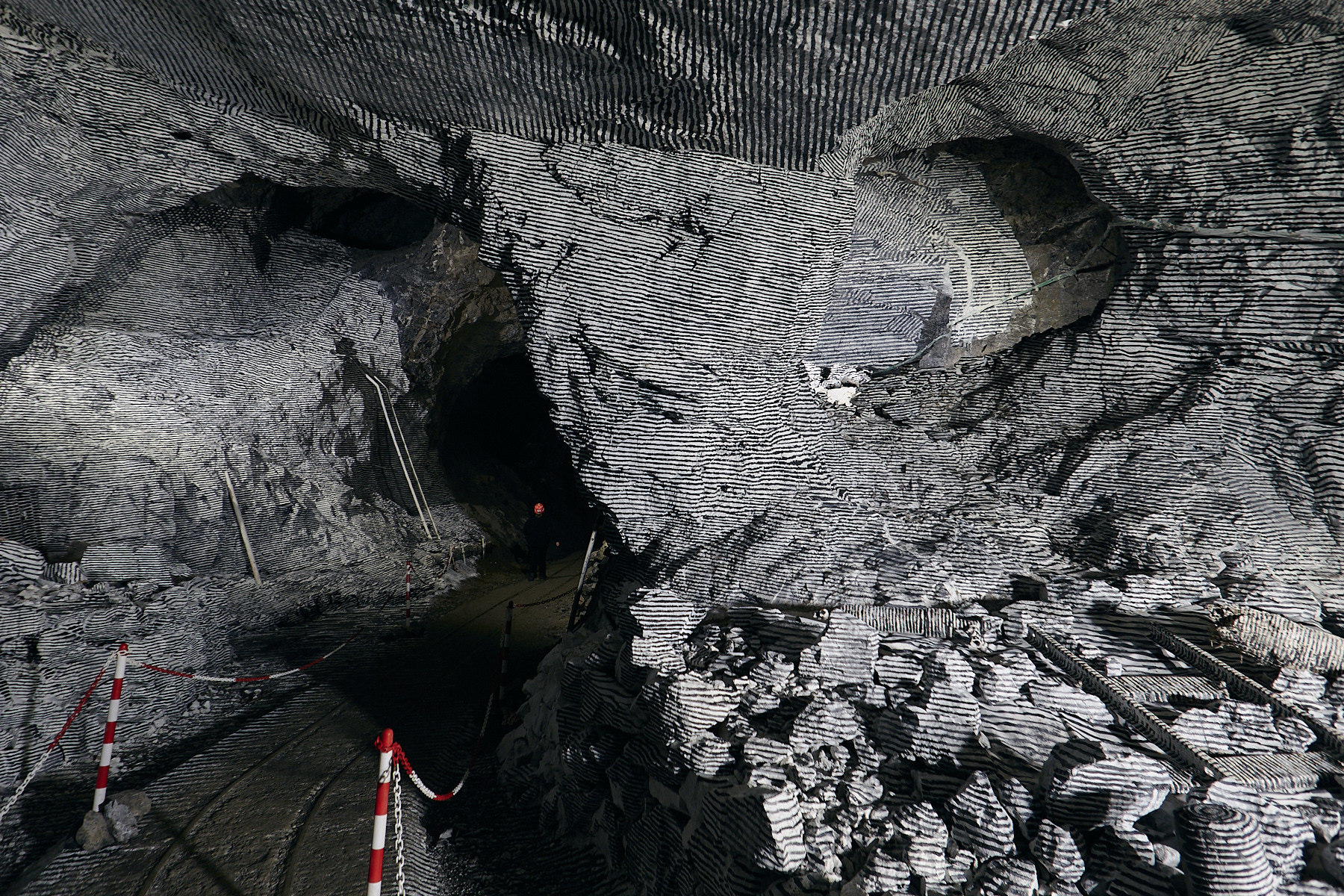
One of these is Julius von Bismarck installed his work in June, though it took him and his team a few weeks to actually create. Within a former fluorite mine in Dossena in the Brembana Valley, the artist has created what he terms “an inverted trompe-l'œil”, painstakingly painting lines and hatches directly onto a section of the mines internal surface to create a cartoon-like rendering of the place itself. Standing in one precise position, the eye can see nothing but the geometric layer, but when moving through and around the cavern forms slip and slide past each other and a hard junction between drawing and geological forms.
It is a remarkable experience, playful but also poetic in its reach into art history, etching and landscape studies, woodcut rendering, and ideas around representation and reality of place. Standing within the work, mediated and newspaper imagery come to mind, and through that the way in which histories and places are framed, presented, and delivered to distant realms, flattening a reality or situation into a simplification. Through this are questions around nature and its representation, just as the space itself is a geological structure but also profoundly man-made and artificial through extractive capitalism and as a site of industry.
![]()
![]()
![]()
Abraham Cruzvillegas’ offer was less impactful. With a nonsensely-long 49-word title, his sculptural work utilised discarded materials and found industrial objects sourced locally. The outcome, three brightly colour poles with wheelbarrows up in the sky, did emerge from interesting collaborations with local worker cooperatives, but ultimately lost its sense of presence when set in the manicured park of the Fondazione Dalmine, though came to life with an opening activation by musician and performer Dudù Kouate.
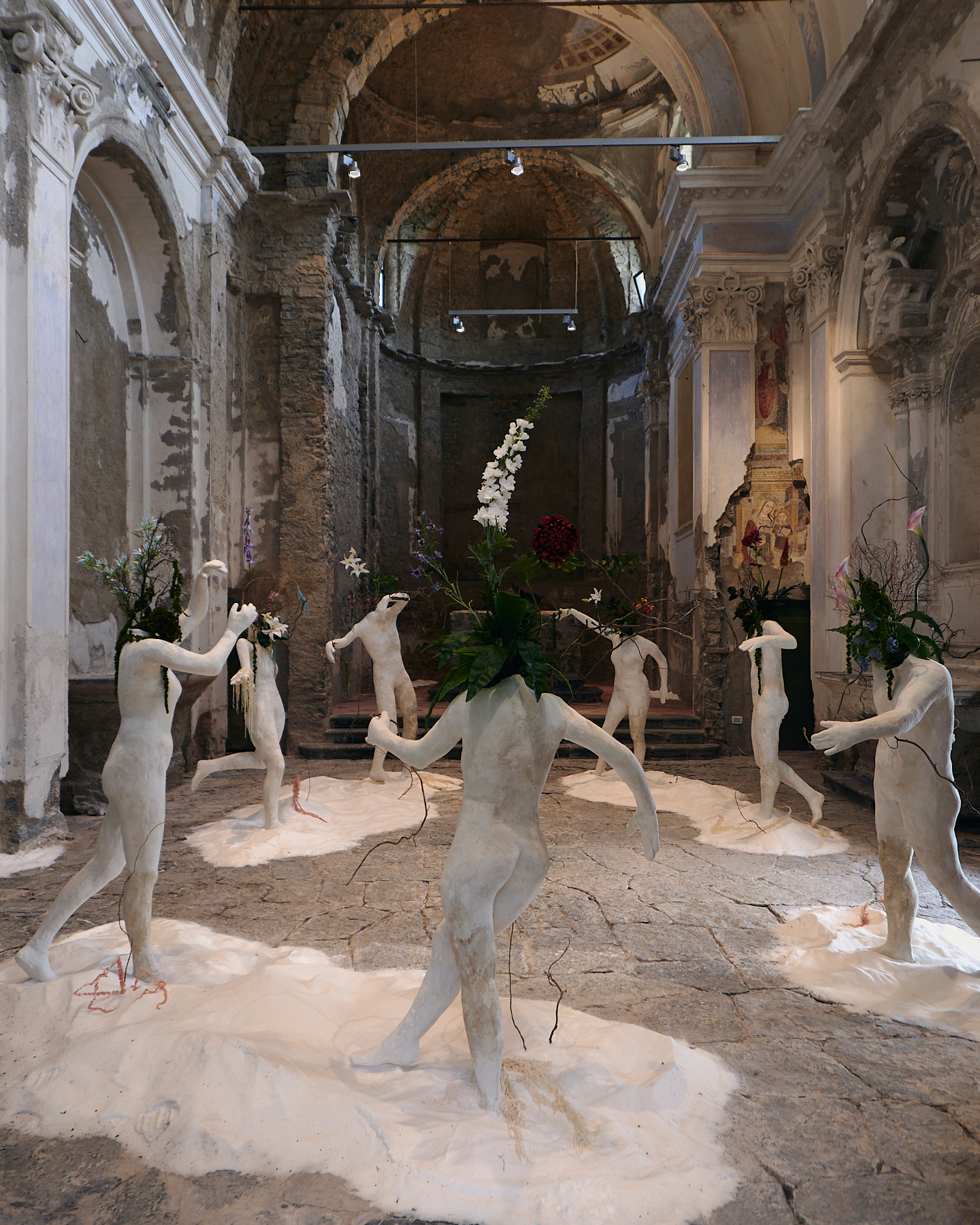
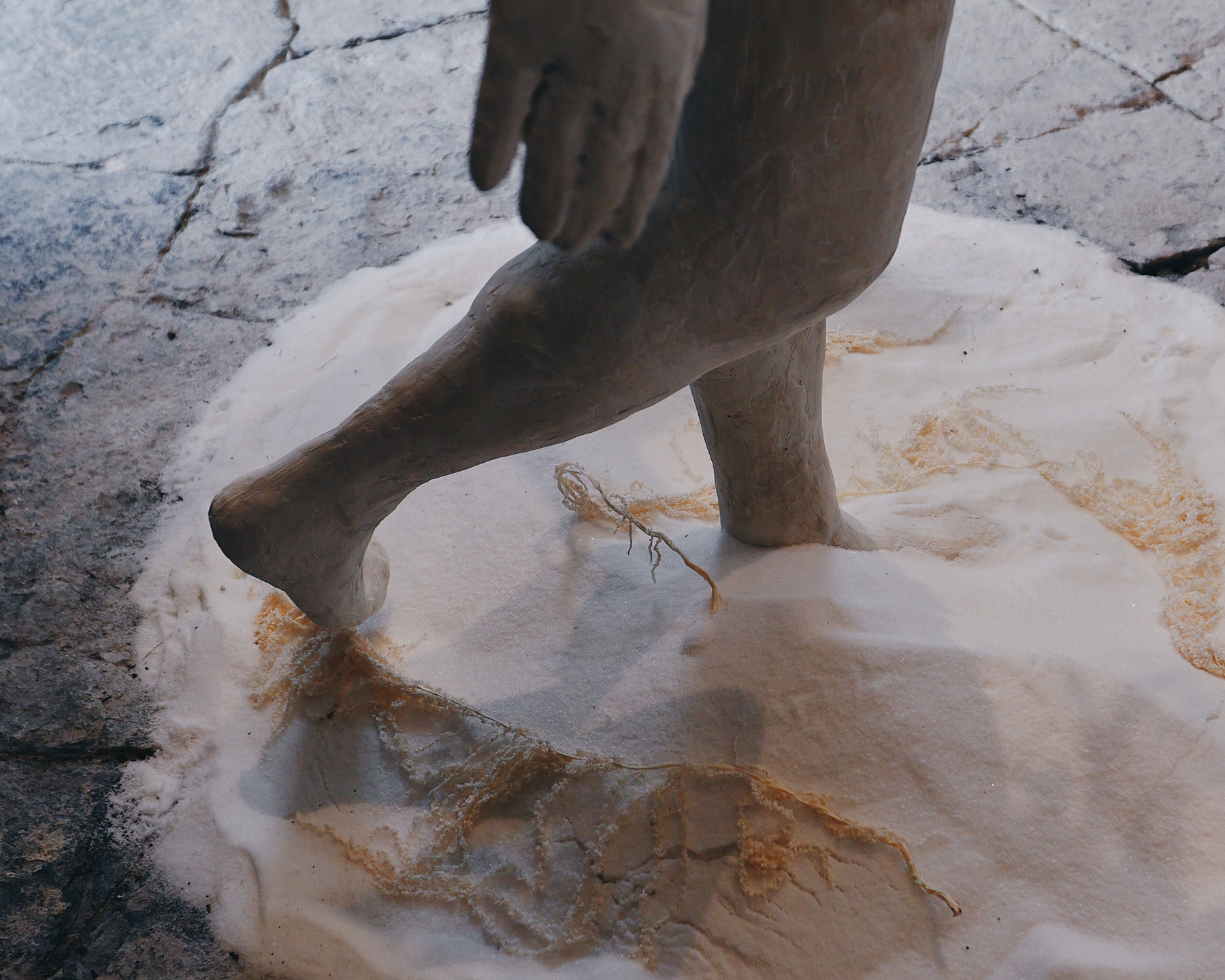
Art events that contend with site always make more of an impact when there’s a stronger coming together of site and work, and especially so when the site is unexpected or not usually the host of culture. Such is the case with Bianca Bondi’s Graces for Gerosa, filling the deconsecrated Romanesque Santa Maria in Montania church in Gerosa, with a suite of sculptures. As if Matisse’s dancers had frozen still, the seven figures – modelled anonymously on local citizens – have had their heads replaced by flora, their feet surrounded by pools of salt.
There are other art historical references Biondi draws from: postures are derived from Boticelli’s Three Graces, figures in Mantegna’s Parnassus, and even Etruscan scenes in the 5th century BC Tomb of Triclinium. Here, the bodies are sites of ritual and rebirth, and using fresh and natural materials, the site itself will change and evolve over the duration of its installation. In a way, this is a dance in itself – one between the installation and time, place, and decay. Historically, the artist says, dance was prohibited in sacred spaces, and here she seeks to reconcile such a space using the bodily form to connect between the everyday and the otherworldly.
![]()
![]()
![]()
The view from the church rivals what can be seen inside, with the rhythmic arrangement of staggered hills along the Val Brembilla appearing in the mists like huge stage scenography. But not all the works are in such remote vastness, with the GAMeC HQ and the city of Bergamo also hosting several projects. The smallest of these is Pedro Vaz’s painting Becoming Mountain, a landscape work concavely curved to allow the viewer to feel enclosed by the expanse of the depicted Presolana mountain.
While the painting is of the mountain filling the distance, the work emerged from a three-day hike by Vaz through what would become his scene, along the dolomitic wall. Just as von Bismarck did, Vaz is similarly working to contain and visually explain the sublime without deploying art-history’s clichés of scale, instead working with raw truth and naivety.
![]()
![]()
![]()
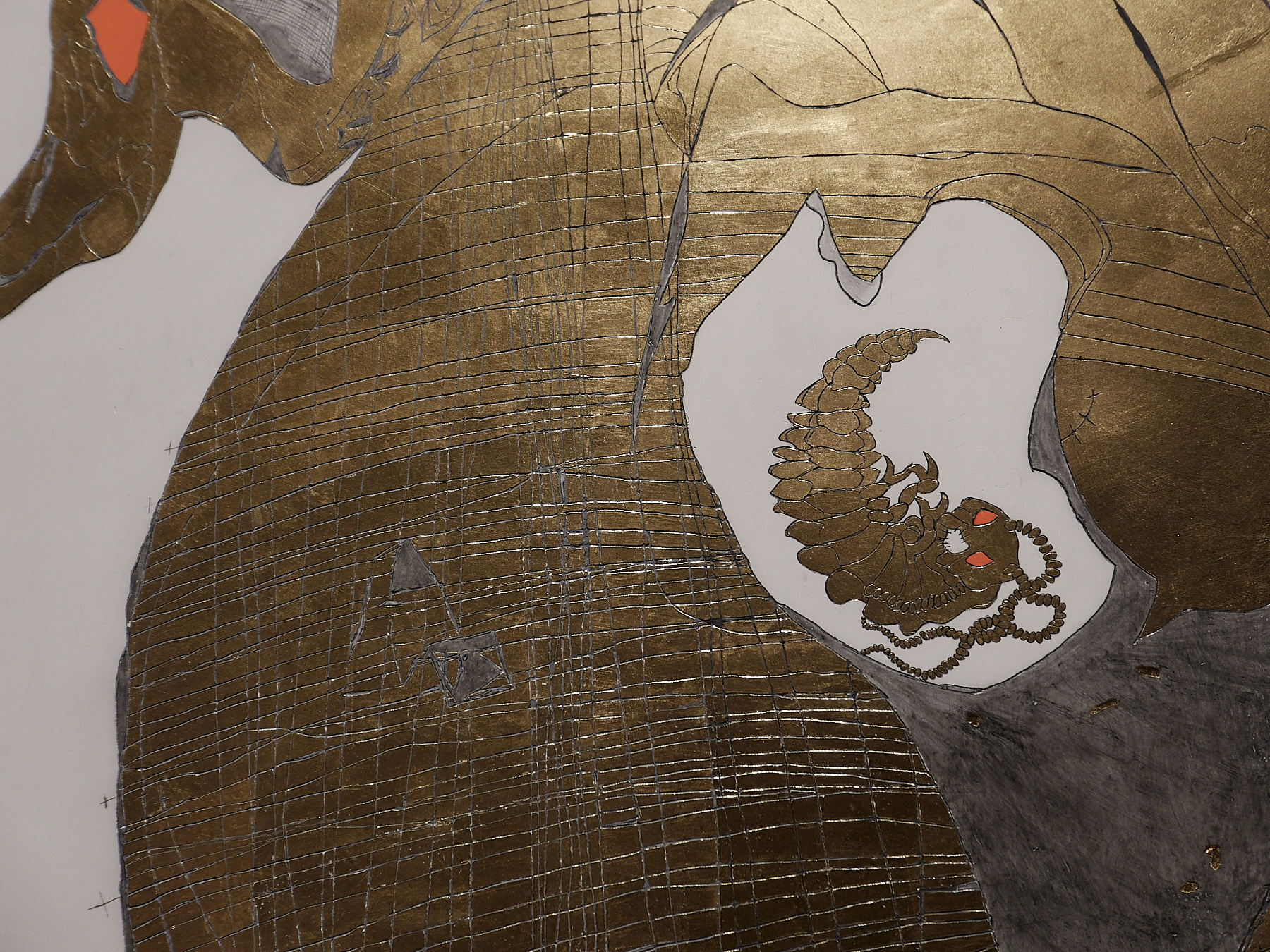
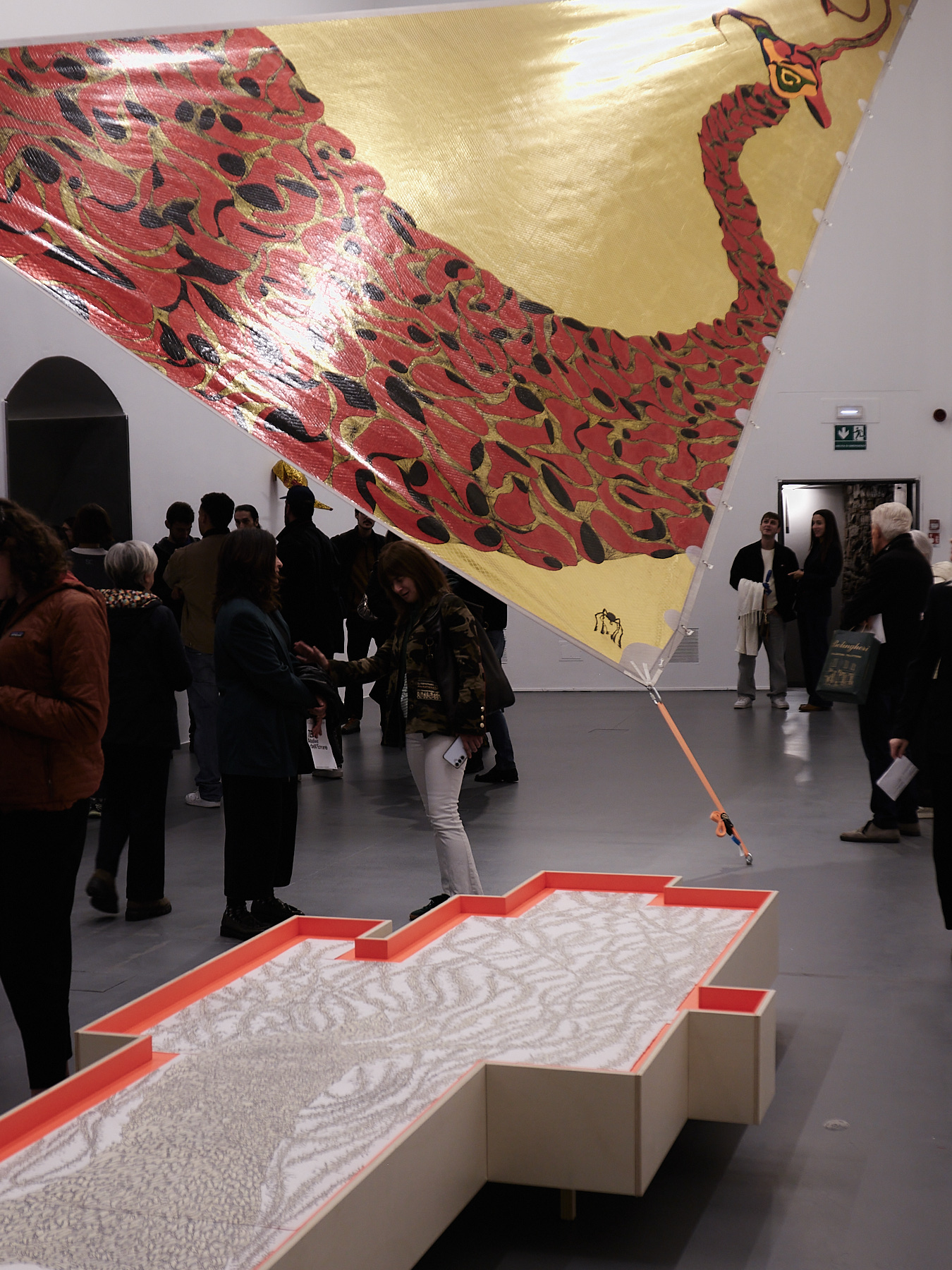
Scattered around the building are works by art Atelier dell’Errore, a collective Giusti also presented at the Biennale Gherdëina and whose works we also reported from at last year’s Panorama Monferrato (00235). Presenting as a retrospective of works created by the group in collaboration with neurodivergent children from the Reggio Emilia region, there are two rules in their drawing process: “animals are the only subject matter, and during the creative phase, nothing is ever erased – preserving the transformative potential of every so-called mistake or error.”
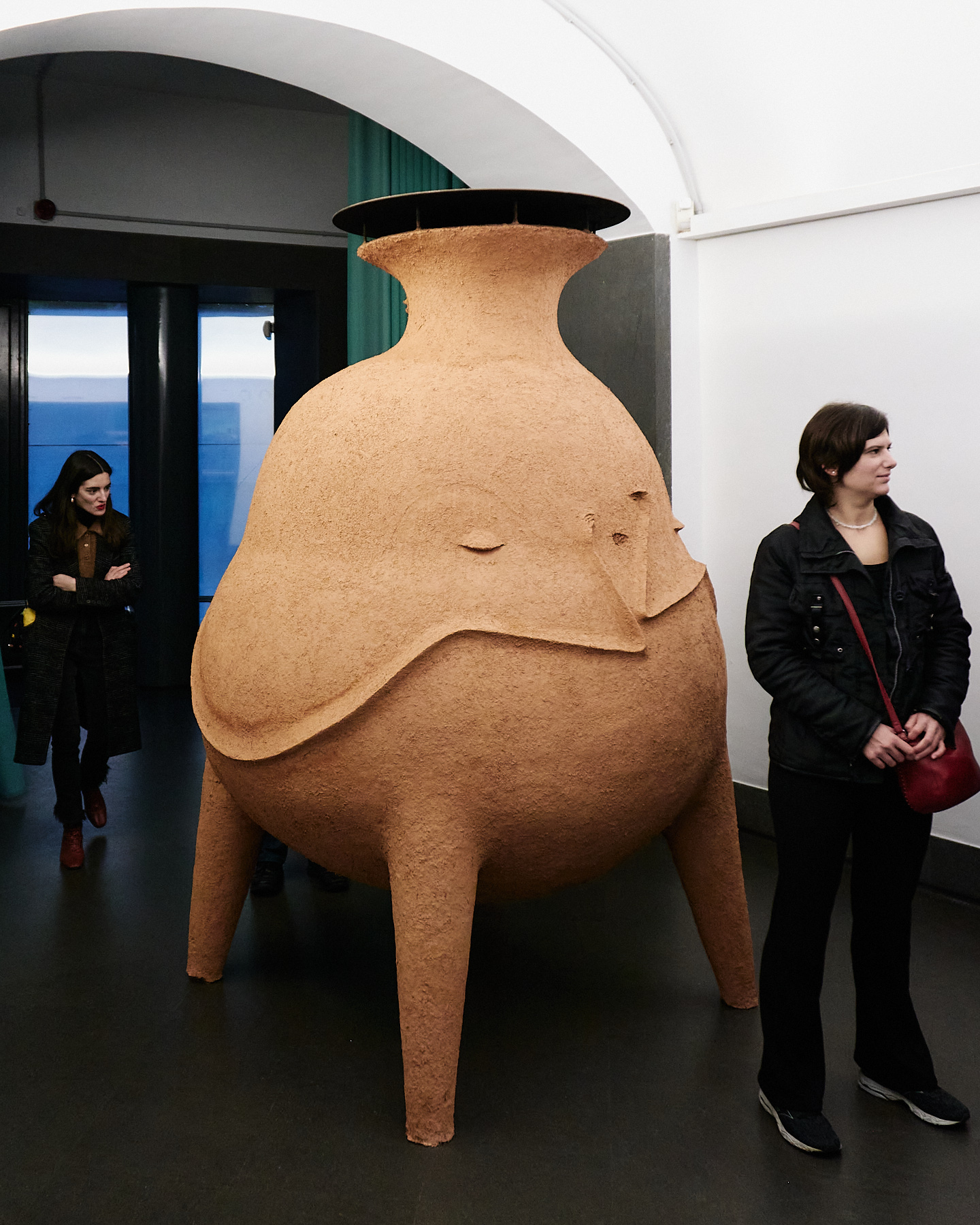
The resultant creatures are unknown imaginaries from either an unknown place or time, or both. They emerge like animalistic Rorschach tests, shorthand standins to represent every non-human at risk from what we do. Amongst these works is Vertova, a kiln sculpture by Gabriel Chaile (an Argentinian artist we interviewed in 2023, see 00112) that was originally presented in an earlier part of the two-year Orobie Biennial. Also on show is a three-panel photograph by Julius von Bismarck of his mine work, captured at precisely the spot where a viewer’s total view is turned into drawing. Replicated here for those that have visited, it offers the imagined rendering and a new way of reading the place, for those who only see this image it offers a beguiling, curious sight.
![]()
![]()
![]()
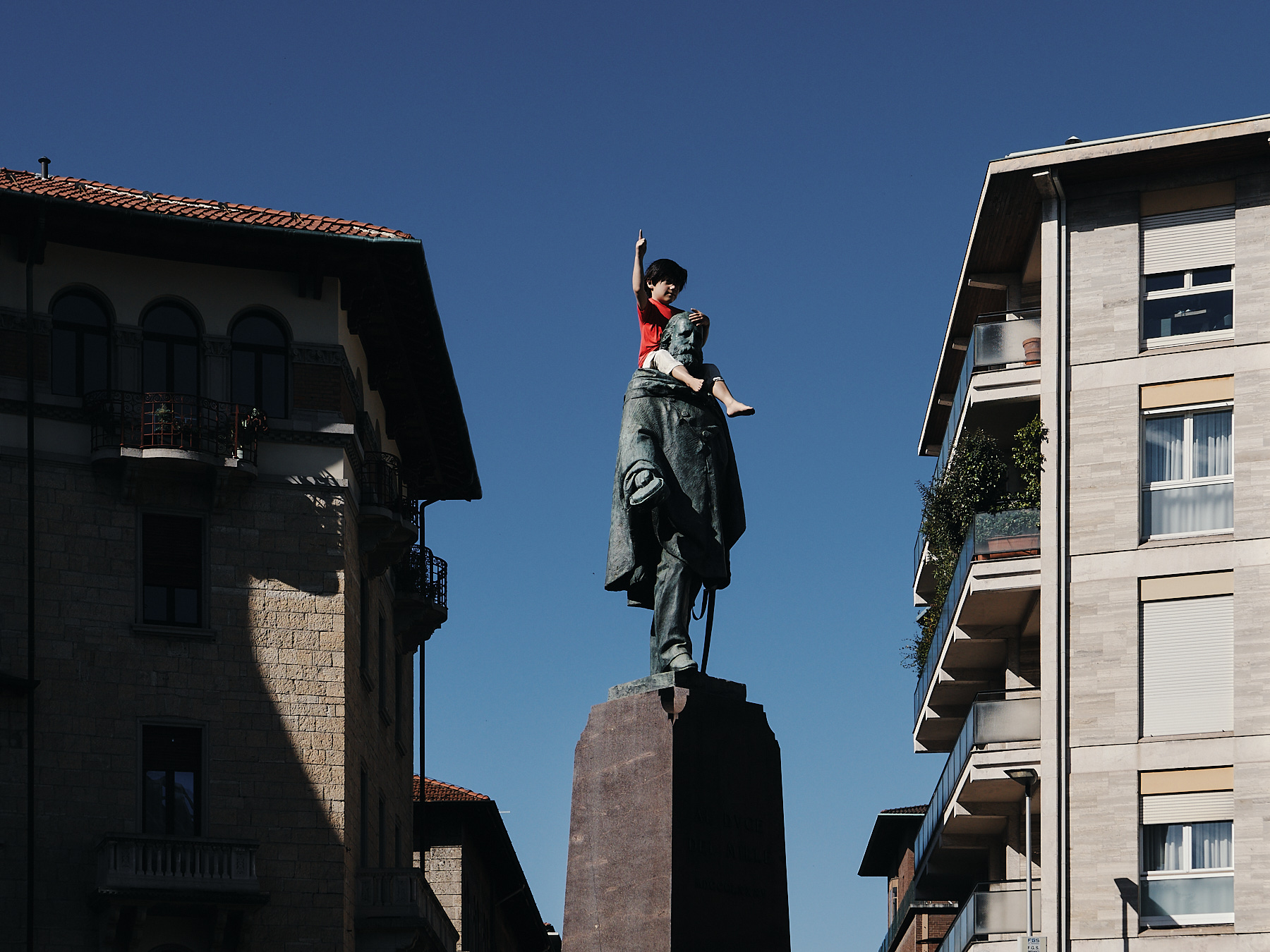
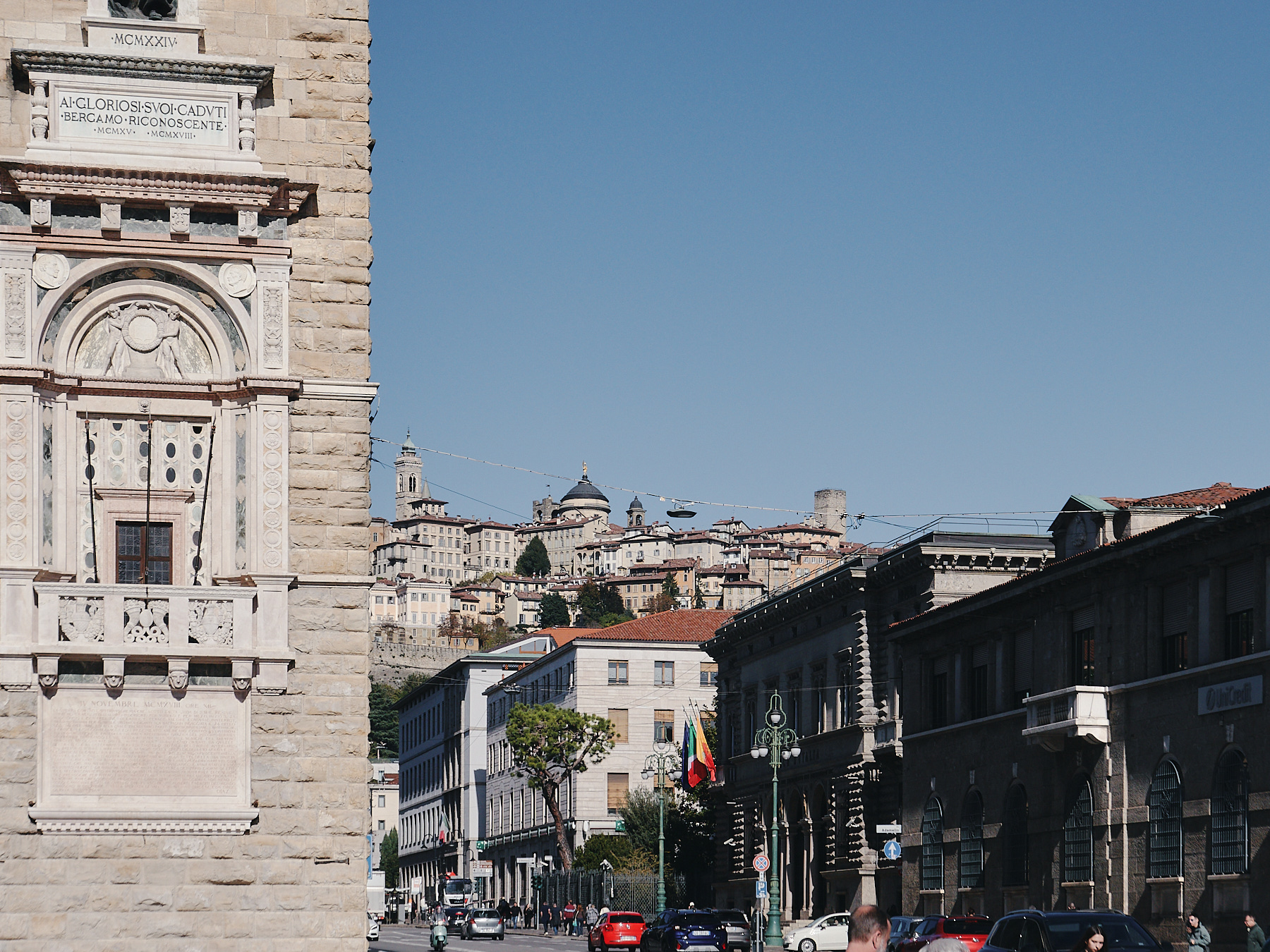
Celebrated artist Maurizio Cattelan was also invited to take part in the biennial. His work pops up in a few places around the upper and lower part of the city, and is perhaps most publicly visible with One. At the centre of the Rotonda dei Mille, a roundabout close to the political, commercial, and historic parts of Bergamo, is a statue of Garibaldi on a column.
The 19th century Italian revolutionary republican here is joined by another, a child sat on his shoulders, one hand on Garibaldi’s forehead, the other pointing like a gun skywards. The public intervention is typically ambiguous. Is the pointing hand a symbol of a new generation’s revolutionary struggle? Is the boy trying to lighten the baggage of Italy’s political history and presence, reminding of the humanity it was and is for? Is it a call to look forwards at a moment of cultural and social pivot, rather than lingering in the past, its politics, and narratives? Is it just nonsensical fun, even?
![]()
![]()
![]()
![]()
Back in GAMeC is another new Cattelan commission. Empire, is a brick in a bottle, the titular word carved in caps on its side. The brick, a metaphor perhaps for the sole worker within a collective process, or even as an impromptu projectile during revolution, is here contained within the fragile perfection of a glass bottle, like a colonial glasshouse for the constituent. In the same room is No, a reworking of the artist’s famous depiction of a child-size Adolf Hitler kneeling in prayer. When the work was to be shown in China, a political request led the artist to cover the face with a brown paper bag, doing as the institution requested but also layering new ideas of withholding, concealment, and censorship.
![]()
![]()
![]()
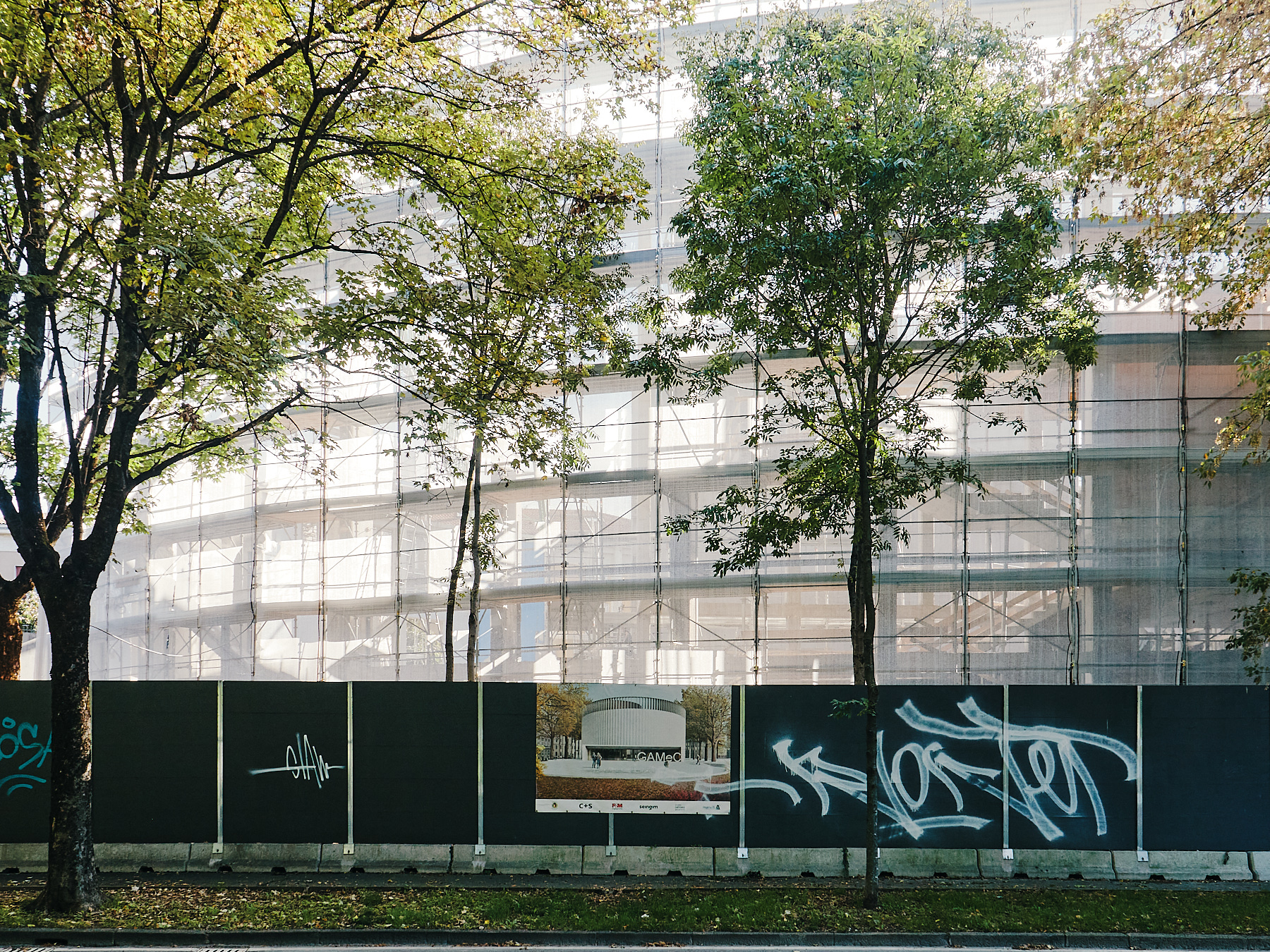
These works dotted around Gamec are one of the last exhibitions to be held in their historic building. In around a year’s time the institution’s new venue will open, transforming the shell of the city’s former Palazzetto dello Sport into a huge cultural rotunda.
Overseen by C+S Architects, the space will become one of Italy’s most important gallery’s north of Milan, with its opening programme including a visual documentation of the two years of the Orobie Biennial, retracing the conversations, projects, and impact that the series of seasons has formed. Before that huge cultural complex opens, however, GAMeC and Giusti had time to collaborate an a far smaller architectural project.
![]()
![]()
![]()
![]()
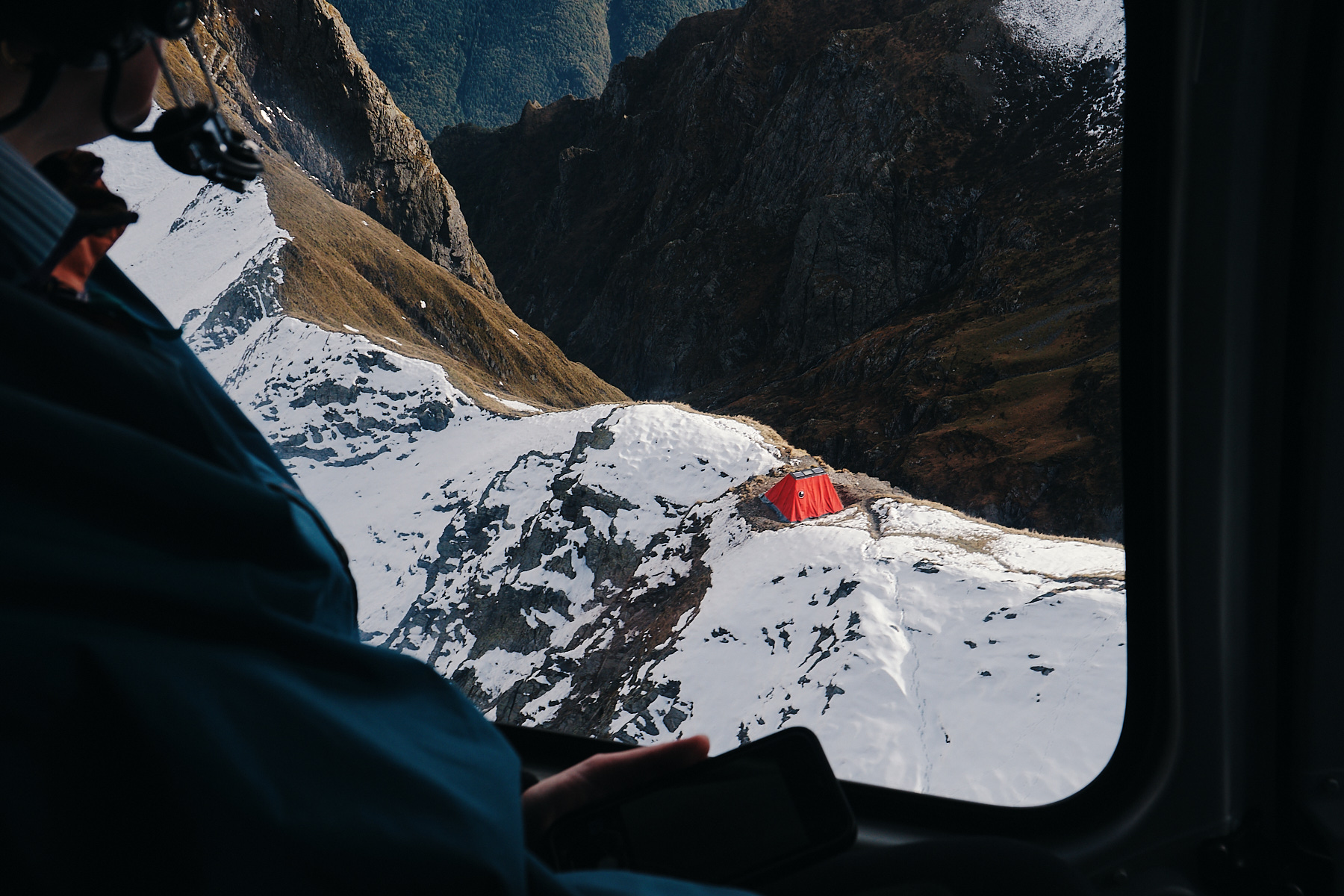
Perched atop a snowy outcrop of the Orobie Prealps is a tiny tent-like structure. The New Frattini Bivouac offers a space of safety, respite, and hostage to climbers stuck in inclement weather and unable to make it to the nearest place of safety. The emergency shelter, designed by a collaborative creative group led by EX, an architectural studio from Torino, in dialogue with the Bergamo section of the Italian Alpine Club, replaces an older asbestos structure that had passed its useable life.
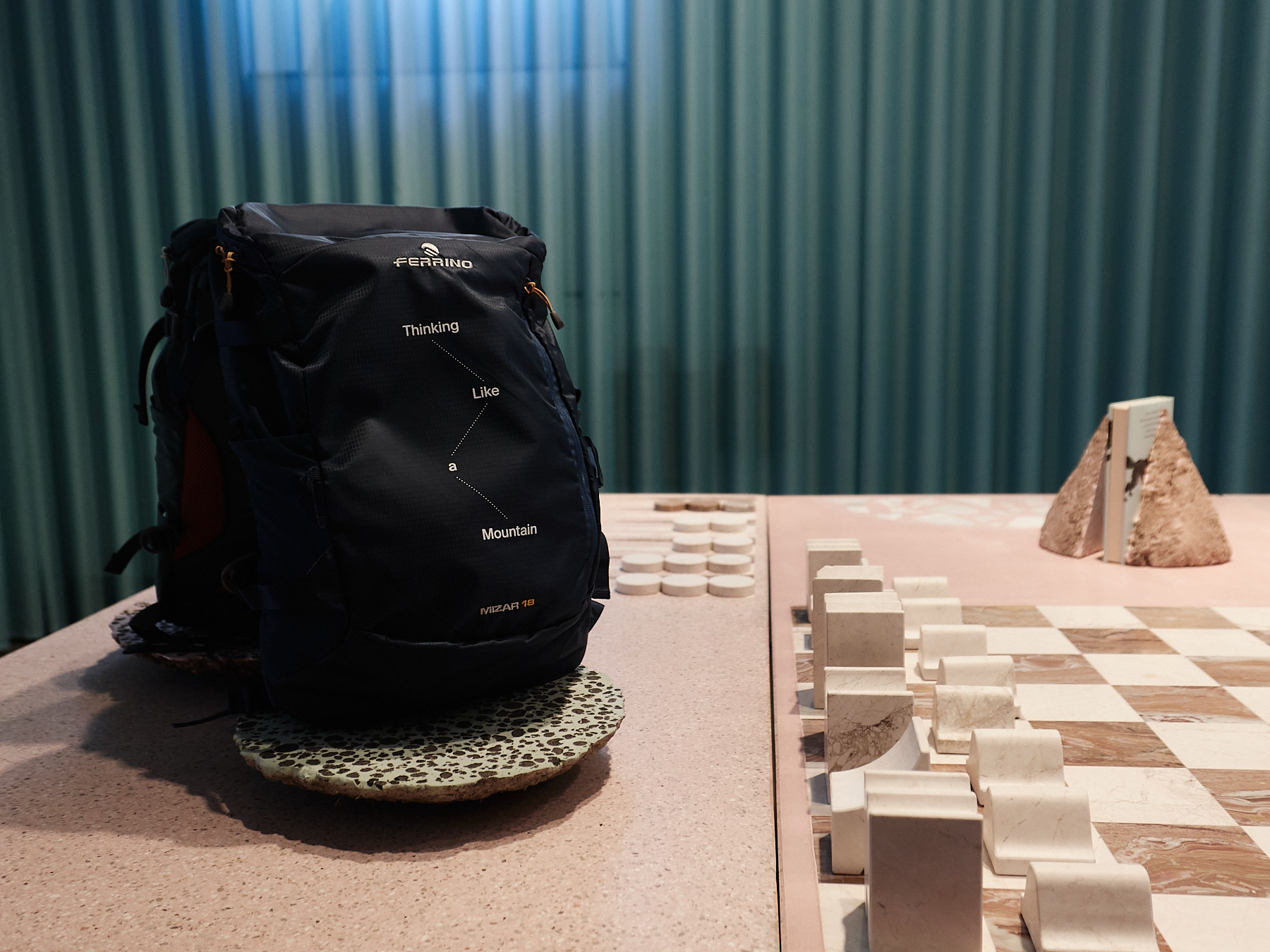
The new one is designed for a long life, formed of a modular timber capsule reinforced with metal ribs, it has a light footprint of 2.5m2, requiring the smallest concrete foundation possible. It’s all wrapped in a fabric skin, designed in partnership with materials producer Ferrino (a neat hiking rucksack made by the firm also sits in GAMeC).
![]()
![]()
![]()
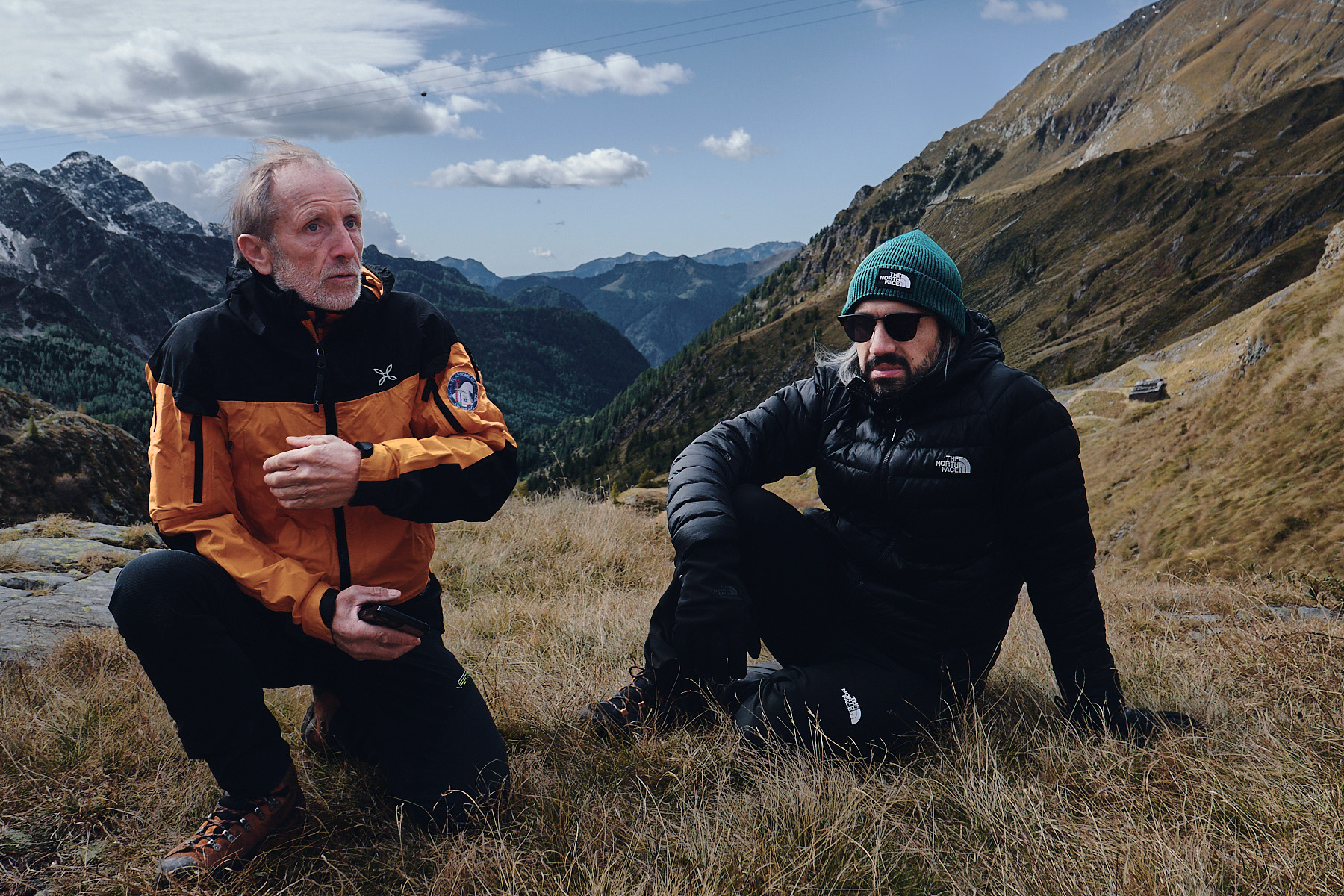
As if to evidence the inclement weather the building is designed to work with, when recessed.space visited unseasonally deep snow prevented a hike over the mountain to see it, instead we encircled it from a helicopter, perfectly emphasising its sense of fragility and lightness within a sublime, vast theatre of geology. Inside, it feels altogether more secure, especially for those who find their way to it when in need of refuge. The interior is formed of fold-out beds and a table, ensuring groups of up to nine people who settle in there for weather or night to pass can do so in security and comfort. EX even considered the sensorial welcome – with a scent of the cork cladding, insulated silence, and with light entering through a skylight and two portholes, it is also a place of emotional security.
Beyond shelter, it is also an expansion of GAMeC’s cultural relationship to the mountain regions for the Biennial and beyond. It will not host exhibitions or performances (though, in conversation Giusti did say that when the Ferrini fabric needs replacing it may offer opportunity for a quite unique artistic opportunity) but it is a both symbolic and scientific connection. Equipped in sensors, the bivouac collects real-time data and imagery of the surrounding landscape, ecosystem, and climate. This data will be fed back to the new GAMeC gallery to not only provide information of value to local mountaineers and climate scientists, but also imagery and information that may further the institution’s relationship with the wider landscape and its meaning through as yet unknown creative acts.
![]()
![]()
![]()
Overall, the two-year-long Orobie Biennial has been an anti-biennial with real value. By turning the conventional once-every-two-years-spectacle format on its head, and instead by thinking durationally with depth and breadth far beyond the confines of gallery and regular gallery visitor, Giusti has tested not only what an institutional event is, but what work art can do. The subtitle, Thinking Like a Mountain, a term borrowed from writer and naturalist Aldo Leopold, speaks to an approach of working local, longer, and at scale, and the works present do just that.
The challenge now will be how to marry that expanded proposition next time the event comes around, when GAMeC has a shiny new bauble gallery to fill. Perhaps that’s when the idea may truly evolve – when it can marry the urban and the rural, the crowded and the empty, the moment and the duration.
Imagery supported by MPB - the right way to buy, trade and sell camera gear.
More information on MPB can be found here.
“A biennial in consecutive years?” you may ask? Fair, but this isn’t a normal Biennale – instead of popping up once every two years, curator Lorenzo Giusti instead created an event that lasts for two years, comprising a series of overlapping cycles that allow the time and space to explore the wide terrain across the various municipalities that make up the Province of Bergamo in Lombardy. Designed to explore issues of sustainability and community through works that respond to the sites rather than simply helicoptering in existent pieces (though there is some helicoptering, more of that later), Giusti hopes that the event presents a new kind of biennial, one less focussed on flashy one-off events and more rooted in a developmental relationship between institution and context.

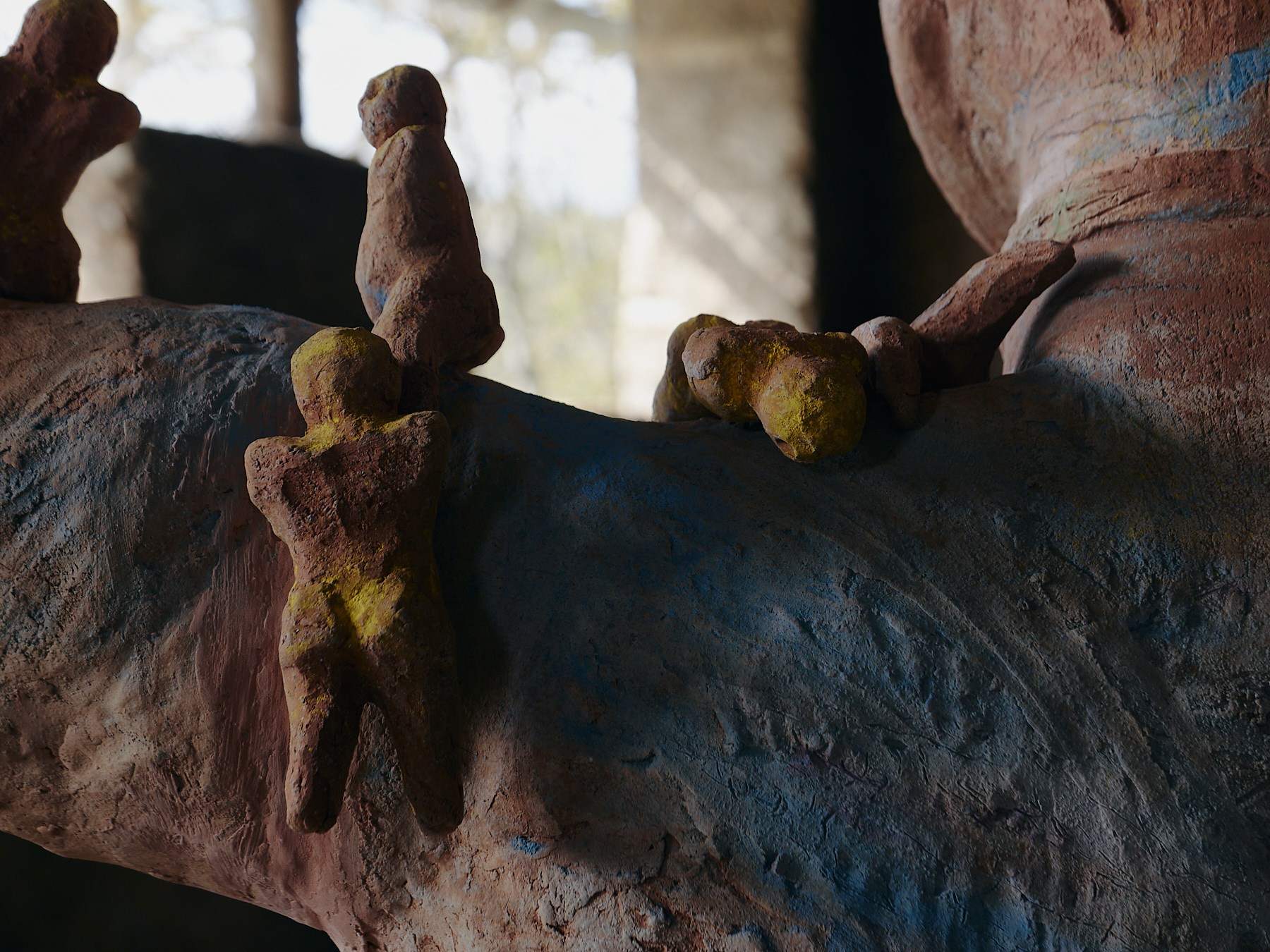
The fifth and final cycle takes in some sublime landscape and majestic locations of the Bergamasque Prealps, but also the humble. Milanese artist Gaia Fugazza’s Mother of Millions is remote and requires beautiful drive through the Val taleggio then a short walk to what first appears as an abandoned agricultural shed. Inside, Fugazza’s hand-made clay figure serenely sits in hay, arms open to the misty mountain light in an offer of embrace to both visitor and observed landscape. Inspired by the Mother of Millions plant, a succulent that reproduces asexually through the generation of clones along its leaves, the sculpture too appears to be crawling with offspring, ready to leap off and plant themselves into an unknown future.
It's one of many fascinating and richly enticing locations selected by curator Lorenzo Giusti, the Director of GAMeC – Gallery of Modern and Contemporary Art in Bergamo, who is behind the project to expand the institution outside of its Bergamo HQ and take itself across the land. In 2024, he was also curator of the 9th edition of Biennale Gherdëina (see 00216) and some of the artists presented there have continued the relationship to work on the Orobie Biennial.
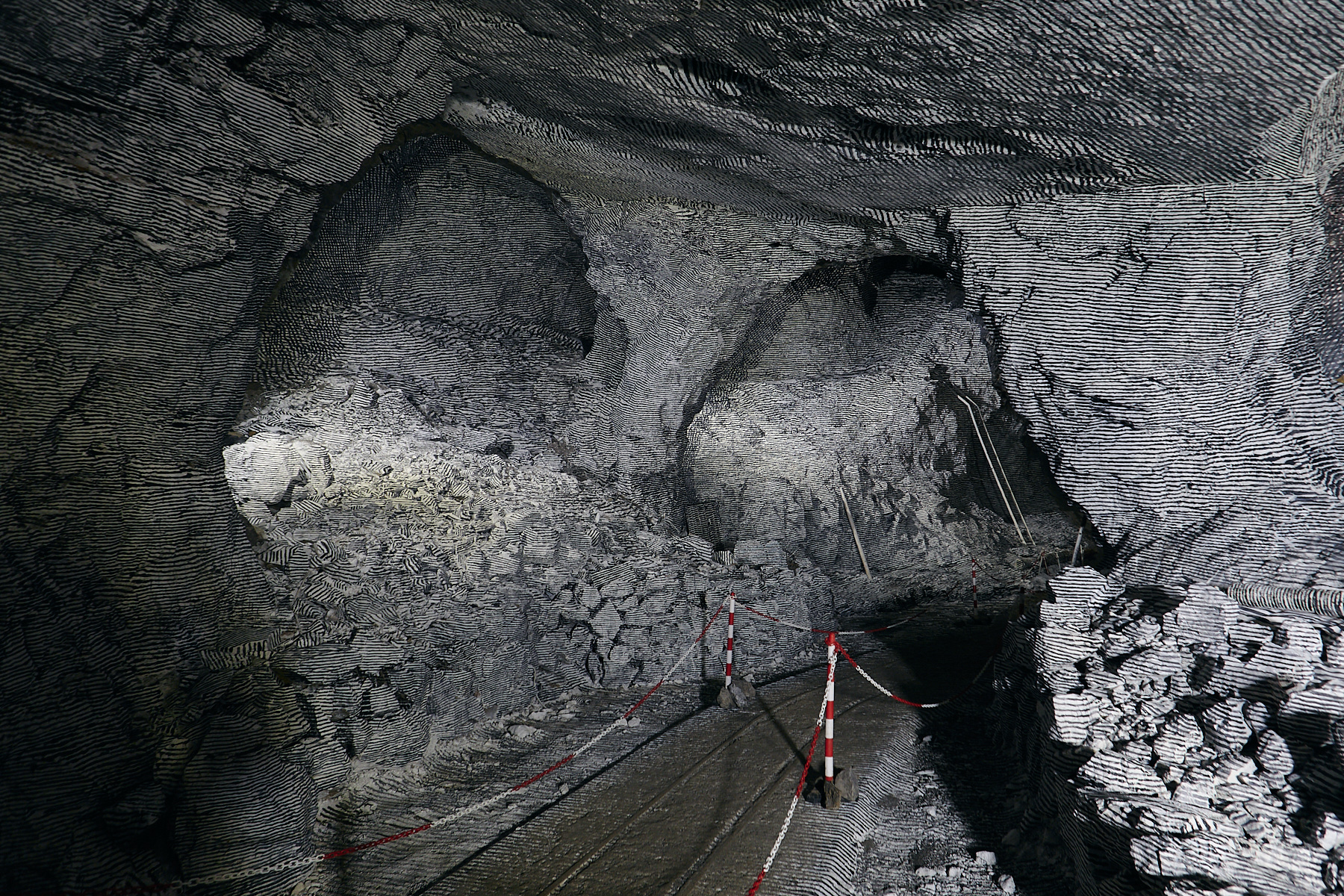
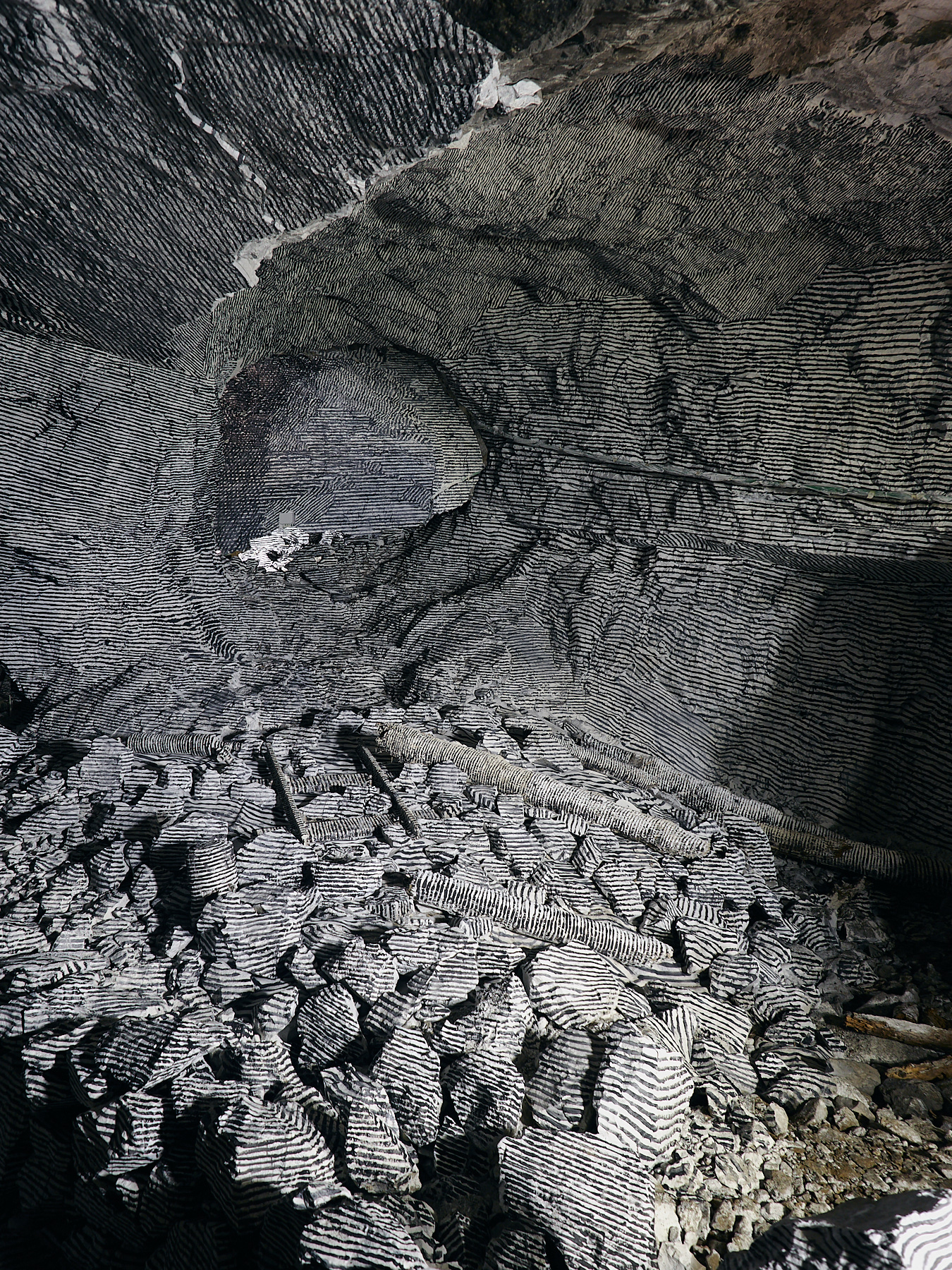
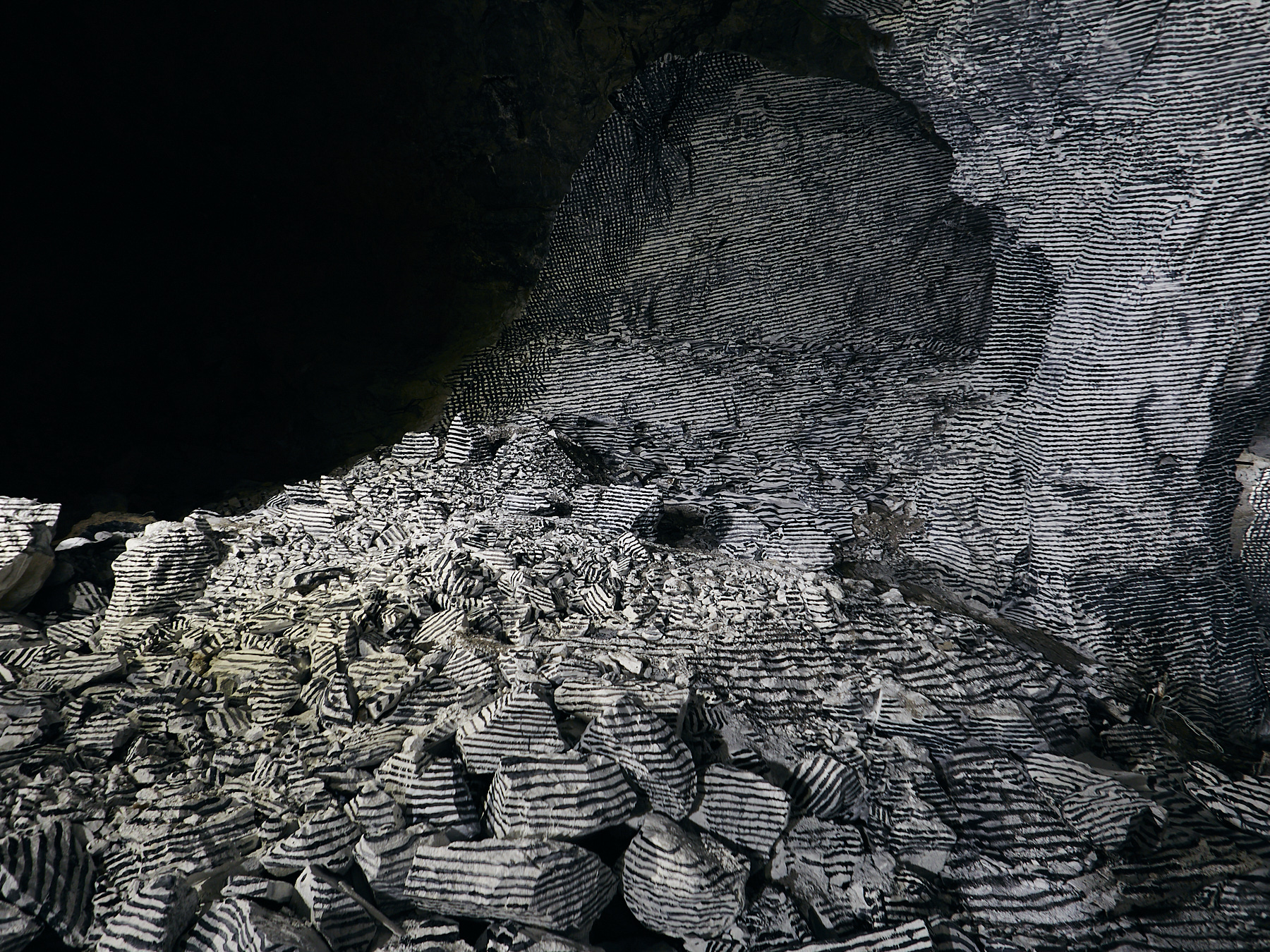
One of these is Julius von Bismarck installed his work in June, though it took him and his team a few weeks to actually create. Within a former fluorite mine in Dossena in the Brembana Valley, the artist has created what he terms “an inverted trompe-l'œil”, painstakingly painting lines and hatches directly onto a section of the mines internal surface to create a cartoon-like rendering of the place itself. Standing in one precise position, the eye can see nothing but the geometric layer, but when moving through and around the cavern forms slip and slide past each other and a hard junction between drawing and geological forms.
It is a remarkable experience, playful but also poetic in its reach into art history, etching and landscape studies, woodcut rendering, and ideas around representation and reality of place. Standing within the work, mediated and newspaper imagery come to mind, and through that the way in which histories and places are framed, presented, and delivered to distant realms, flattening a reality or situation into a simplification. Through this are questions around nature and its representation, just as the space itself is a geological structure but also profoundly man-made and artificial through extractive capitalism and as a site of industry.
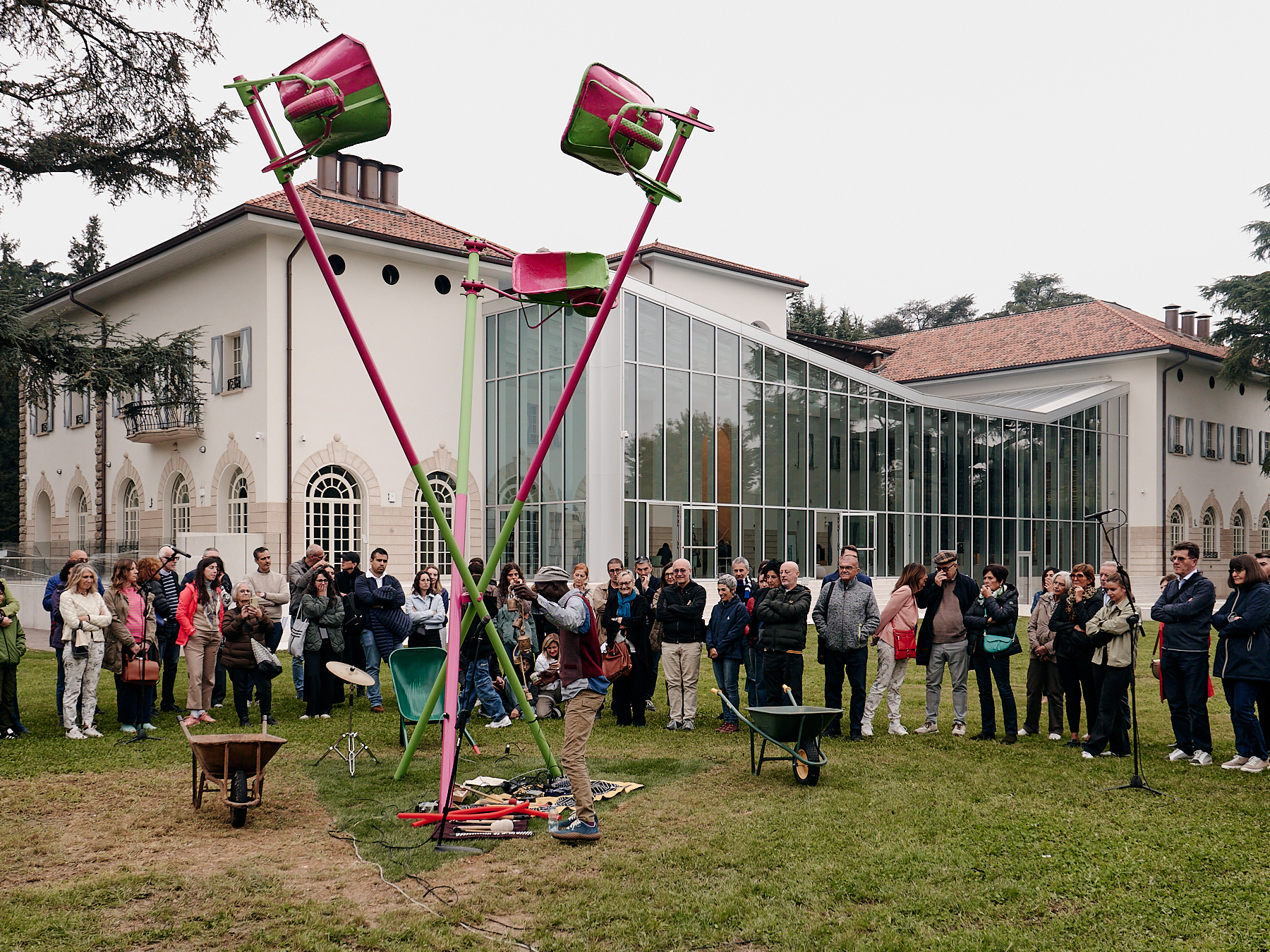
Abraham Cruzvillegas’ offer was less impactful. With a nonsensely-long 49-word title, his sculptural work utilised discarded materials and found industrial objects sourced locally. The outcome, three brightly colour poles with wheelbarrows up in the sky, did emerge from interesting collaborations with local worker cooperatives, but ultimately lost its sense of presence when set in the manicured park of the Fondazione Dalmine, though came to life with an opening activation by musician and performer Dudù Kouate.
Art events that contend with site always make more of an impact when there’s a stronger coming together of site and work, and especially so when the site is unexpected or not usually the host of culture. Such is the case with Bianca Bondi’s Graces for Gerosa, filling the deconsecrated Romanesque Santa Maria in Montania church in Gerosa, with a suite of sculptures. As if Matisse’s dancers had frozen still, the seven figures – modelled anonymously on local citizens – have had their heads replaced by flora, their feet surrounded by pools of salt.
There are other art historical references Biondi draws from: postures are derived from Boticelli’s Three Graces, figures in Mantegna’s Parnassus, and even Etruscan scenes in the 5th century BC Tomb of Triclinium. Here, the bodies are sites of ritual and rebirth, and using fresh and natural materials, the site itself will change and evolve over the duration of its installation. In a way, this is a dance in itself – one between the installation and time, place, and decay. Historically, the artist says, dance was prohibited in sacred spaces, and here she seeks to reconcile such a space using the bodily form to connect between the everyday and the otherworldly.
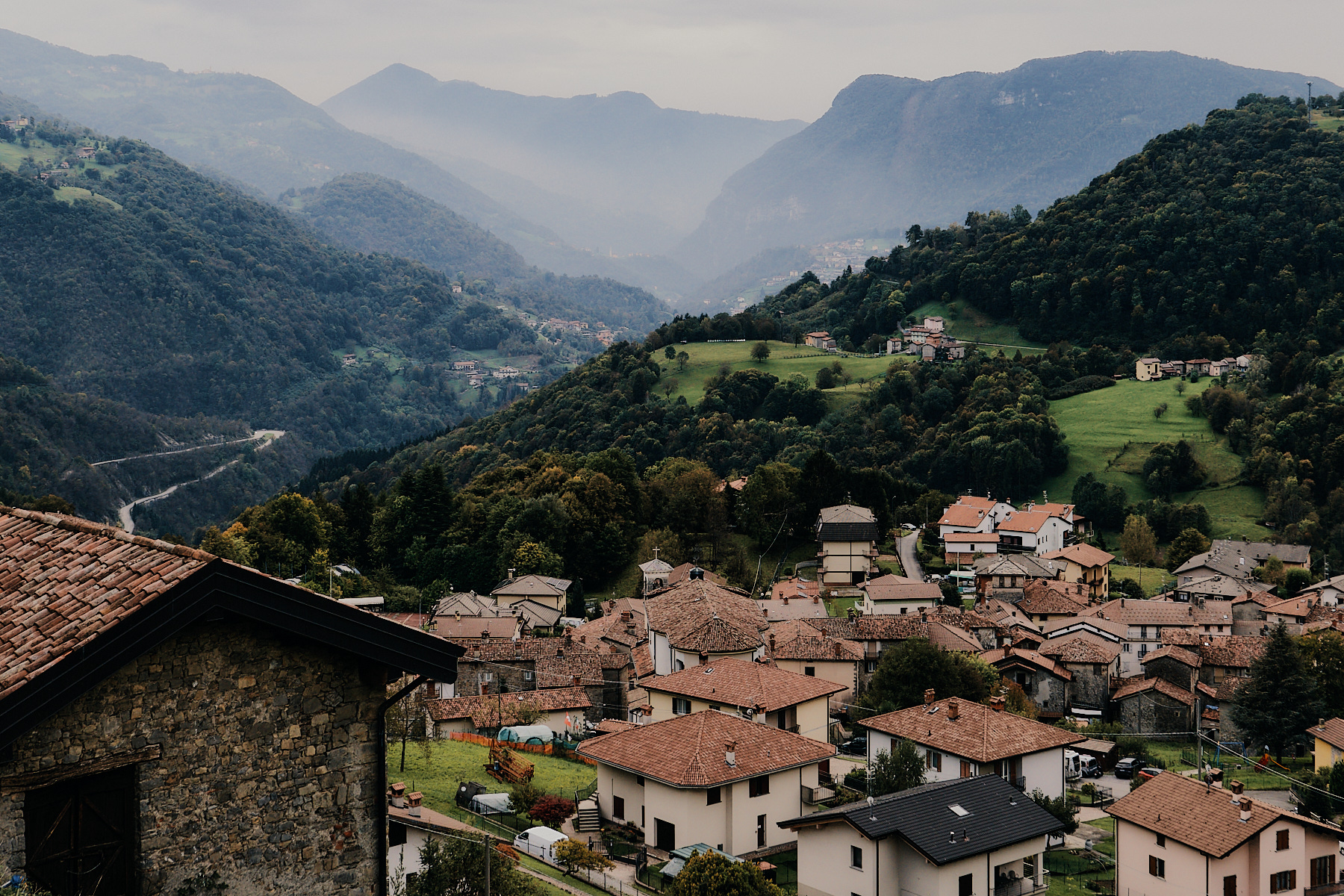

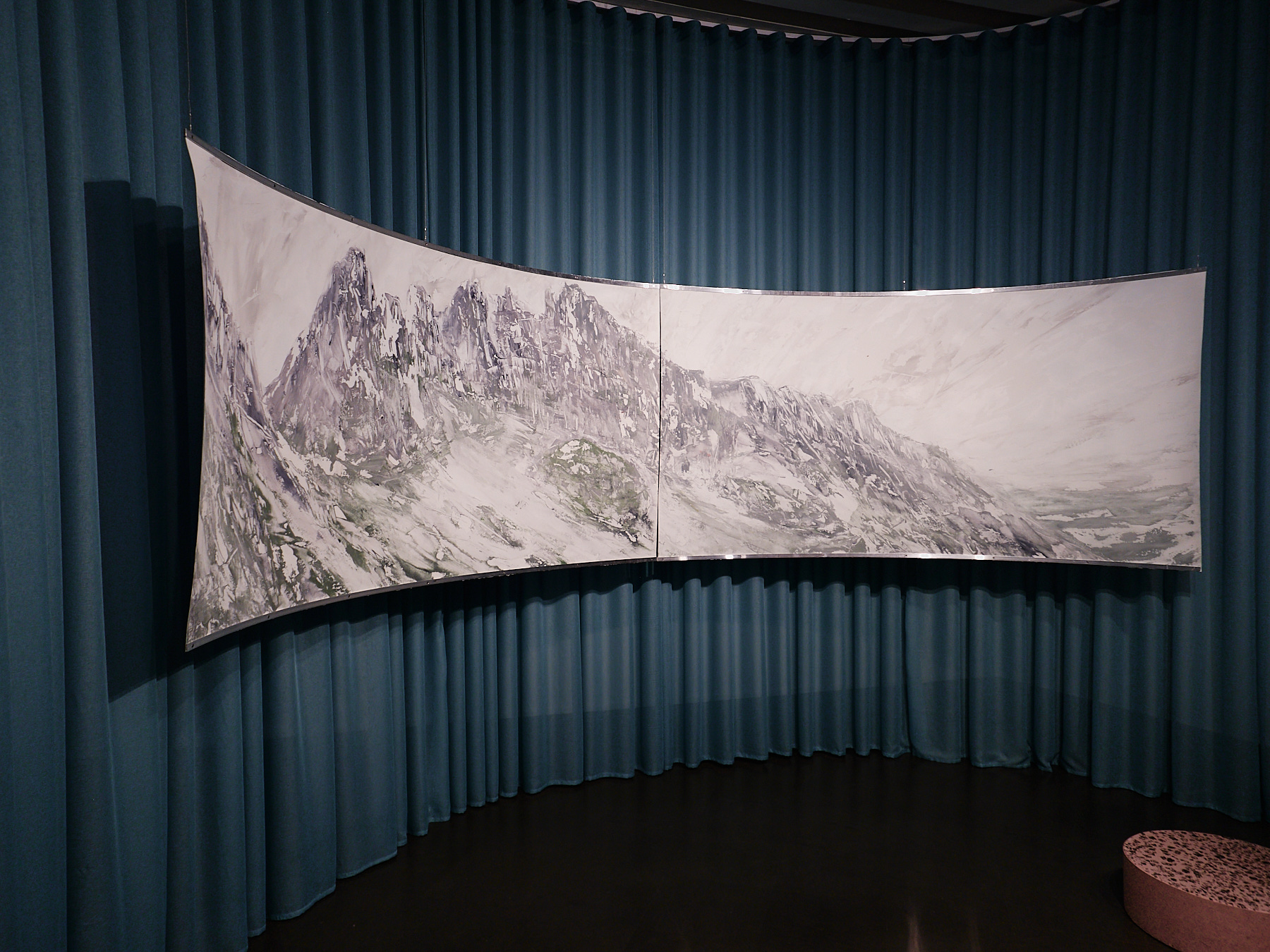
The view from the church rivals what can be seen inside, with the rhythmic arrangement of staggered hills along the Val Brembilla appearing in the mists like huge stage scenography. But not all the works are in such remote vastness, with the GAMeC HQ and the city of Bergamo also hosting several projects. The smallest of these is Pedro Vaz’s painting Becoming Mountain, a landscape work concavely curved to allow the viewer to feel enclosed by the expanse of the depicted Presolana mountain.
While the painting is of the mountain filling the distance, the work emerged from a three-day hike by Vaz through what would become his scene, along the dolomitic wall. Just as von Bismarck did, Vaz is similarly working to contain and visually explain the sublime without deploying art-history’s clichés of scale, instead working with raw truth and naivety.
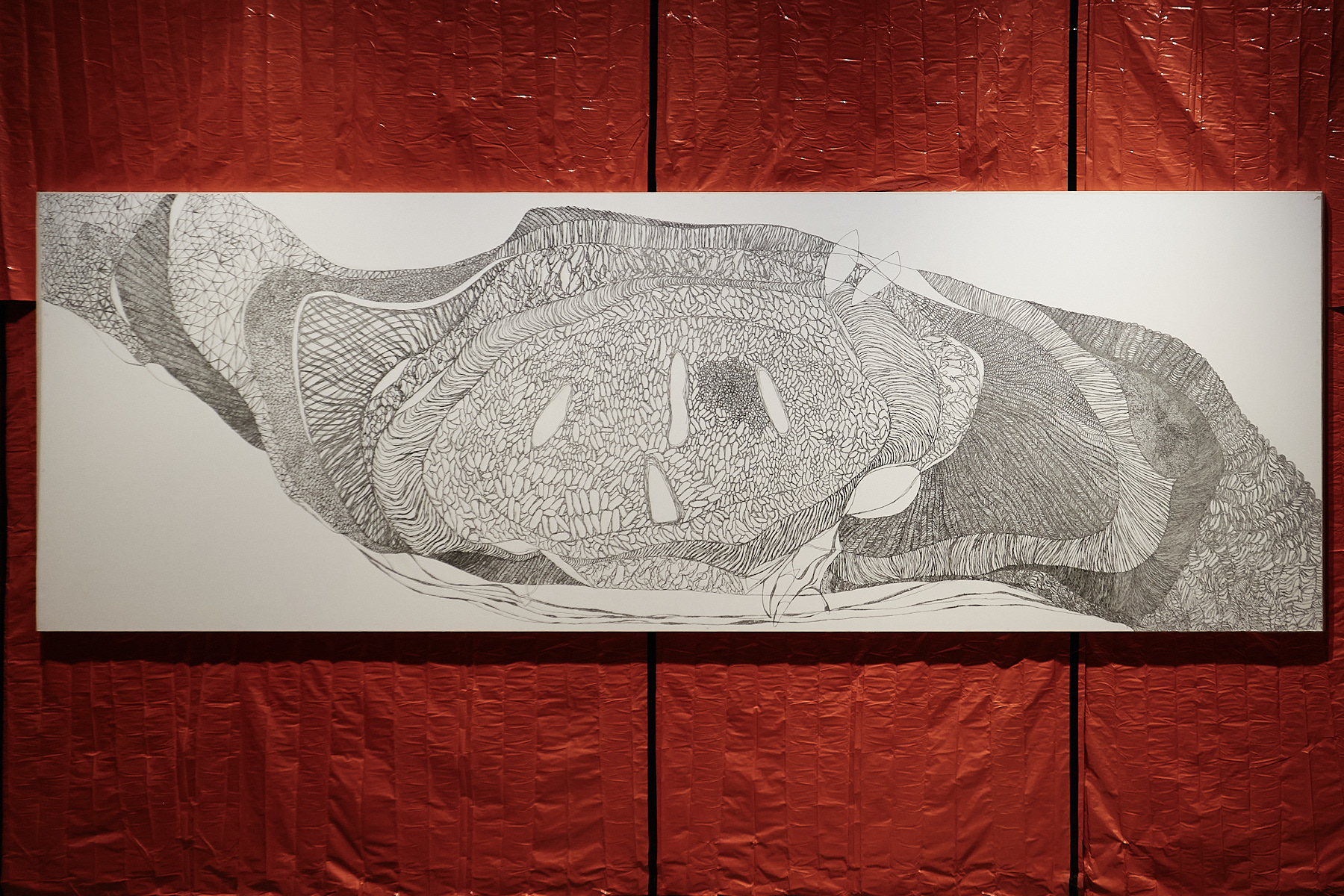
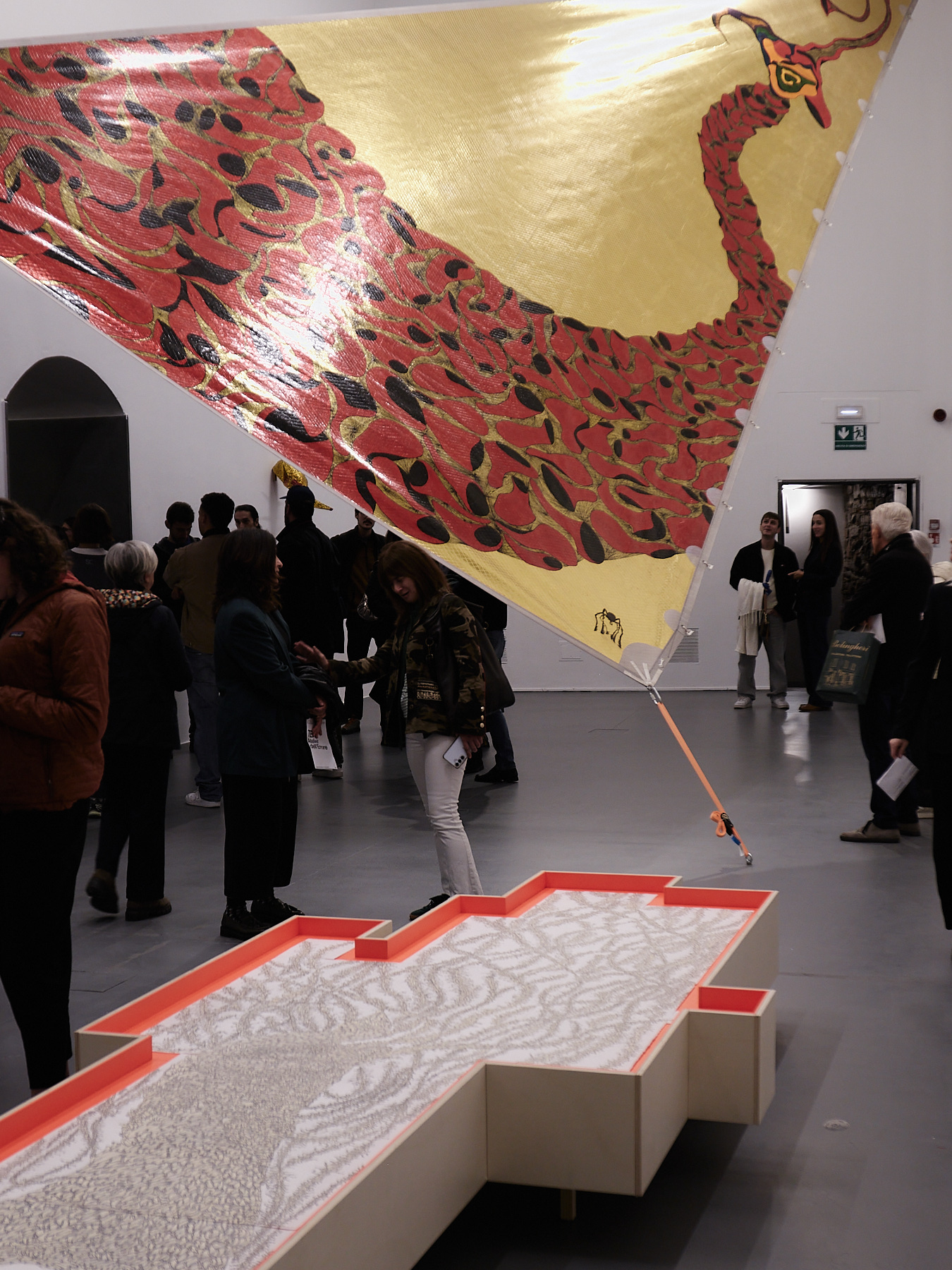
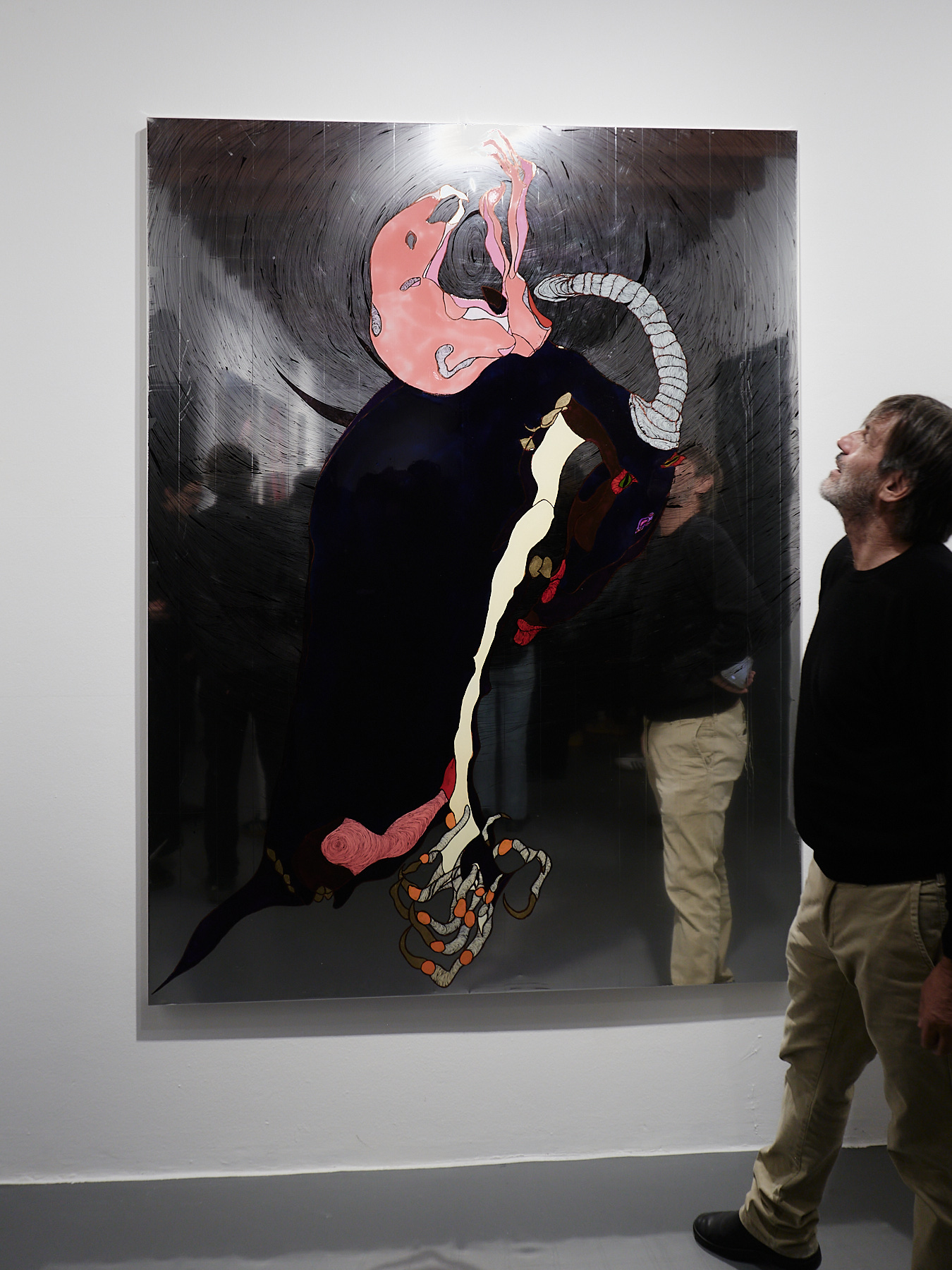
Scattered around the building are works by art Atelier dell’Errore, a collective Giusti also presented at the Biennale Gherdëina and whose works we also reported from at last year’s Panorama Monferrato (00235). Presenting as a retrospective of works created by the group in collaboration with neurodivergent children from the Reggio Emilia region, there are two rules in their drawing process: “animals are the only subject matter, and during the creative phase, nothing is ever erased – preserving the transformative potential of every so-called mistake or error.”
The resultant creatures are unknown imaginaries from either an unknown place or time, or both. They emerge like animalistic Rorschach tests, shorthand standins to represent every non-human at risk from what we do. Amongst these works is Vertova, a kiln sculpture by Gabriel Chaile (an Argentinian artist we interviewed in 2023, see 00112) that was originally presented in an earlier part of the two-year Orobie Biennial. Also on show is a three-panel photograph by Julius von Bismarck of his mine work, captured at precisely the spot where a viewer’s total view is turned into drawing. Replicated here for those that have visited, it offers the imagined rendering and a new way of reading the place, for those who only see this image it offers a beguiling, curious sight.
Celebrated artist Maurizio Cattelan was also invited to take part in the biennial. His work pops up in a few places around the upper and lower part of the city, and is perhaps most publicly visible with One. At the centre of the Rotonda dei Mille, a roundabout close to the political, commercial, and historic parts of Bergamo, is a statue of Garibaldi on a column.
The 19th century Italian revolutionary republican here is joined by another, a child sat on his shoulders, one hand on Garibaldi’s forehead, the other pointing like a gun skywards. The public intervention is typically ambiguous. Is the pointing hand a symbol of a new generation’s revolutionary struggle? Is the boy trying to lighten the baggage of Italy’s political history and presence, reminding of the humanity it was and is for? Is it a call to look forwards at a moment of cultural and social pivot, rather than lingering in the past, its politics, and narratives? Is it just nonsensical fun, even?


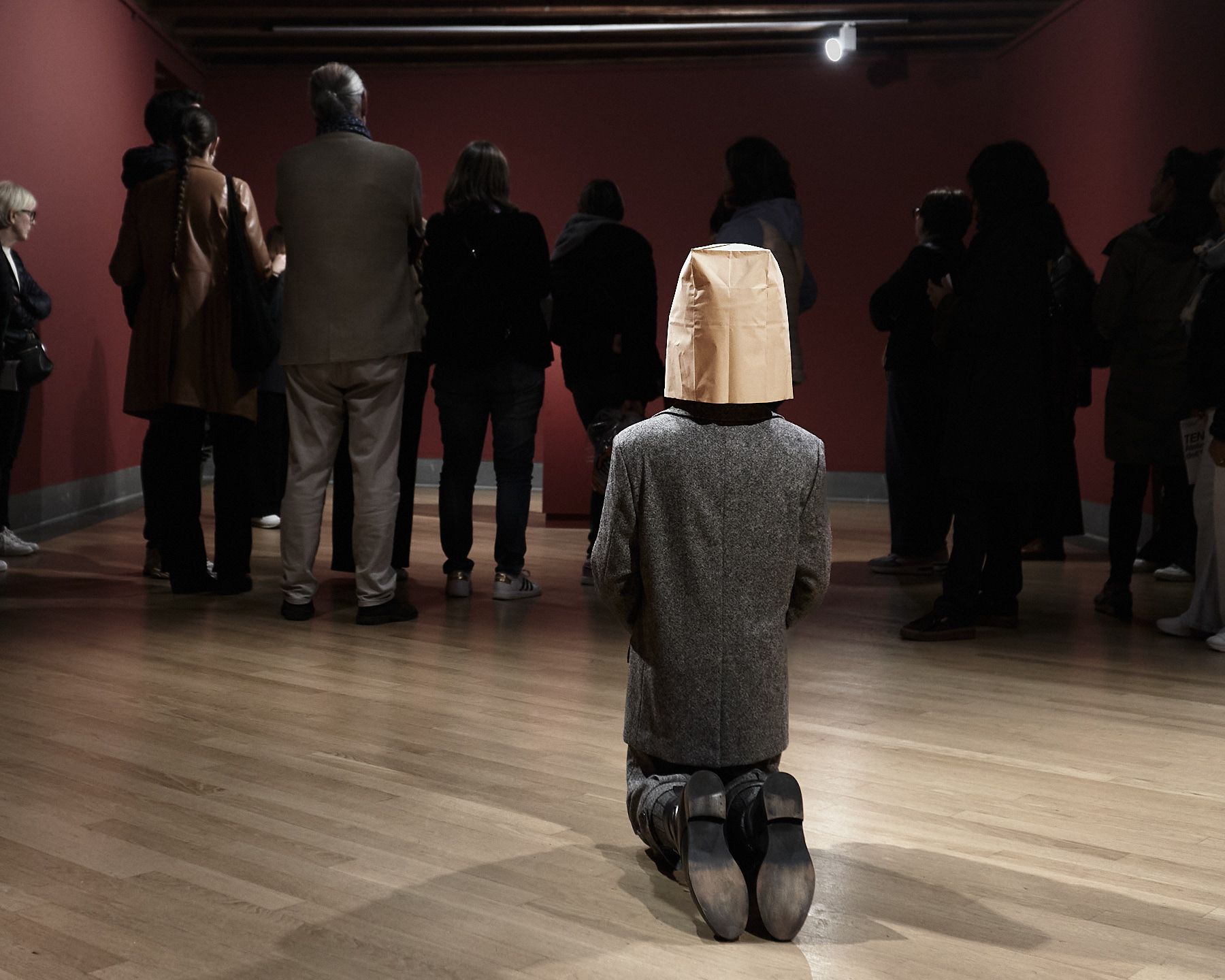
Back in GAMeC is another new Cattelan commission. Empire, is a brick in a bottle, the titular word carved in caps on its side. The brick, a metaphor perhaps for the sole worker within a collective process, or even as an impromptu projectile during revolution, is here contained within the fragile perfection of a glass bottle, like a colonial glasshouse for the constituent. In the same room is No, a reworking of the artist’s famous depiction of a child-size Adolf Hitler kneeling in prayer. When the work was to be shown in China, a political request led the artist to cover the face with a brown paper bag, doing as the institution requested but also layering new ideas of withholding, concealment, and censorship.
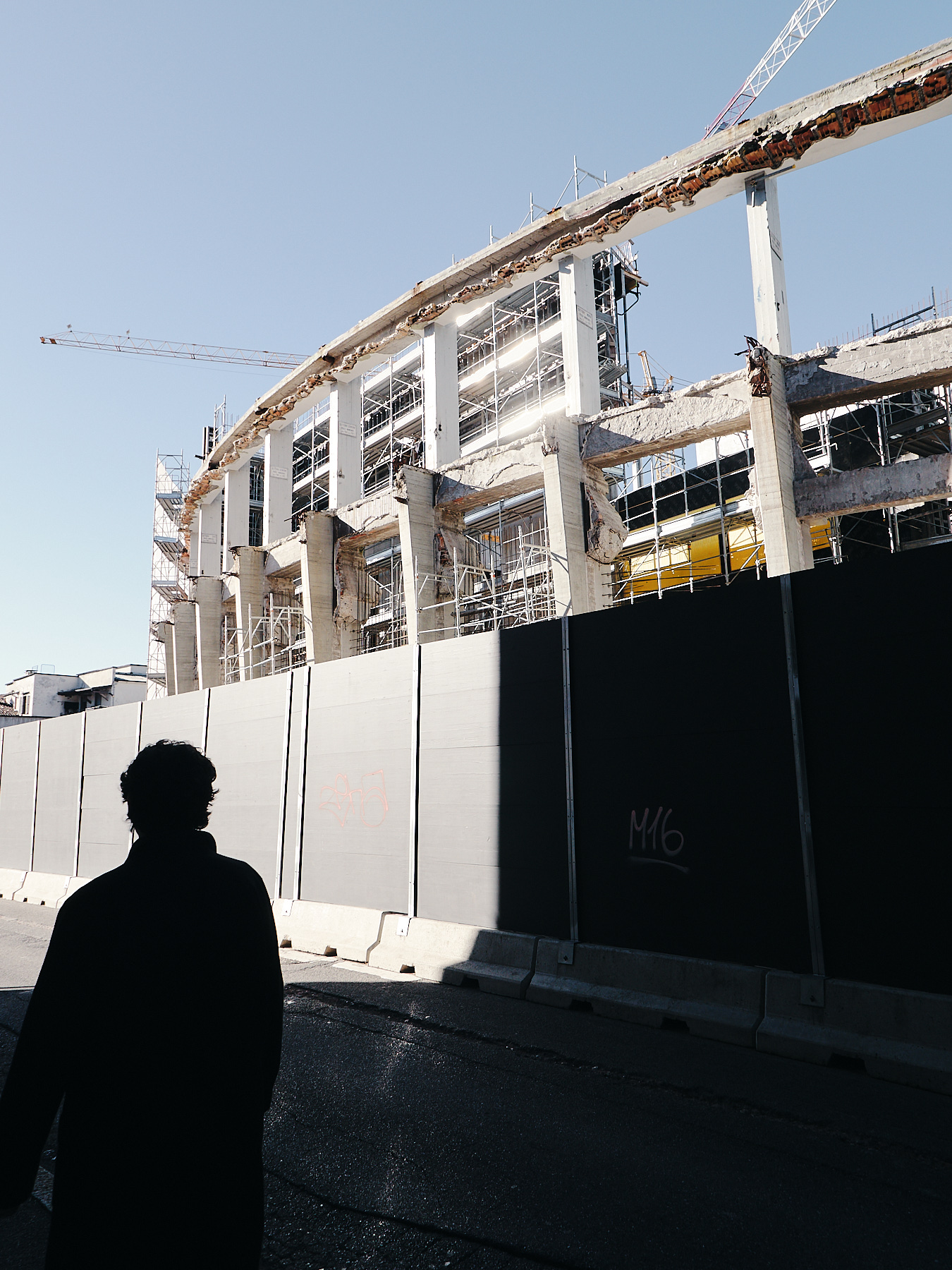
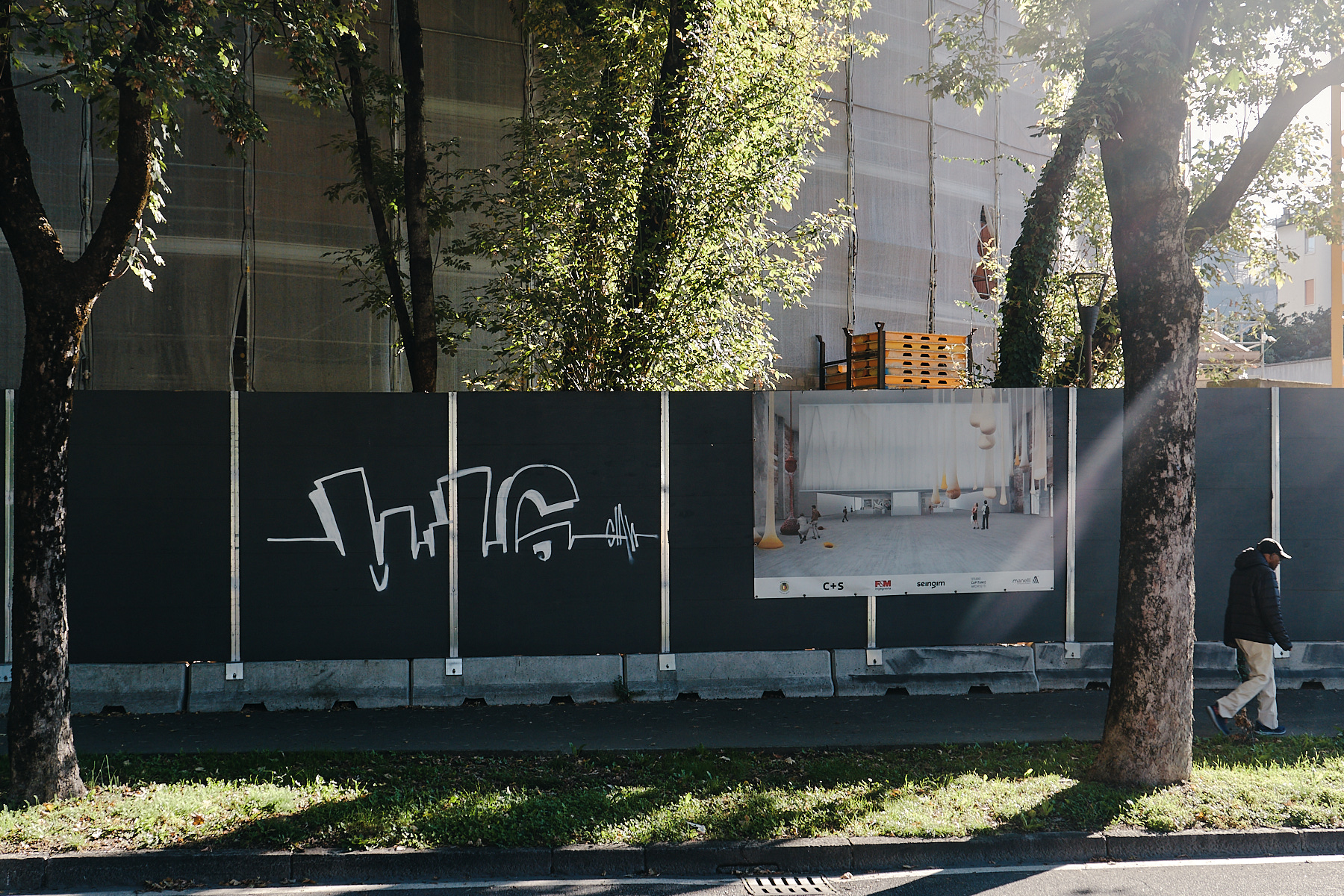
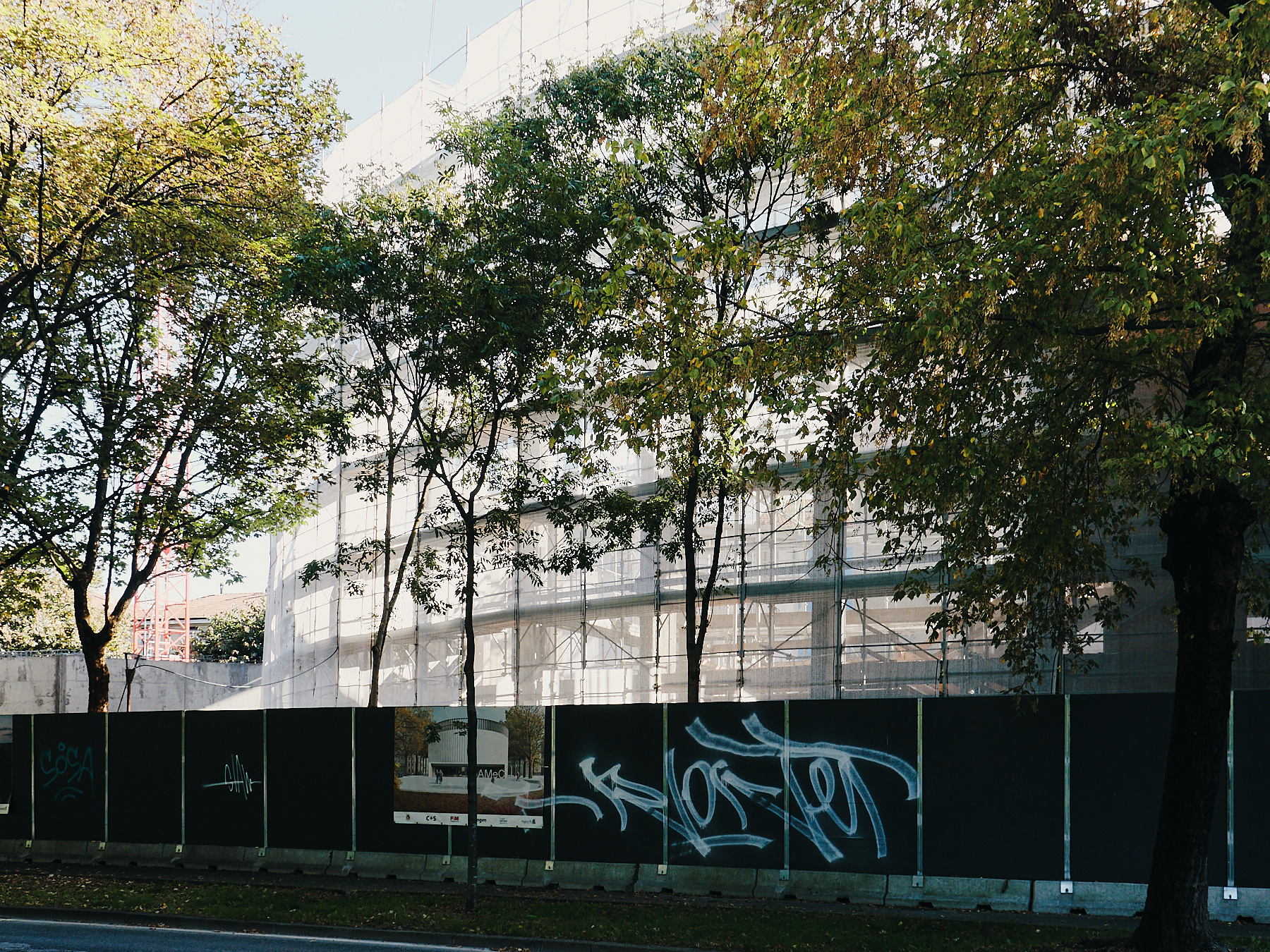
These works dotted around Gamec are one of the last exhibitions to be held in their historic building. In around a year’s time the institution’s new venue will open, transforming the shell of the city’s former Palazzetto dello Sport into a huge cultural rotunda.
Overseen by C+S Architects, the space will become one of Italy’s most important gallery’s north of Milan, with its opening programme including a visual documentation of the two years of the Orobie Biennial, retracing the conversations, projects, and impact that the series of seasons has formed. Before that huge cultural complex opens, however, GAMeC and Giusti had time to collaborate an a far smaller architectural project.
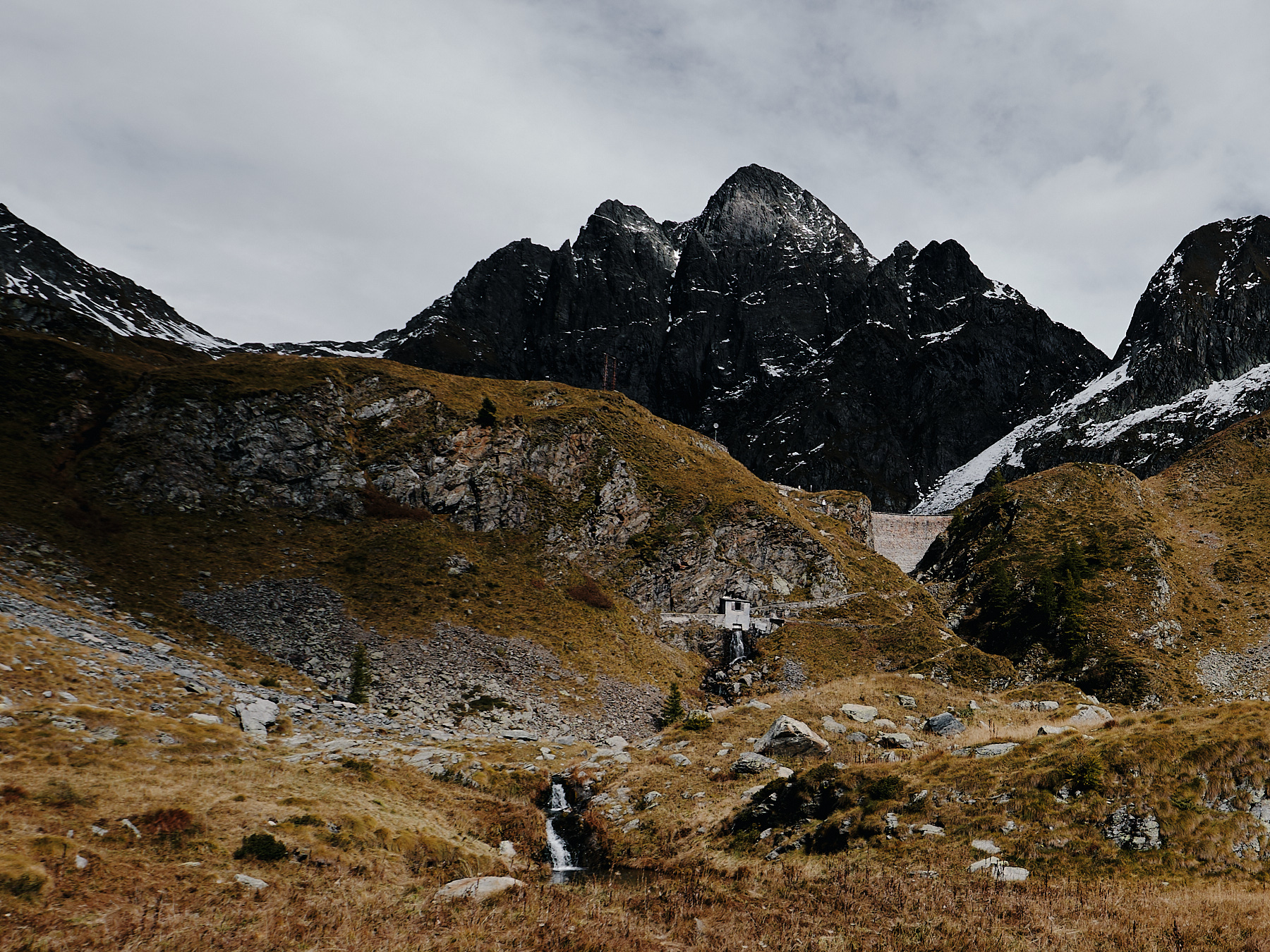
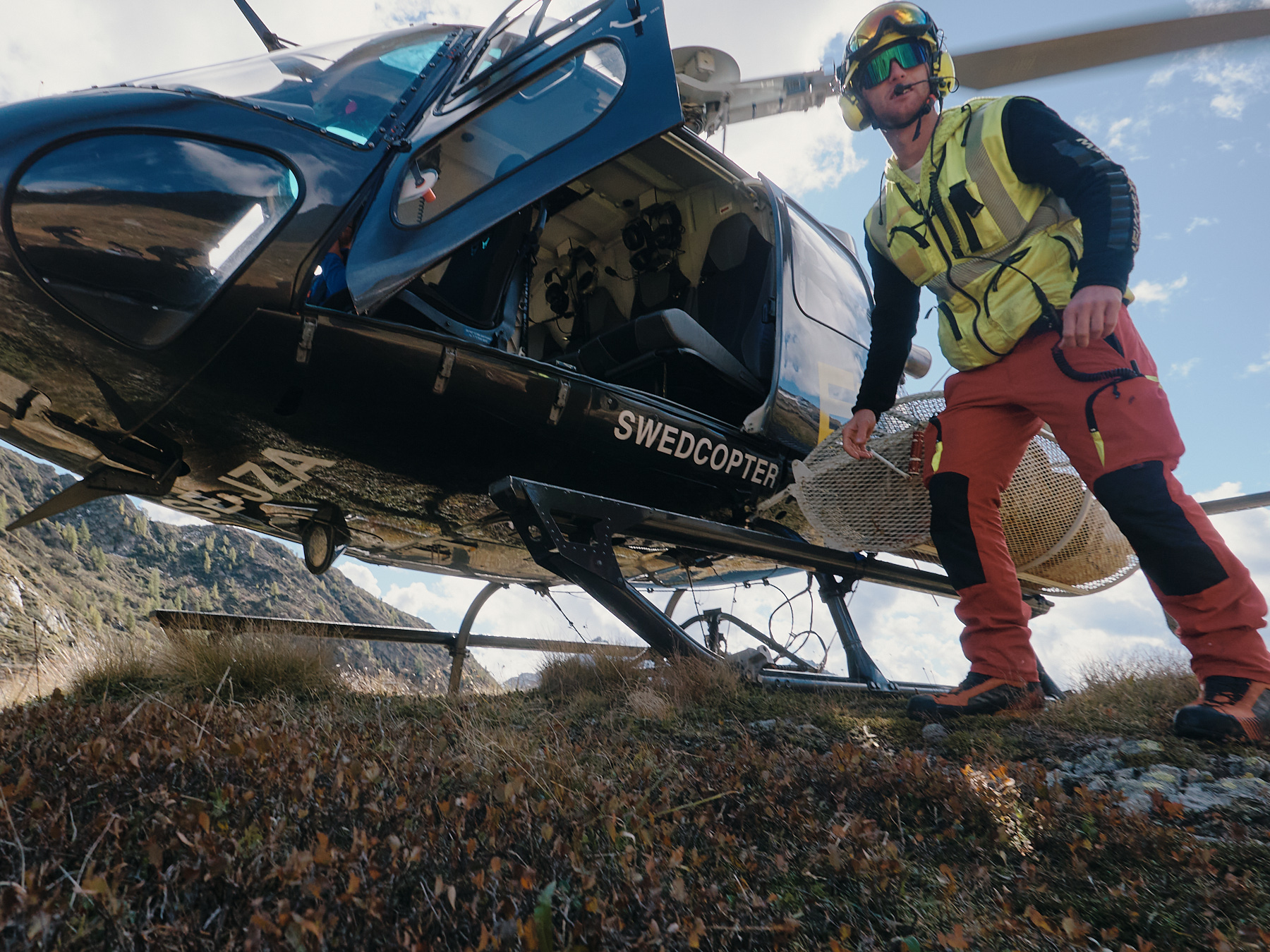
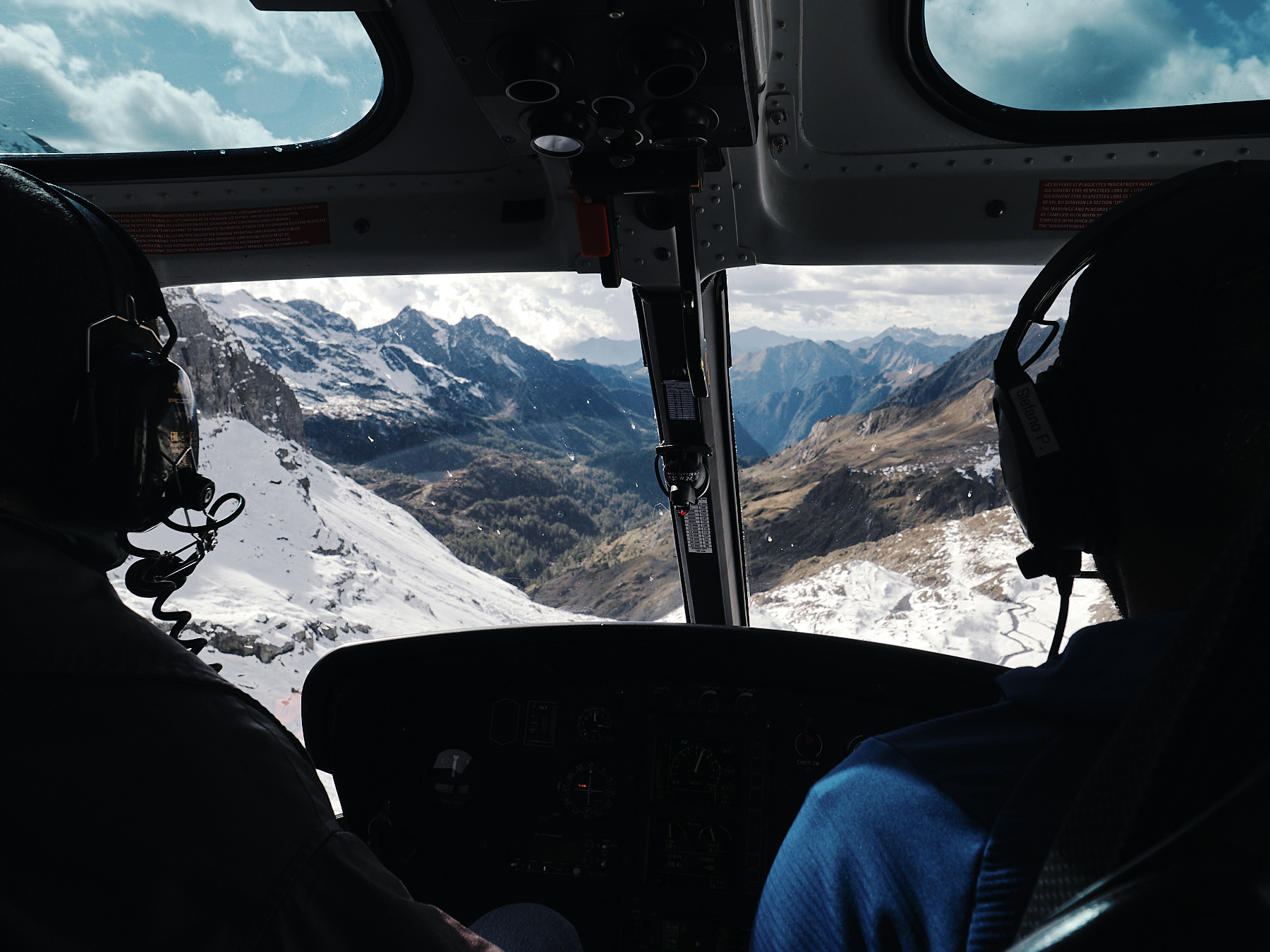
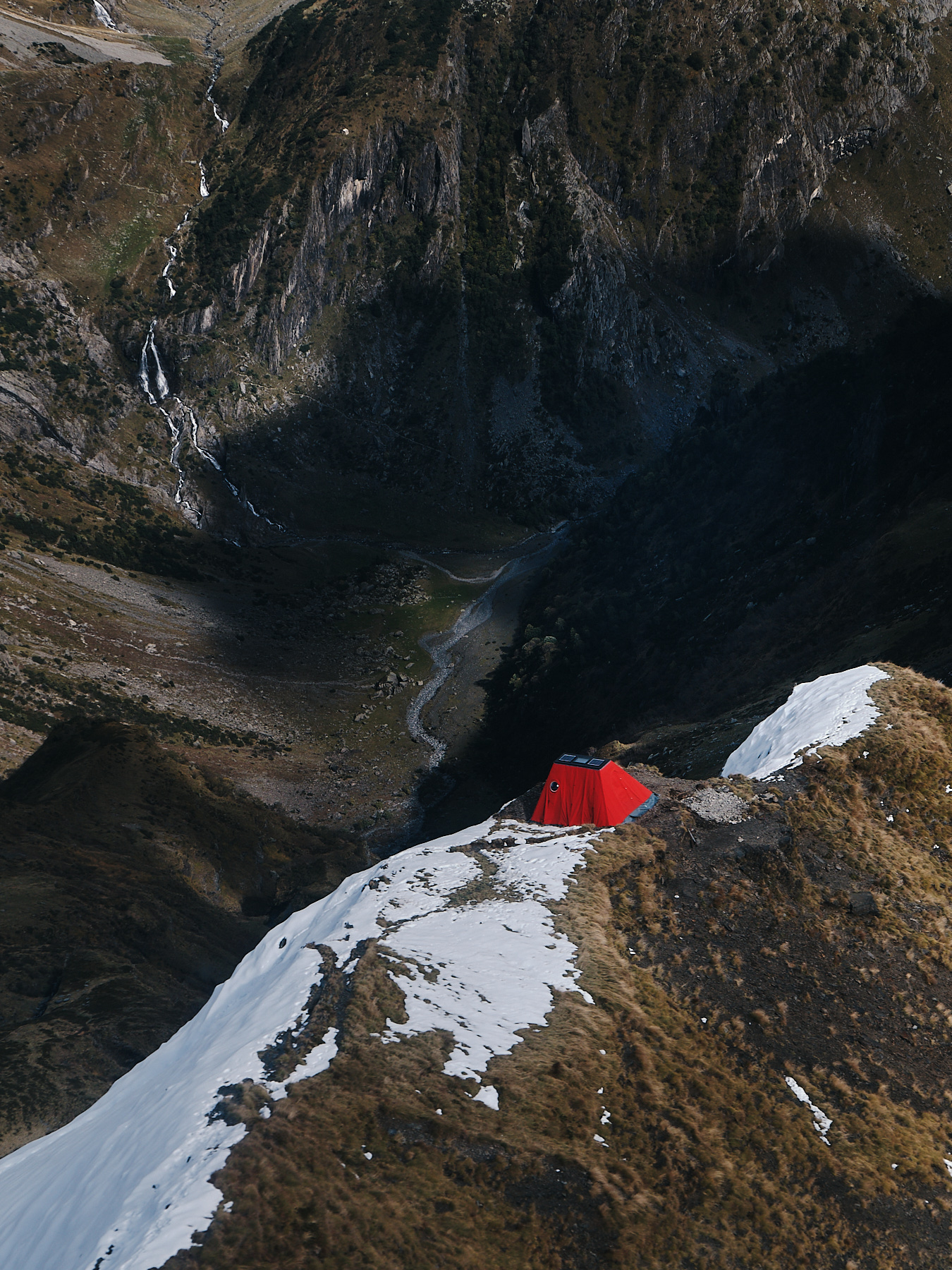
Perched atop a snowy outcrop of the Orobie Prealps is a tiny tent-like structure. The New Frattini Bivouac offers a space of safety, respite, and hostage to climbers stuck in inclement weather and unable to make it to the nearest place of safety. The emergency shelter, designed by a collaborative creative group led by EX, an architectural studio from Torino, in dialogue with the Bergamo section of the Italian Alpine Club, replaces an older asbestos structure that had passed its useable life.
The new one is designed for a long life, formed of a modular timber capsule reinforced with metal ribs, it has a light footprint of 2.5m2, requiring the smallest concrete foundation possible. It’s all wrapped in a fabric skin, designed in partnership with materials producer Ferrino (a neat hiking rucksack made by the firm also sits in GAMeC).
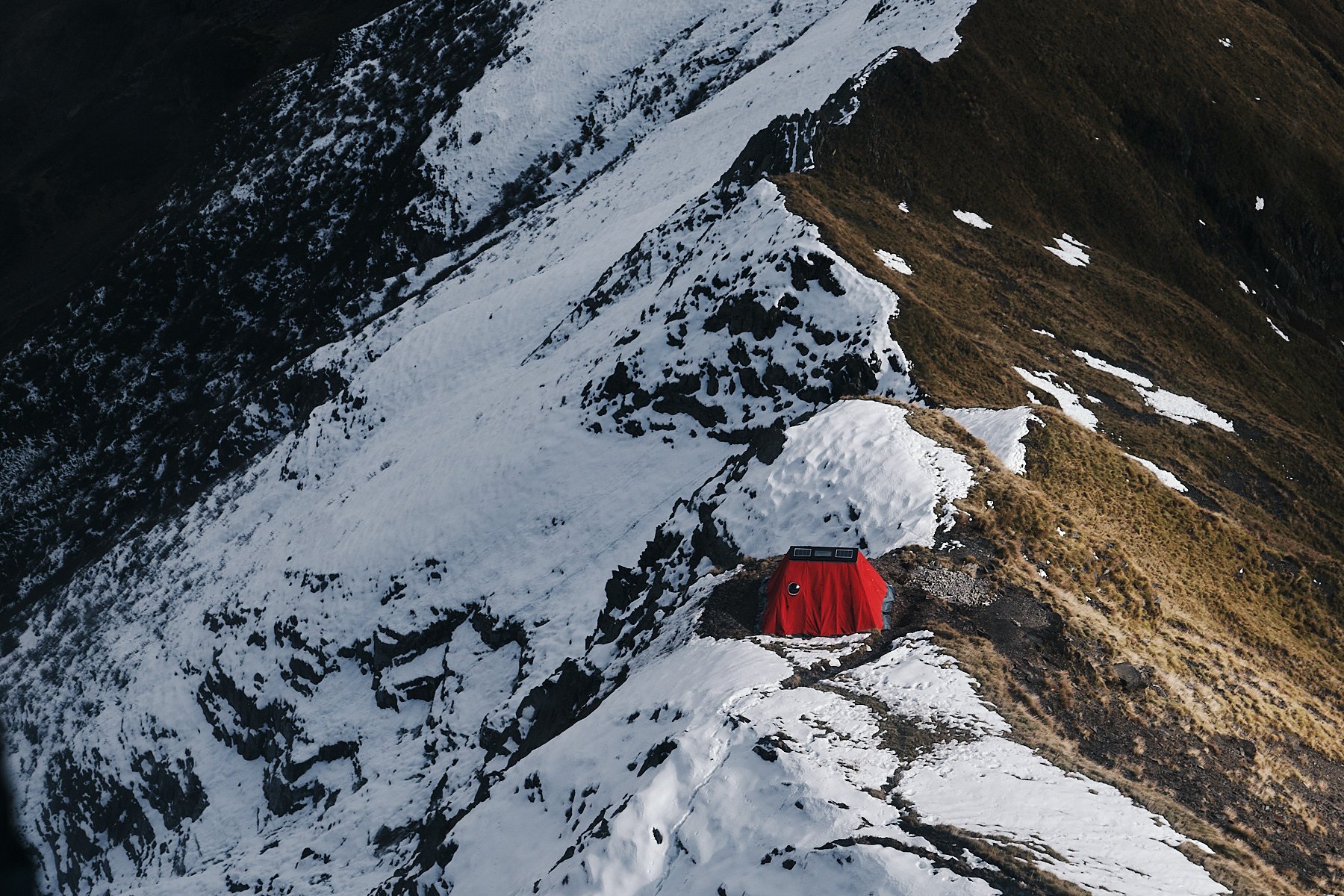
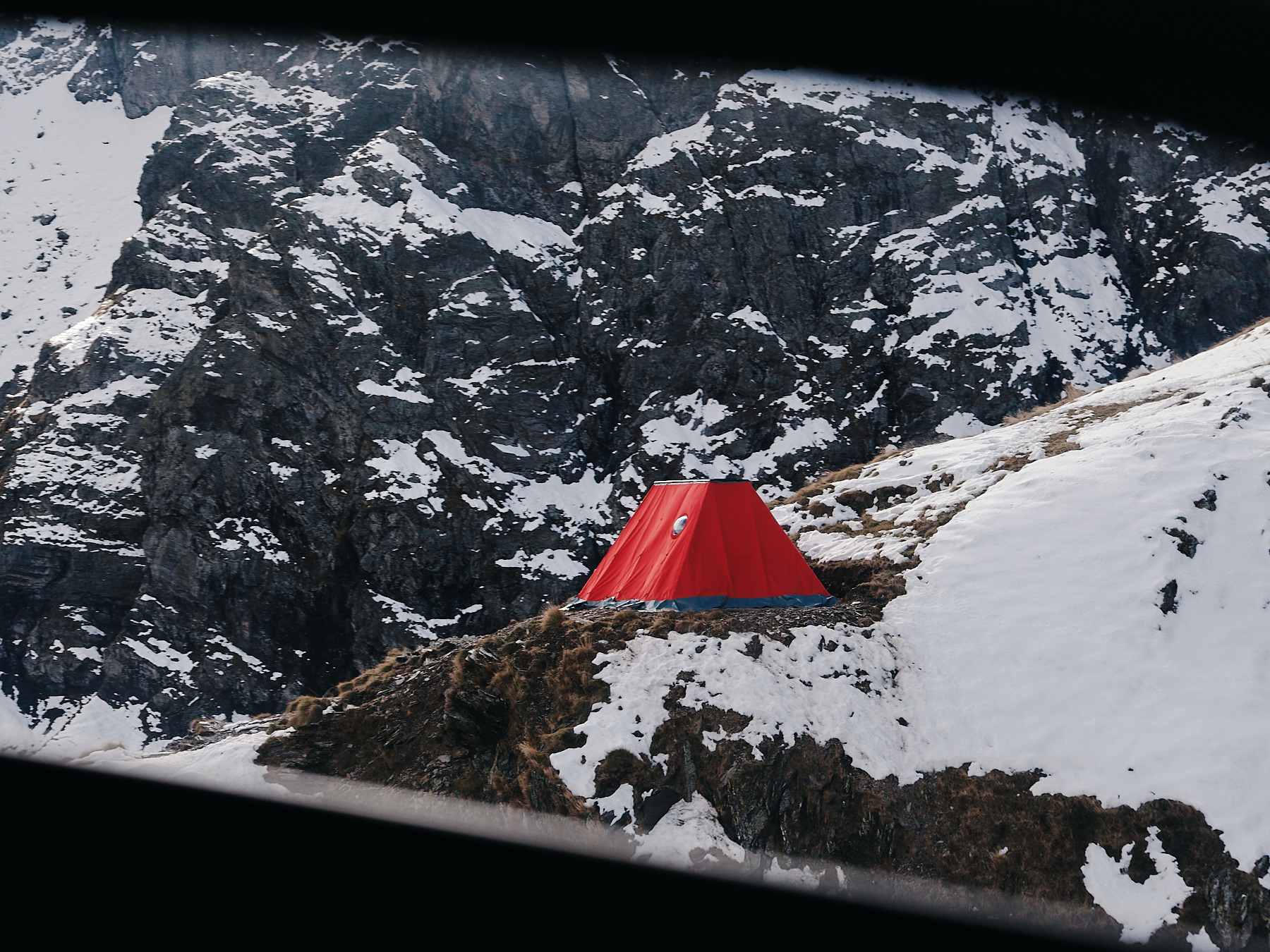
As if to evidence the inclement weather the building is designed to work with, when recessed.space visited unseasonally deep snow prevented a hike over the mountain to see it, instead we encircled it from a helicopter, perfectly emphasising its sense of fragility and lightness within a sublime, vast theatre of geology. Inside, it feels altogether more secure, especially for those who find their way to it when in need of refuge. The interior is formed of fold-out beds and a table, ensuring groups of up to nine people who settle in there for weather or night to pass can do so in security and comfort. EX even considered the sensorial welcome – with a scent of the cork cladding, insulated silence, and with light entering through a skylight and two portholes, it is also a place of emotional security.
Beyond shelter, it is also an expansion of GAMeC’s cultural relationship to the mountain regions for the Biennial and beyond. It will not host exhibitions or performances (though, in conversation Giusti did say that when the Ferrini fabric needs replacing it may offer opportunity for a quite unique artistic opportunity) but it is a both symbolic and scientific connection. Equipped in sensors, the bivouac collects real-time data and imagery of the surrounding landscape, ecosystem, and climate. This data will be fed back to the new GAMeC gallery to not only provide information of value to local mountaineers and climate scientists, but also imagery and information that may further the institution’s relationship with the wider landscape and its meaning through as yet unknown creative acts.
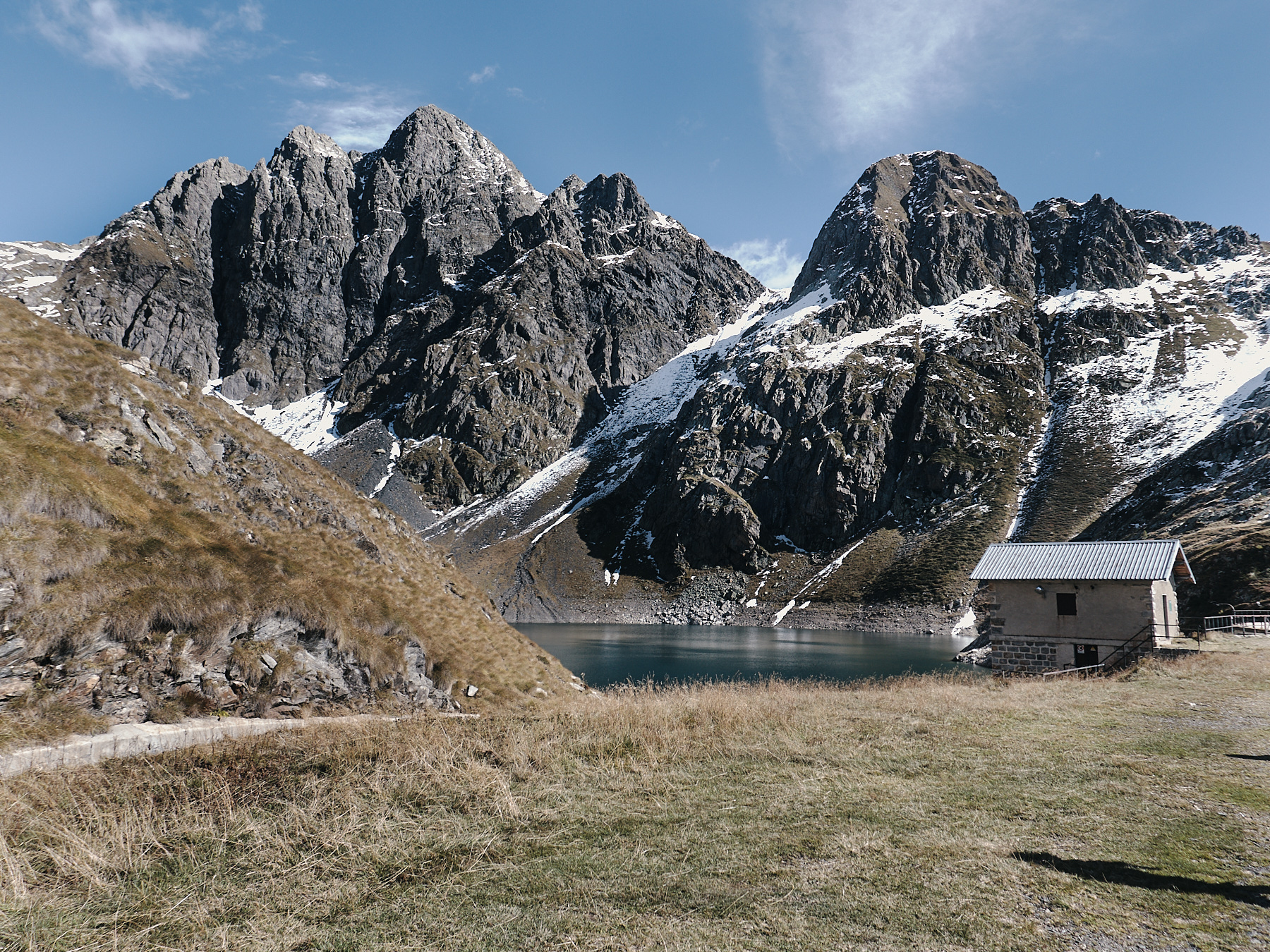
Overall, the two-year-long Orobie Biennial has been an anti-biennial with real value. By turning the conventional once-every-two-years-spectacle format on its head, and instead by thinking durationally with depth and breadth far beyond the confines of gallery and regular gallery visitor, Giusti has tested not only what an institutional event is, but what work art can do. The subtitle, Thinking Like a Mountain, a term borrowed from writer and naturalist Aldo Leopold, speaks to an approach of working local, longer, and at scale, and the works present do just that.
The challenge now will be how to marry that expanded proposition next time the event comes around, when GAMeC has a shiny new bauble gallery to fill. Perhaps that’s when the idea may truly evolve – when it can marry the urban and the rural, the crowded and the empty, the moment and the duration.
Imagery supported by MPB - the right way to buy, trade and sell camera gear.
More information on MPB can be found here.

The Galleria d’Arte Moderna e Contemporanea di Bergamo was opened in 1991. A virtuous model of shared public-private management, the museum is located in the spaces once occupied by the fifteenth-century Monastery of the Dimesse and Servite, the restoration of which was entrusted to Studio Gregotti Associati International between the late eighties and the nineties. Over the years, diversified planning has transformed it into a versatile space that draws many types of visitors with its targeted activities. With its 1,500 square meters of exhibition space, GAMeC welcomes contemporary art in all its forms.
Temporary personal and collective exhibitions by international artists, and an intense calendar of fringe activities designed for different types of users are among the strong points of the Gallery’s cultural policy. It is a dynamic place for debate, analysis, and cultural integration, and one evolving daily. Thanks to both donations and acquisitions, the Gallery has built the collection of modern and contemporary art of the city of Bergamo, which includes works by Italian and international authors of the twentieth century, and works by contemporary artists.
GAMeC is a supporter and founding member of the association AMACI – Associazione dei Musei d’Arte Contemporanea Italiani, and works actively with contemporary art museums and centers both in Italy and abroad.
www.gamec.it
Lorenzo Giusti (Ph.D) is an Italian art historian and curator, director of GAMeC in Bergamo. He has produced exhibitions and publications dedicated to leading figures in 20th-century art history and curated contemporary art projects in Italy and abroad involving numerous artists from the international scene. His special interests lie in the relationship between historical avant-gardes and contemporary languages as well as between ecological thinking and the visual arts. Curator of the two major retrospectives dedicated to Maria Lai (2015) and Regina Cassolo Bracchi (2021), he is the author of various essays on art of the twentieth and twenty-first centuries.
In 2024 he curated the ninth edition of the Biennale Gherdëina. In 2023 he curated the Modern section of Art Dubai. In 2022 he served on the international jury of the Venice Biennale.
From 2020 to 2022 he was president of AMACI – Associazione dei Musei d’Arte Contemporanea Italiani. In 2020 he conceived the digital platform Radio GAMeC, recognized by UNESCO as one of the most important museum initiatives in the world during the pandemic. From 2019 to 2021 he coordinated the curatorial team of the Back to the Future section of Artissima, Turin. In 2018 he was part of the curatorial team of the Curated by festival in Vienna. In 2017 he curated the international conference Museum at the Post-digital turn at OGR, Turin. In 2016 he was part of the curatorial team of the Third Shenzhen Biennial of Animation (CHN). From 2012 to 2017, he was director of the MAN Museum in Nuoro, Italy.
He has curated solo and group exhibitions in public and private institutions, including Kunsthaus Baselland (Chiara Bersani. Deserters, 2023), the Triennale di Milano (Thea Djordjadze-Fausto Melotti, 2017), FRAC Corse (Nomadisme, 2016) and Palazzo Strozzi (Green Platform, 2008).
www.lorenzogiusti.xyz
EX. is a design workshop bridging art, landscape and technology through architecture.
The activity of EX. originates from the work of Andrea Cassi and Michele Versaci, authors of the Corradini Bivouac / Black Body Mountain Shelter and the Berrone Bivouac / Pinwheel Shelter. They design buildings, spaces, products, and strategies that shape the built environment. Their multidisciplinary expertise ranges from research and material innovation to urban planning, architecture, interiors, and exhibitions.
www.studioex.space
Will Jennings is a London based writer, visual artist & educator interested in cities, architecture & culture. He has written for Wallpaper*, Canvas, The Architect’s Newspaper, RIBA Journal, Icon, Art Monthly & more. He teaches history & theory at UCL Bartlett & is director of UK cultural charity Hypha Studios.
www.willjennings.info
The activity of EX. originates from the work of Andrea Cassi and Michele Versaci, authors of the Corradini Bivouac / Black Body Mountain Shelter and the Berrone Bivouac / Pinwheel Shelter. They design buildings, spaces, products, and strategies that shape the built environment. Their multidisciplinary expertise ranges from research and material innovation to urban planning, architecture, interiors, and exhibitions.
www.studioex.space
Will Jennings is a London based writer, visual artist & educator interested in cities, architecture & culture. He has written for Wallpaper*, Canvas, The Architect’s Newspaper, RIBA Journal, Icon, Art Monthly & more. He teaches history & theory at UCL Bartlett & is director of UK cultural charity Hypha Studios.
www.willjennings.info
visit
The Orobie Biennial continues until 18 January 2026. Further details available from the GAMeC & biennial websites:
www.gamec.it/en/thinking-like-a-mountain-the-orobie-biennial
www.pensarecomeunamontagna.gamec.it/en/il-progetto
images
All photographs © Will Jennings.
Imagery supported by MPB - the right way to buy, trade and sell camera gear. More information on MPB can be found here.
publication date
15 December 2025
tags
xxx
www.gamec.it/en/thinking-like-a-mountain-the-orobie-biennial
www.pensarecomeunamontagna.gamec.it/en/il-progetto
