

The essential Palm Springs: the city & desert modernism
In the first of a three-part special on Palm Springs, we
explore the Californian city so deeply connected with mid-century modernism. In
this first part, we look at the homes and hotels of Desert Modernism and bring
you the best shops, food, and drink to start your visit to the Coachella
Valley.
Drive westwards from Los Angeles for an hour, away from the
polluted grid, property developer boosterism, and LA28 building sites, and you
will reach a place of total otherness – Palm Springs. For decades, it has been
a go-to space of escape for all kinds of communities: fresh air and privacy for
the post-war icons of music and cinema; whole-weekend pool parties and queer celebration;
basecamp for Gen-Z’ers during the Coachella music festival; even an annual destination
for huge numbers of Canadian retirees seeking escape from the chill each year
(until Trump broke the accord between the two nations).
But there is much more to Palm Springs. While most of the European recessed.space readership are still in a chilly, wet winter, we thought it would be a great time to also escape with a deep dive into Palm Springs and its region. You may even be planning your 2026 holidays, and we think the desert city offers a unique place to explore all kinds of culture and architecture, and a perfect base from which to discover sublime landscapes. We visited in 2025 during the Desert X sculpture festival, which every two years decorates the valley with a series of extraordinary site-specific artworks – some large, some small, some playful, some melancholy, but all offering a lens through which to read the unique locality that is Palm Springs and the surrounding environment.
After Desert X, we hung around a little longer courtesy of local tourism group Visit Greater Palm Springs. We did a lot. So much in fact that we have spread it over three articles covering the best of the area for the discerning cultural and architectural tourist. Today we present a selection of highlights from the city of Palm Springs itself, then we will follow with some very different areas to explore just outside the city limits, and finally we will delve deeper (and higher) into the landscape of the wider Coachella Valley.
All of this has been beautifully captured for us by photographer Carlo Zambon. So, here is your three-part Palm Springs takeover of recessed.space.
But there is much more to Palm Springs. While most of the European recessed.space readership are still in a chilly, wet winter, we thought it would be a great time to also escape with a deep dive into Palm Springs and its region. You may even be planning your 2026 holidays, and we think the desert city offers a unique place to explore all kinds of culture and architecture, and a perfect base from which to discover sublime landscapes. We visited in 2025 during the Desert X sculpture festival, which every two years decorates the valley with a series of extraordinary site-specific artworks – some large, some small, some playful, some melancholy, but all offering a lens through which to read the unique locality that is Palm Springs and the surrounding environment.
After Desert X, we hung around a little longer courtesy of local tourism group Visit Greater Palm Springs. We did a lot. So much in fact that we have spread it over three articles covering the best of the area for the discerning cultural and architectural tourist. Today we present a selection of highlights from the city of Palm Springs itself, then we will follow with some very different areas to explore just outside the city limits, and finally we will delve deeper (and higher) into the landscape of the wider Coachella Valley.
All of this has been beautifully captured for us by photographer Carlo Zambon. So, here is your three-part Palm Springs takeover of recessed.space.
ARRIVING INTO PALM SPRINGS
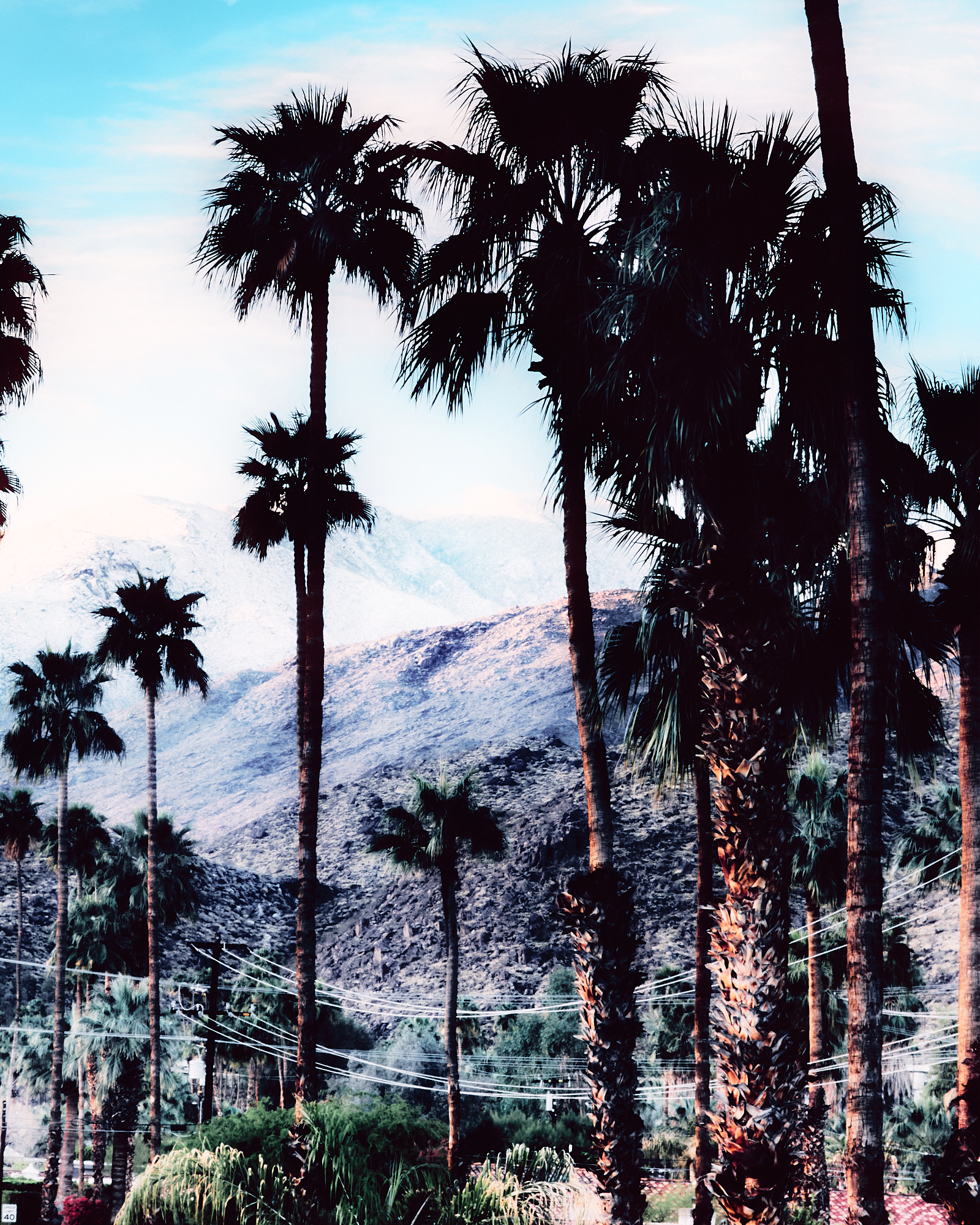
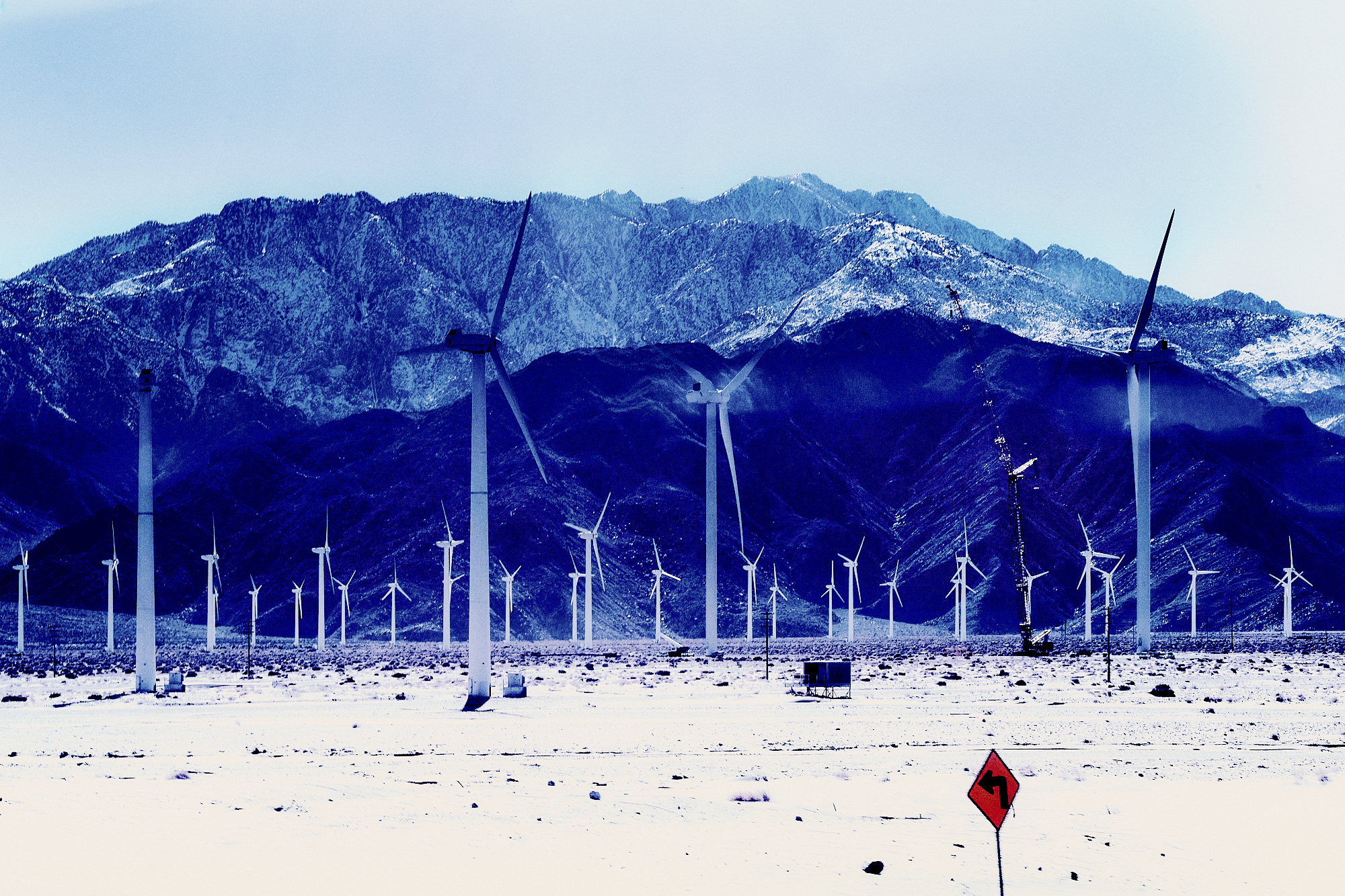
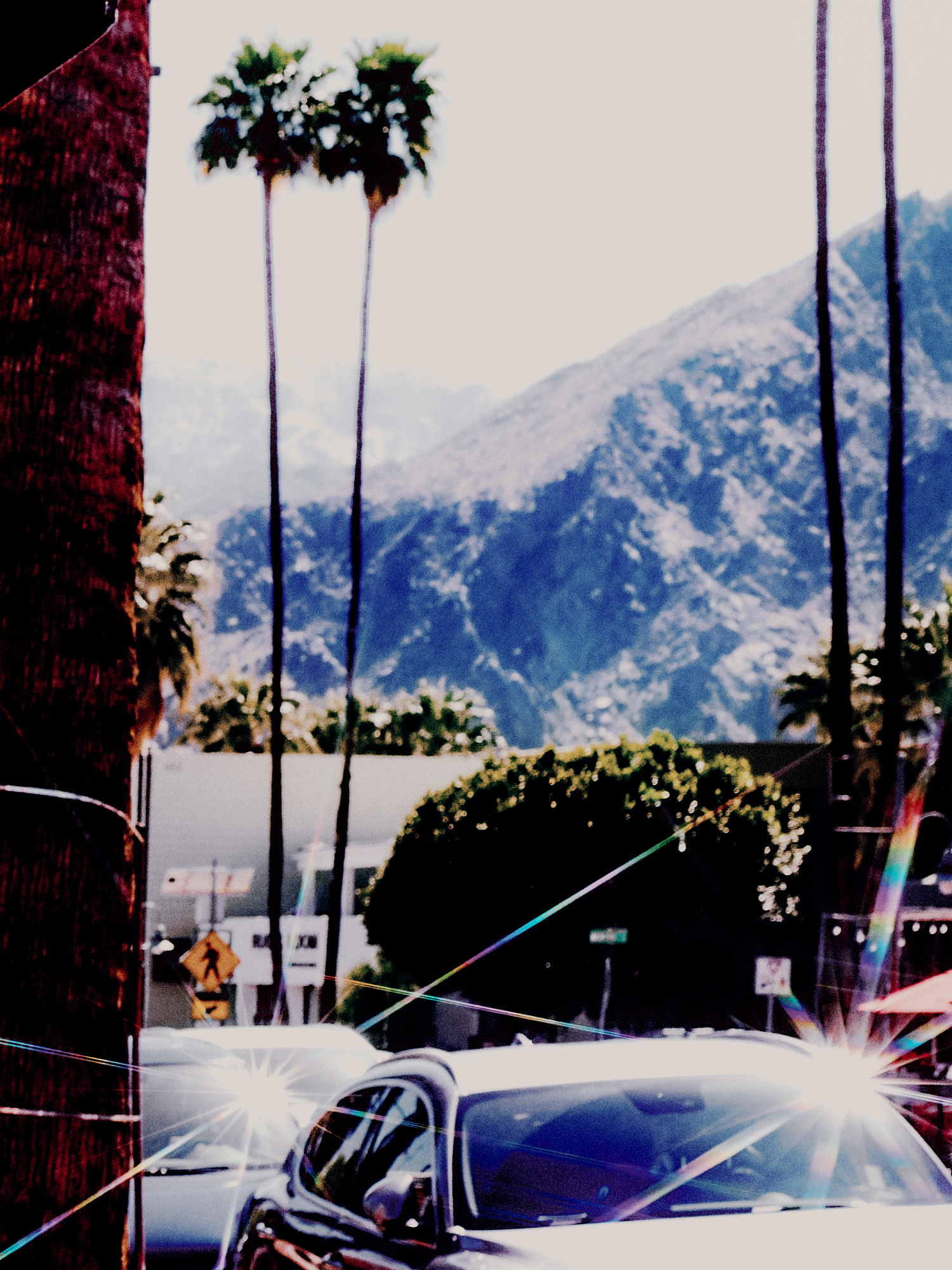
Palm Springs is a city unlike any other. Like an oasis, it sits at the heart of the Coachella Valley, revealing itself unto incoming drivers from Los Angeles with a series of environmental moments. Firstly, all the freeways leaving the eastern sprawl of LA gradually combine into a single route, snaking through gently shifting topologies as suburbia turns into a series of big-box conurbations. There are signs of passage along the route: a giant white letter M tells drivers they are in Moreno Valley; the 27-storey Morongo Casino is architecture as sign; then the hills on each side part and a desert floor opens and wind turbines start to pepper the landscape.
The weather is changeable here, depending on the time of year the driver may encounter sandstorms or snow, the lay of the land changes, mountain peaks rise in the distance, and then, before you realise, flashes of modernist architecture appear through the windscreen. A bold hyperbolic-paraboloid triangulated building appears on the right – now the Palm Springs Visitor Center and formerly a gas station. Designed by Albert Frey with Robson Chambers in the 1960s, it marks your arrival into Palm Springs and is only the first of many modernist landmarks you will discover.
Palm Springs is a city unlike any other. Like an oasis, it sits at the heart of the Coachella Valley, revealing itself unto incoming drivers from Los Angeles with a series of environmental moments. Firstly, all the freeways leaving the eastern sprawl of LA gradually combine into a single route, snaking through gently shifting topologies as suburbia turns into a series of big-box conurbations. There are signs of passage along the route: a giant white letter M tells drivers they are in Moreno Valley; the 27-storey Morongo Casino is architecture as sign; then the hills on each side part and a desert floor opens and wind turbines start to pepper the landscape.
The weather is changeable here, depending on the time of year the driver may encounter sandstorms or snow, the lay of the land changes, mountain peaks rise in the distance, and then, before you realise, flashes of modernist architecture appear through the windscreen. A bold hyperbolic-paraboloid triangulated building appears on the right – now the Palm Springs Visitor Center and formerly a gas station. Designed by Albert Frey with Robson Chambers in the 1960s, it marks your arrival into Palm Springs and is only the first of many modernist landmarks you will discover.
MOD SQUAD MODERNIST TOUR
You don’t need a tour guide to see the modernist architecture in Palm Springs, it shows itself at every turn and any random drive around the streets reveals all kinds of fascinating architecture, but having an expert guide can really help. There are plenty of guides available and they offer different angles through which to consider the built history of the city, whether it’s top-level architectural detailing you’re into, or you just want to know where random rockstars and actors fled from the fans.
We were driven around by Kurt Cyr, who has been opening doors across the city for curious visitors for years as Palm Springs Mod Squad. While a bespoke tour can be organised, he focuses on three themed routes around the city – the Essential, Interior, and one looking at places connected to the Rat Pack – all in small groups, allowing space for questions and learning from other visitors.
You don’t need a tour guide to see the modernist architecture in Palm Springs, it shows itself at every turn and any random drive around the streets reveals all kinds of fascinating architecture, but having an expert guide can really help. There are plenty of guides available and they offer different angles through which to consider the built history of the city, whether it’s top-level architectural detailing you’re into, or you just want to know where random rockstars and actors fled from the fans.
We were driven around by Kurt Cyr, who has been opening doors across the city for curious visitors for years as Palm Springs Mod Squad. While a bespoke tour can be organised, he focuses on three themed routes around the city – the Essential, Interior, and one looking at places connected to the Rat Pack – all in small groups, allowing space for questions and learning from other visitors.
Kurt seems to know everybody in Palm Springs, a
veritable font of design history and local knowledge! The tour passes many
important homes, all presented with social and architectural stories, and also
gets you inside a few.
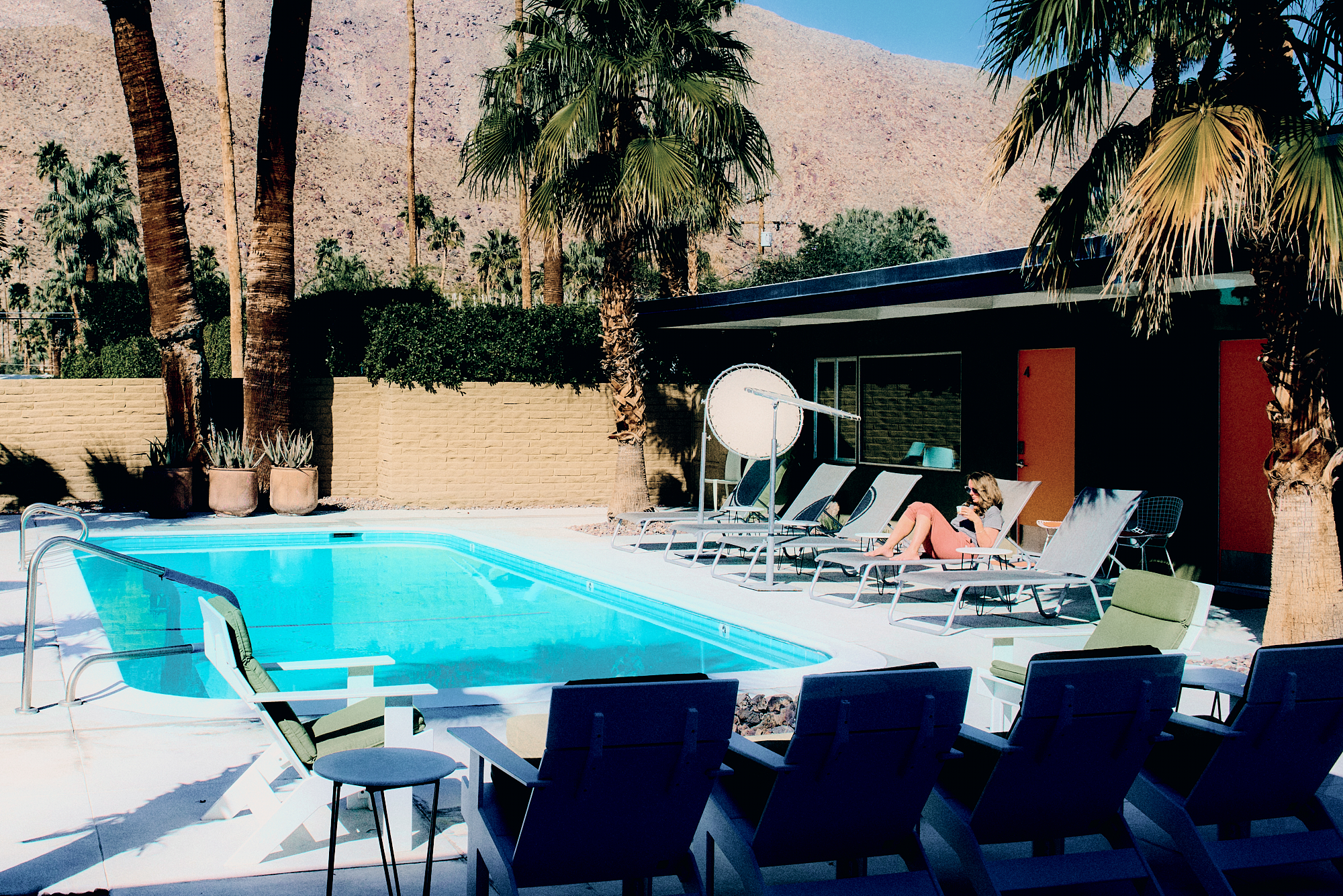
The tour we took looped around the Canyon View Estates cul-de-sac, designed by Dan Palmer and William Krise, as featured in Don’t Worry Darling (a cardboard cutout of Harry Stiles could be seen at a window). We also visited the fascinating Desert Star, designed by Howard Lapham in 1956 as a motor lodge, now fully restored into a suite of six apartments with a larger owner’s home filled with art, books, and mid-century furniture.
The tour we took looped around the Canyon View Estates cul-de-sac, designed by Dan Palmer and William Krise, as featured in Don’t Worry Darling (a cardboard cutout of Harry Stiles could be seen at a window). We also visited the fascinating Desert Star, designed by Howard Lapham in 1956 as a motor lodge, now fully restored into a suite of six apartments with a larger owner’s home filled with art, books, and mid-century furniture.
THE RECOGNITION OF DESERT MODERNISM
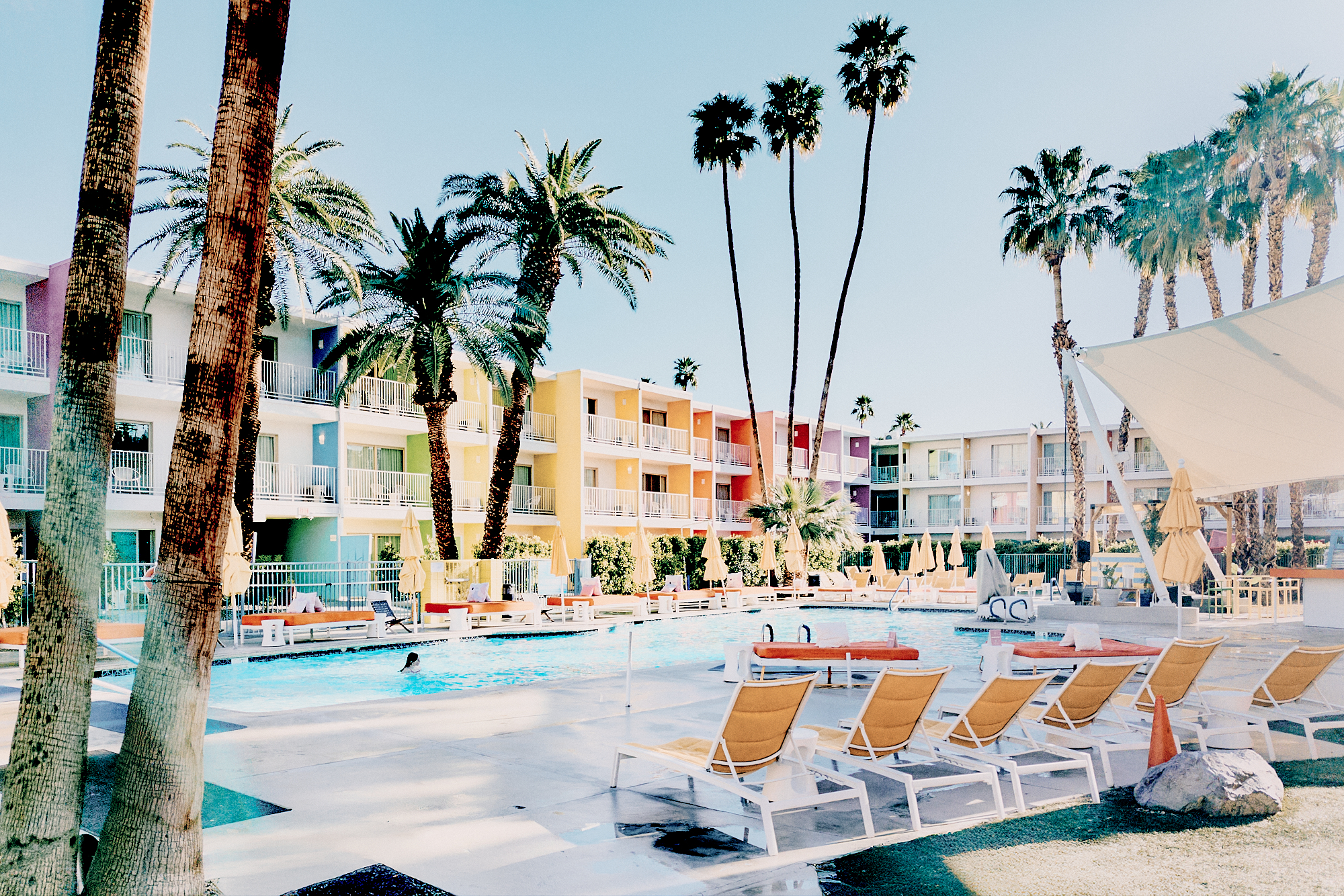
Recently, an effort has been made to position the specifics of Palm Springs modernism as a typology in its own right rather than flattening it within a wider, global Modernism. recessed.space met with architectural historian Sidney Williams at the grand, colourful Saguaro Palm Springs hotel to discuss her work researching and lobbying for the distinct architectural qualities of the regional modernism.
Williams has been instrumental in local architectural history since 1973, and in 2005 rescued the Santa Fe Loans glass pavilion building, threatened with demolition, and helped to reimagine it as an architecture and design space for the Palm Springs Art Museum.
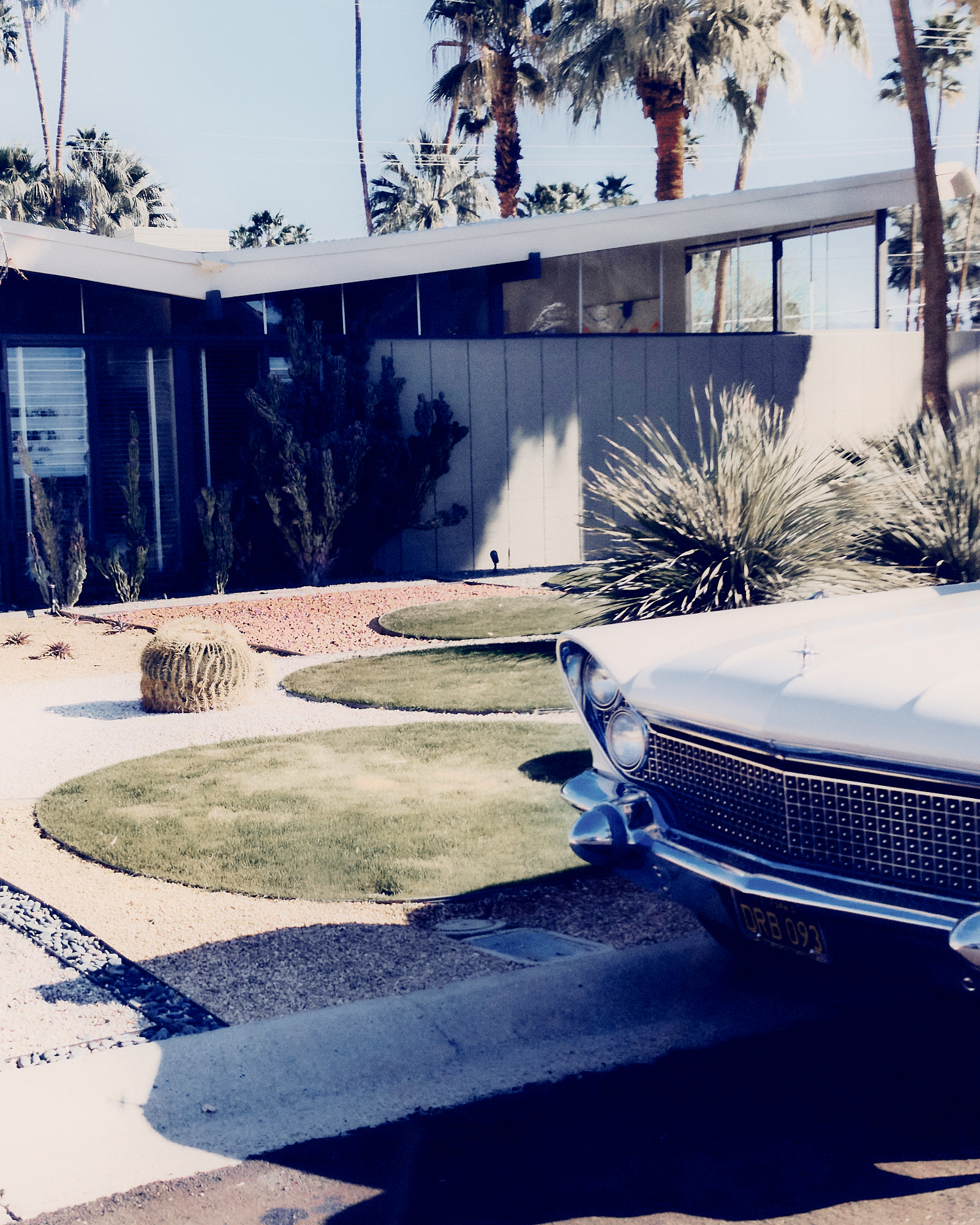
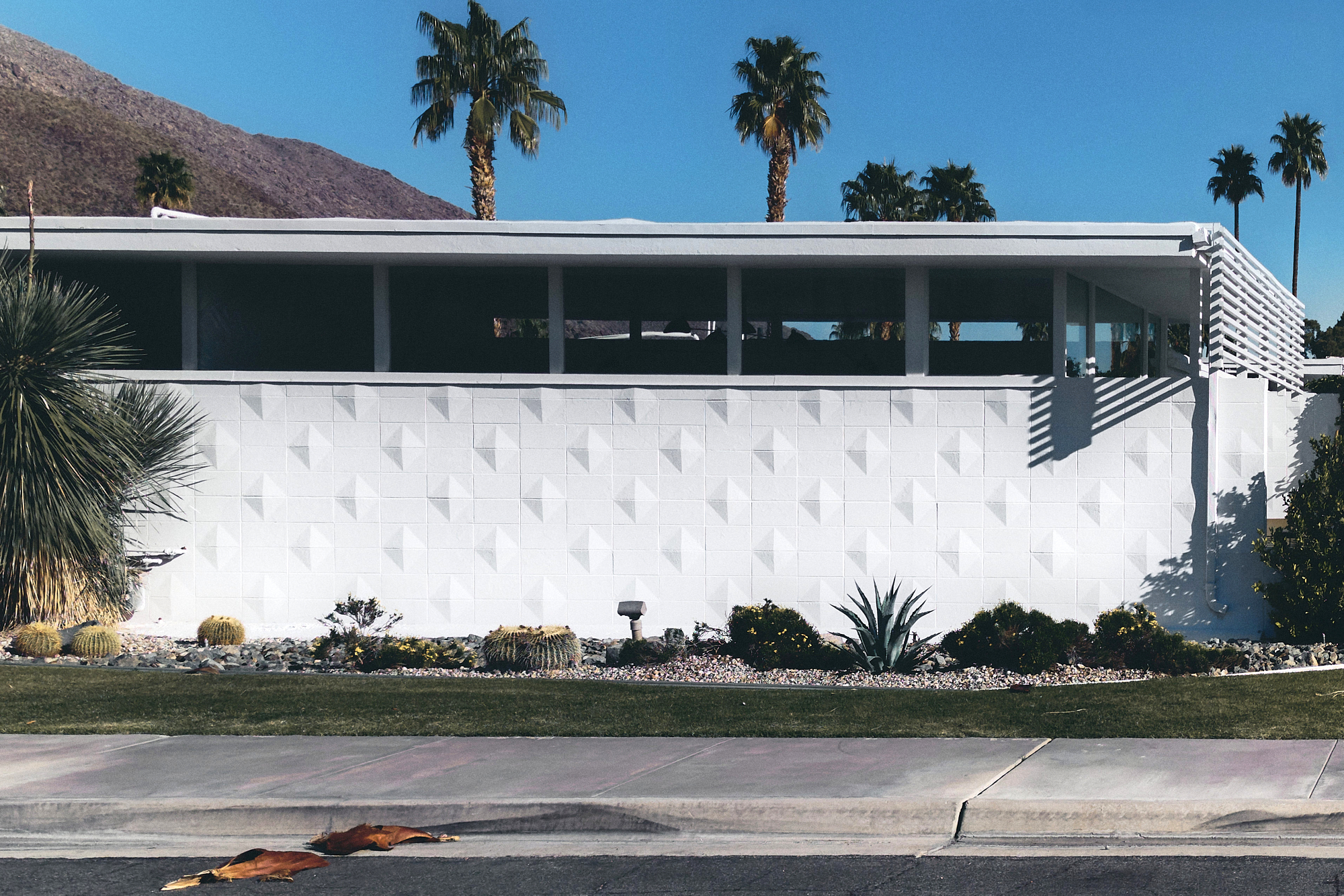
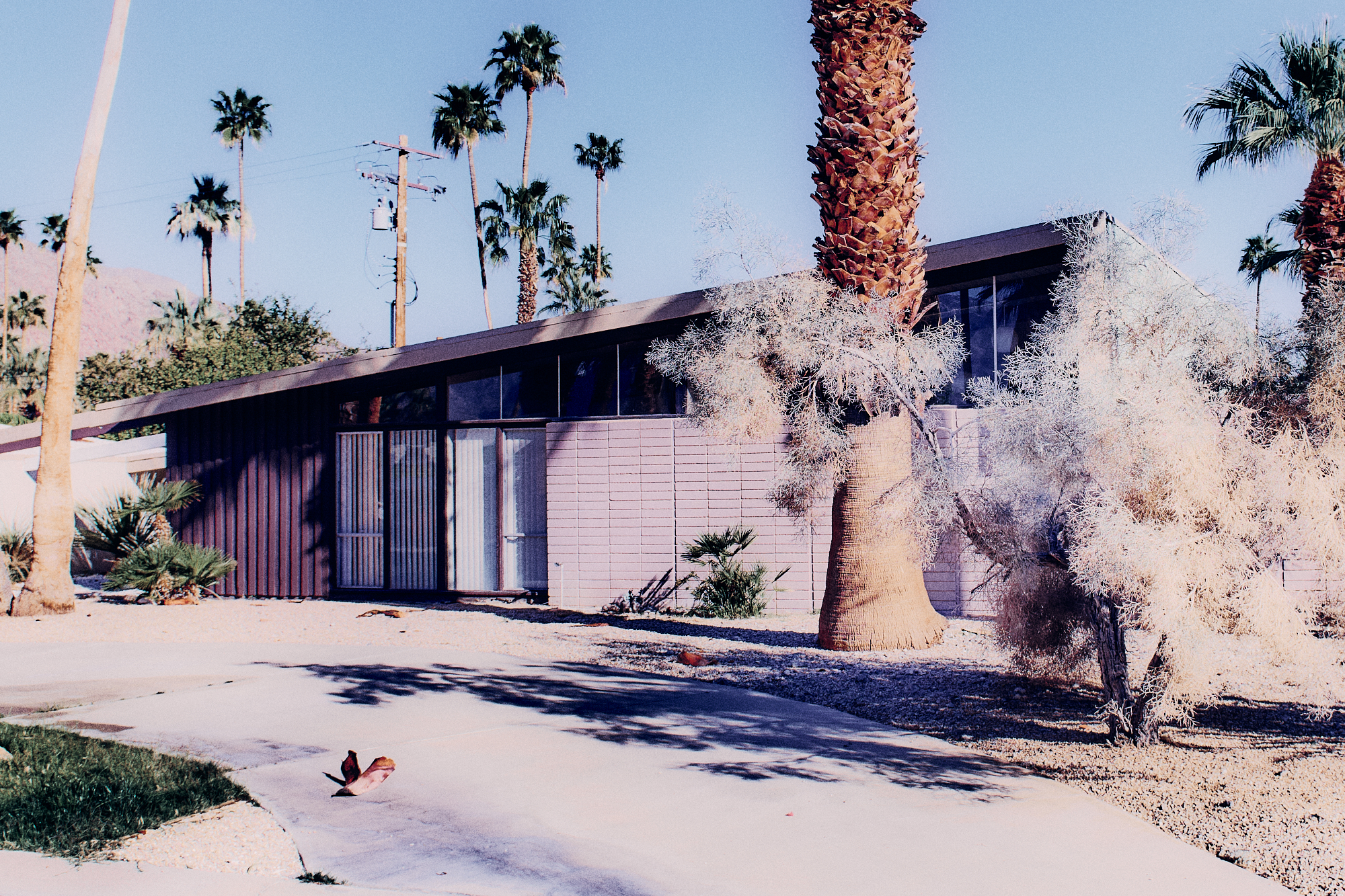
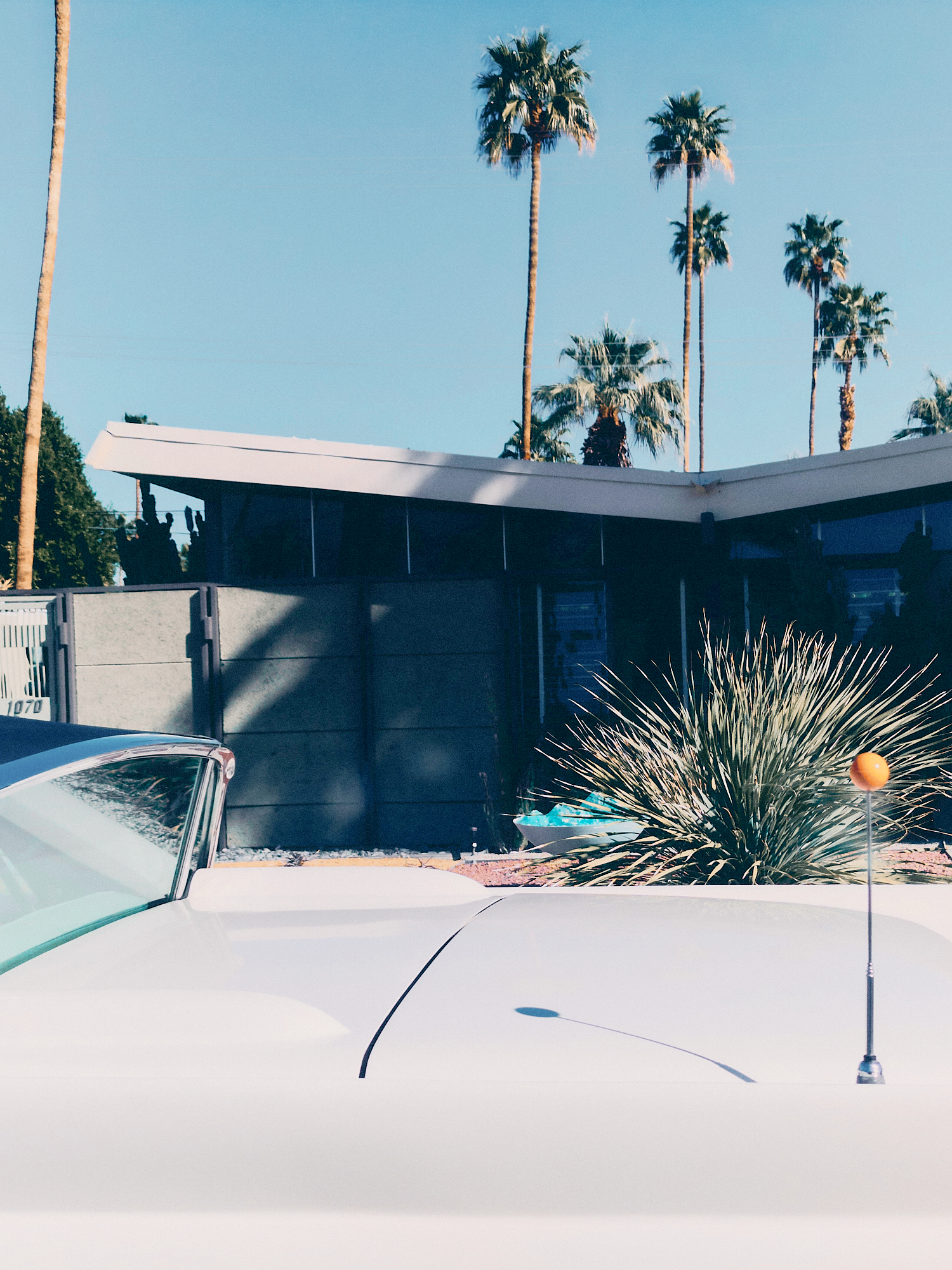
One distinctive element with domestic modernism in the city are clerestory windows, allowing to flood the single-storey homes with light while not become a heat-trap, and from within offering panoramic vantage to the peaks of surrounding mountains while above, long and low rooflines repeat across the city’s homes. While international modernism is associated with technological advancements in plastics, steel, aluminium, and glass, there is much more of a use of vernacular stone and wood than in other modernist architectures.
Recently, an effort has been made to position the specifics of Palm Springs modernism as a typology in its own right rather than flattening it within a wider, global Modernism. recessed.space met with architectural historian Sidney Williams at the grand, colourful Saguaro Palm Springs hotel to discuss her work researching and lobbying for the distinct architectural qualities of the regional modernism.
Williams has been instrumental in local architectural history since 1973, and in 2005 rescued the Santa Fe Loans glass pavilion building, threatened with demolition, and helped to reimagine it as an architecture and design space for the Palm Springs Art Museum.
One distinctive element with domestic modernism in the city are clerestory windows, allowing to flood the single-storey homes with light while not become a heat-trap, and from within offering panoramic vantage to the peaks of surrounding mountains while above, long and low rooflines repeat across the city’s homes. While international modernism is associated with technological advancements in plastics, steel, aluminium, and glass, there is much more of a use of vernacular stone and wood than in other modernist architectures.
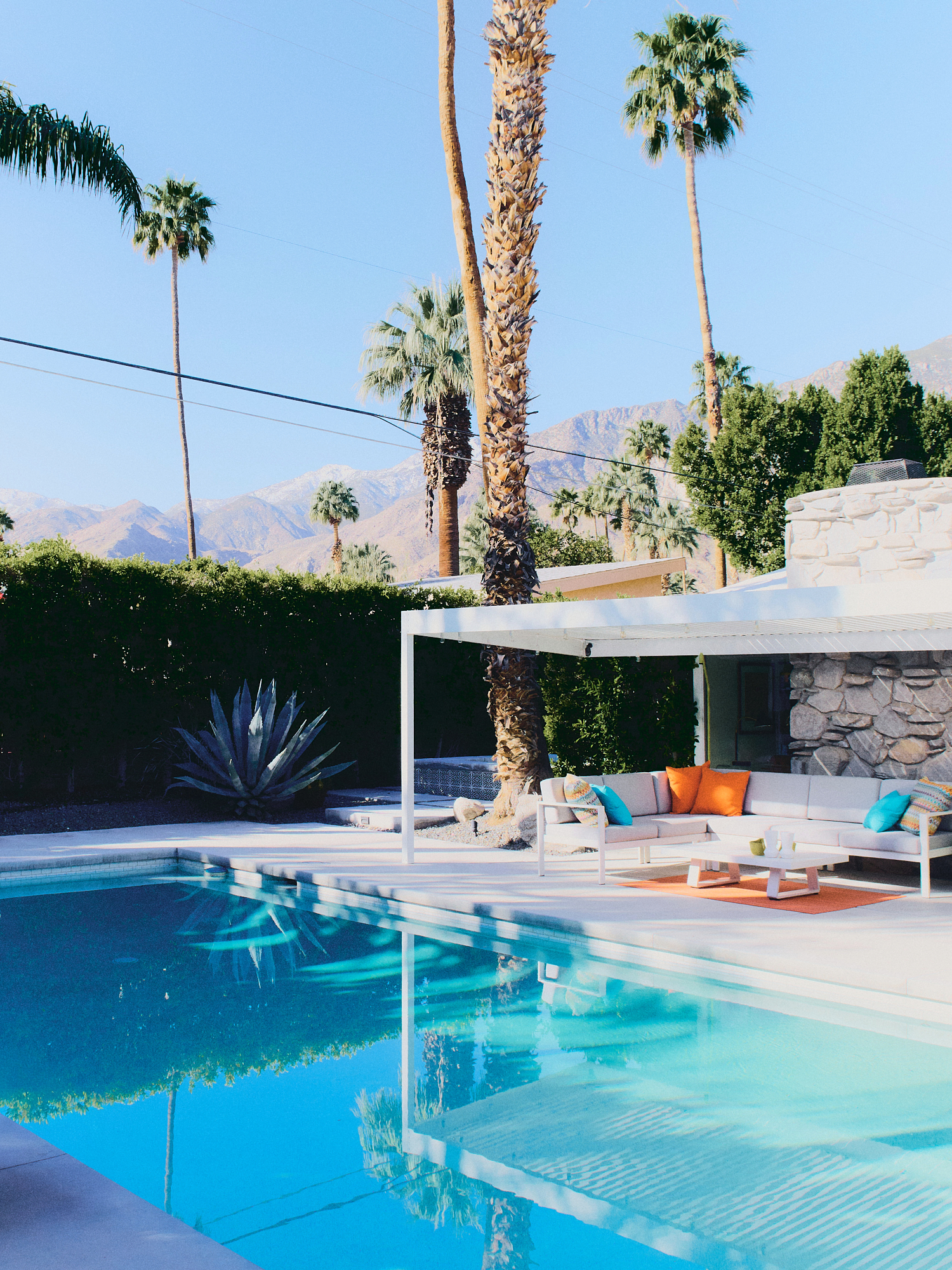
As well recognised in Slim Aarons’ photographs, the outside
of the home was as important as the interior. Open floorplans seamlessly leak
into outside rooms, pool areas, and garden designs that celebrate local flora
and cacti. Away from the domestic, Desert Modernism principles can be found across
the city’s civic and commercial buildings, and while recent developers have tried
to copy some of the aesthetic with embarrassingly bad, cheap results, there is
plenty that has been preserved to offer the eye constant intrigue.
Grand designs at all scales by the likes of Albert Frey, Richard Neutra, John Lautner, William Cody, Donald Wexler, and E. Stewart Williams (Sidney’s father-in-law) don’t only pack the city, but also fill a recent book by Rizzoli, published to celebrate and recognise the Palm Springs School of Desert Modernism. This, alongside the annual Modernism Week have helped reinforce research and knowledge on the local vernacular.
And the work of historians such as Sidney Williams, there is a greater understanding of local architecture not just for architecture’s sake (helping with material and renovation knowledge), but also benefited the local community and offered a sense of regional identity.
Grand designs at all scales by the likes of Albert Frey, Richard Neutra, John Lautner, William Cody, Donald Wexler, and E. Stewart Williams (Sidney’s father-in-law) don’t only pack the city, but also fill a recent book by Rizzoli, published to celebrate and recognise the Palm Springs School of Desert Modernism. This, alongside the annual Modernism Week have helped reinforce research and knowledge on the local vernacular.
And the work of historians such as Sidney Williams, there is a greater understanding of local architecture not just for architecture’s sake (helping with material and renovation knowledge), but also benefited the local community and offered a sense of regional identity.
THE ROYAL SUN PALM SPRINGS
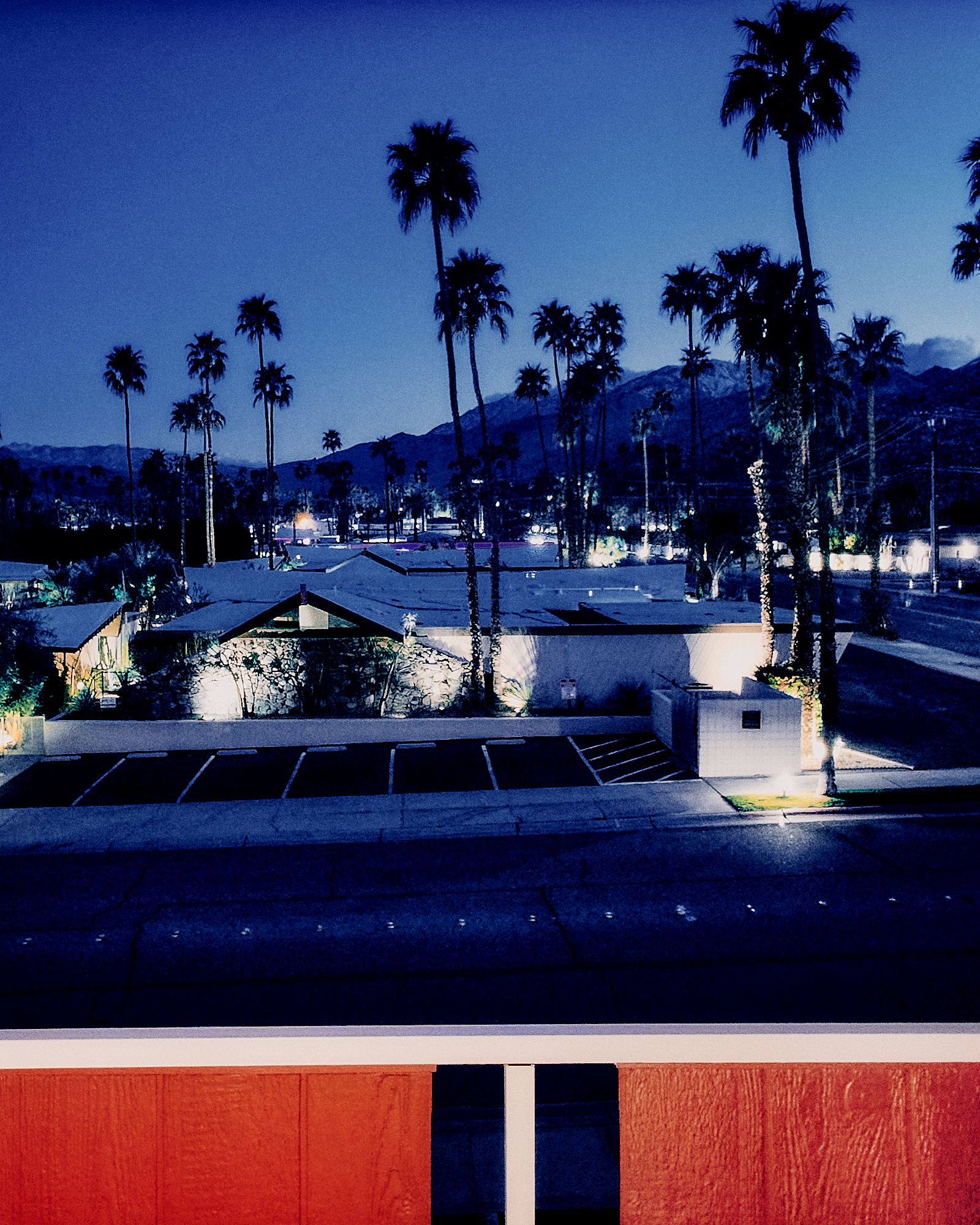
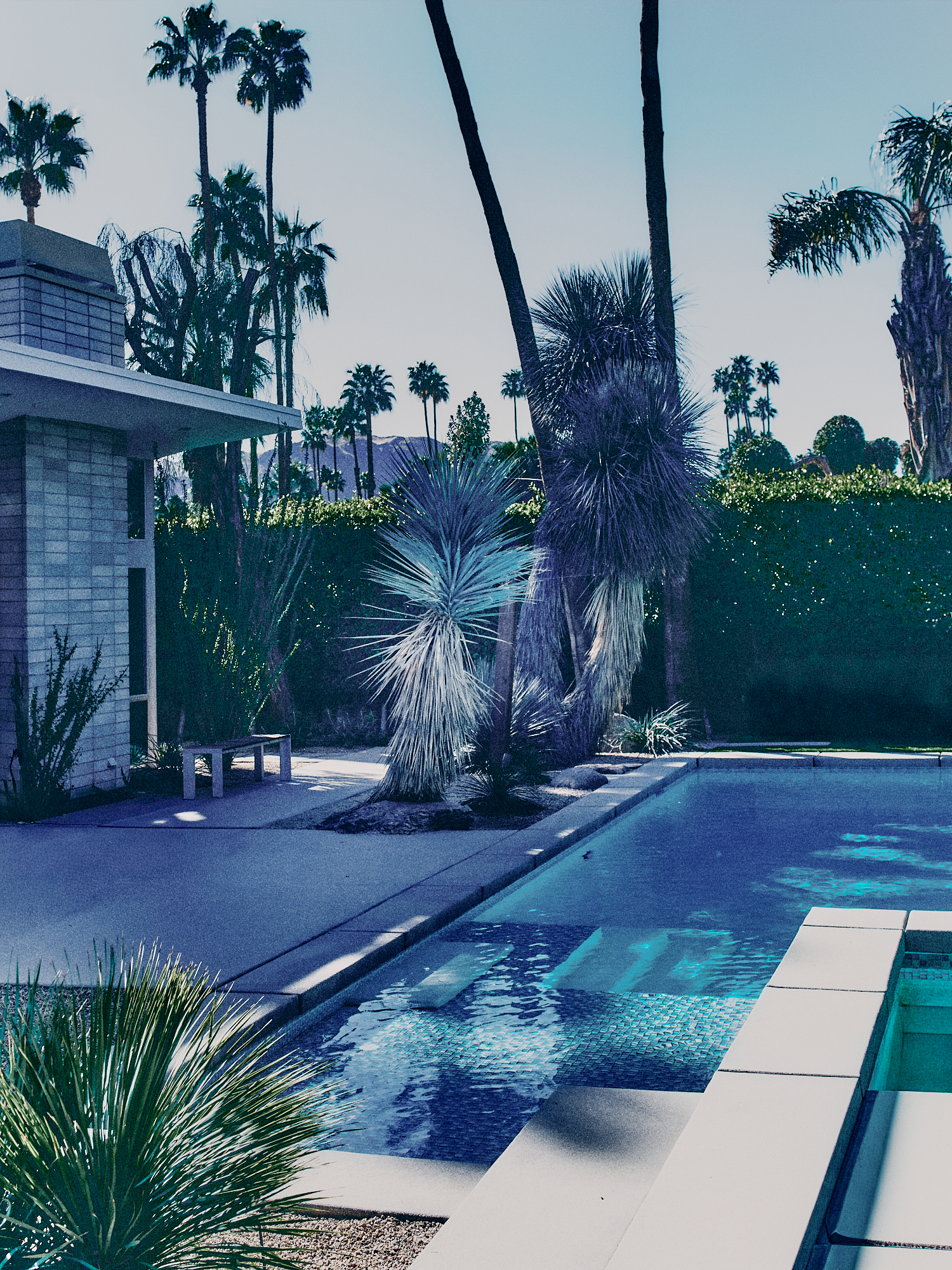
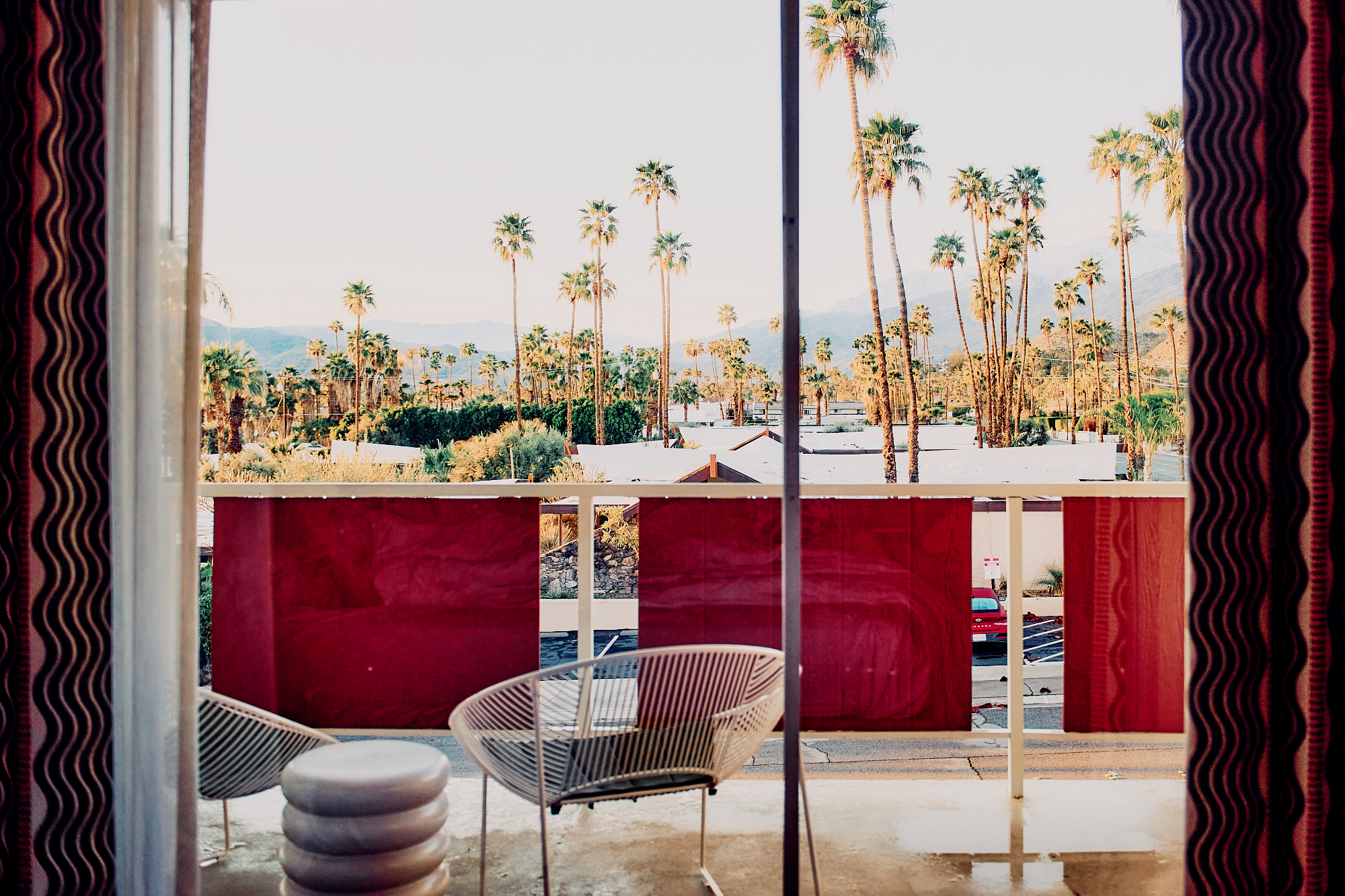
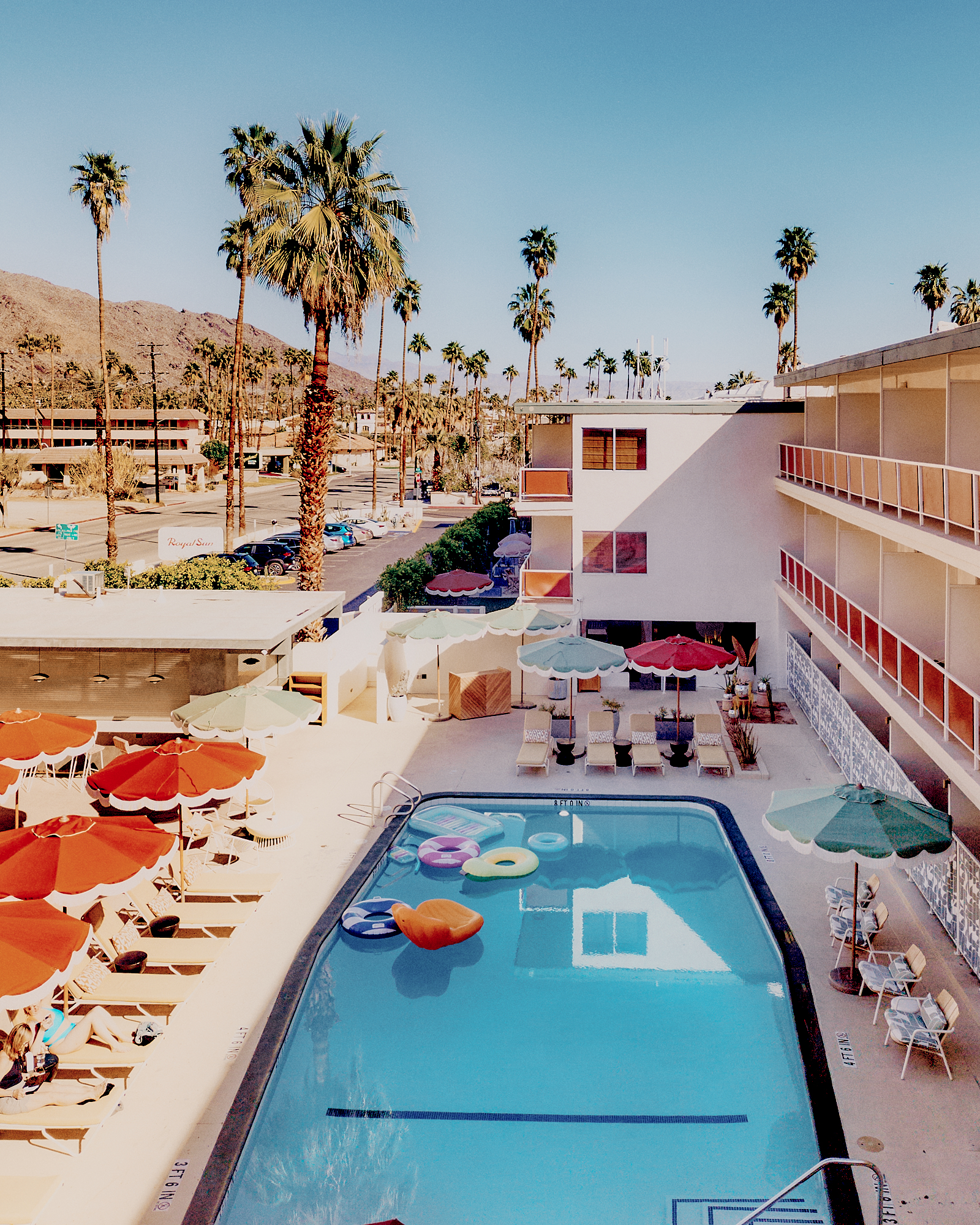
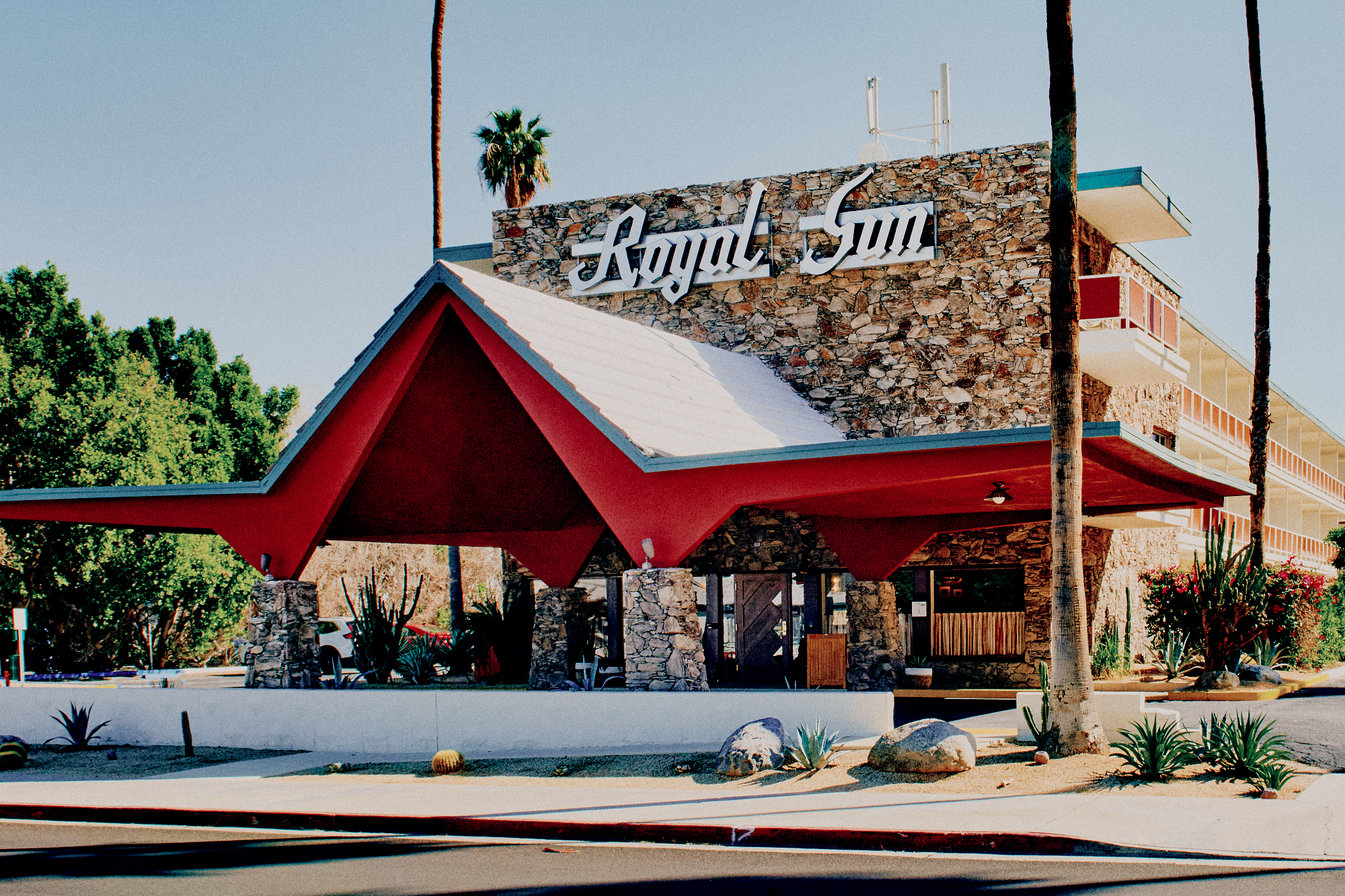
recessed.space stayed at the Royal Sun Hotel, recently purchased, polished, and re-launched. Wrapping around the L-shaped building are 66 rooms, all with easy access to the pool and pool-side bar, and each offering views either across the city or towards surrounding San Jacinto Mountains. The place has recently been taken on by new owners, and their intent to return it to a rich mid-century aesthetic can be seen in the welcoming, open reception area, a relaxing lounge-like space.
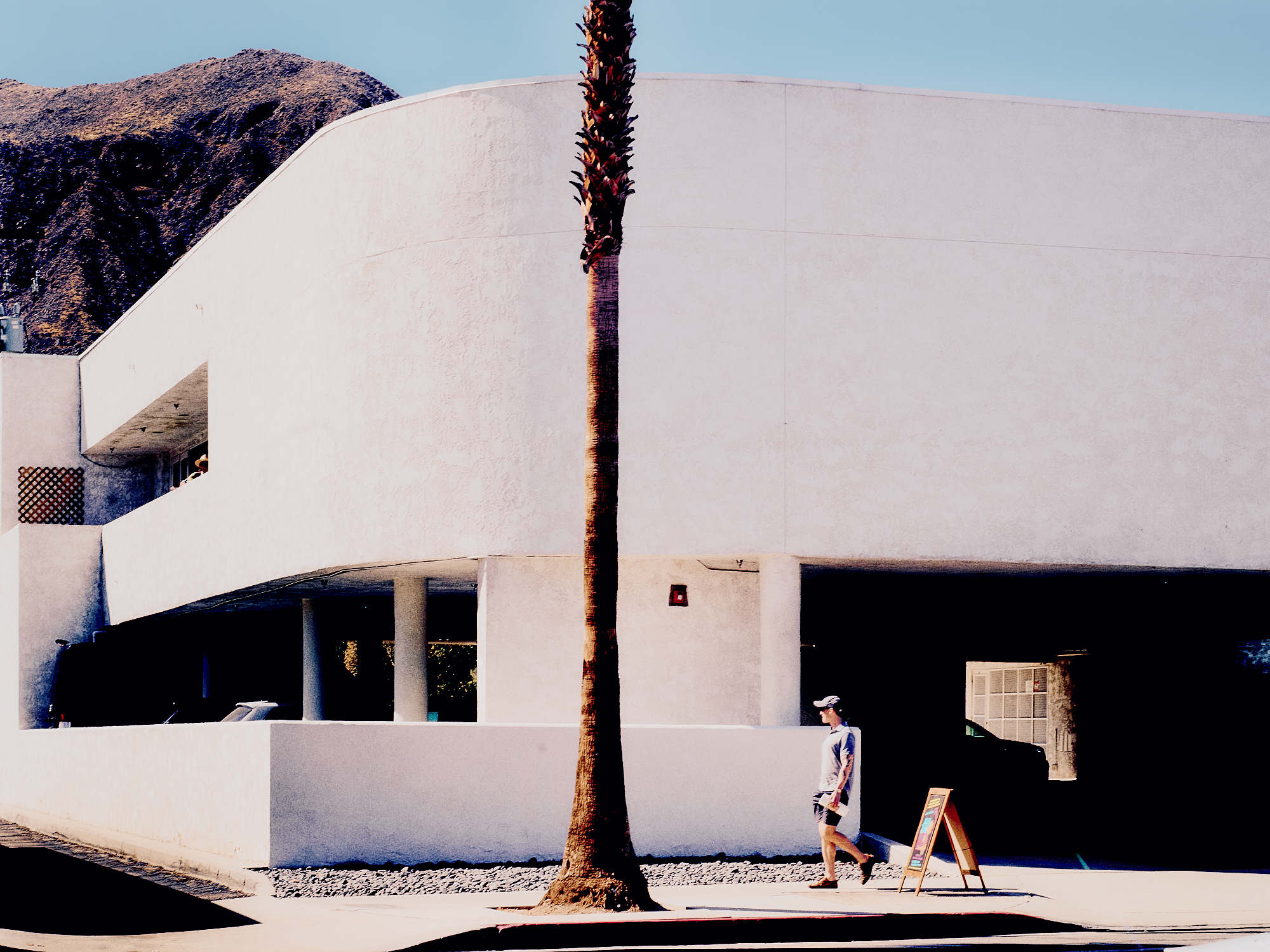
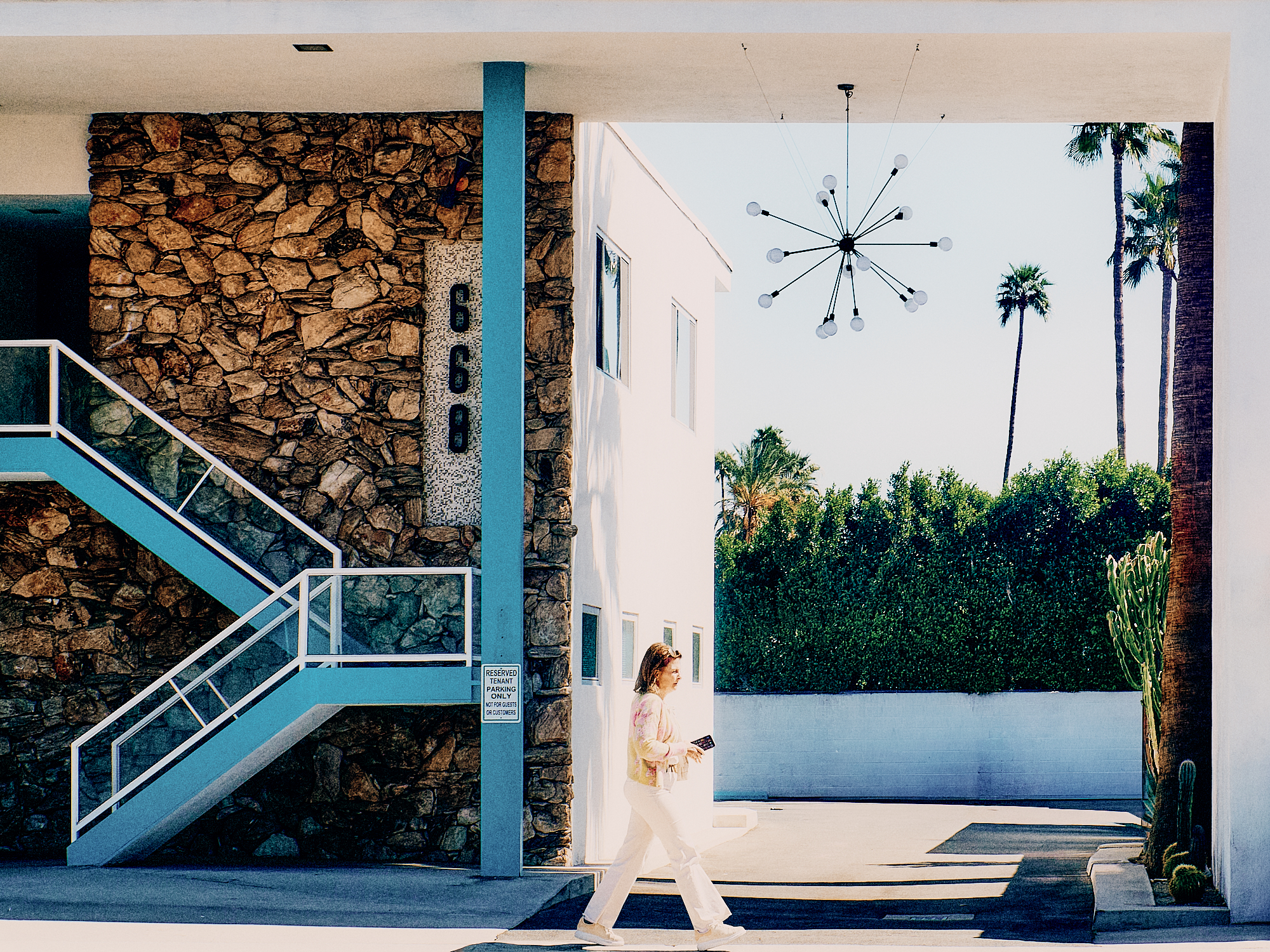
Hotels in Palm Springs mainly follow the same typology: a grand entry porch, often fusing traditional and modernist architecture; a low-profile series of rooms wrapping around a pool (or pools!); and throughout a strong hold on the mid-century aesthetic, furniture, and mood that regular or one-off visitors all crave. The Royal Sun Hotel does all this, and while from the outside it can seem quite modestly sized and tightly-packed into the urban grid, not far from a busy road, once inside it offers a real sense of separation from the city.
recessed.space stayed at the Royal Sun Hotel, recently purchased, polished, and re-launched. Wrapping around the L-shaped building are 66 rooms, all with easy access to the pool and pool-side bar, and each offering views either across the city or towards surrounding San Jacinto Mountains. The place has recently been taken on by new owners, and their intent to return it to a rich mid-century aesthetic can be seen in the welcoming, open reception area, a relaxing lounge-like space.
Hotels in Palm Springs mainly follow the same typology: a grand entry porch, often fusing traditional and modernist architecture; a low-profile series of rooms wrapping around a pool (or pools!); and throughout a strong hold on the mid-century aesthetic, furniture, and mood that regular or one-off visitors all crave. The Royal Sun Hotel does all this, and while from the outside it can seem quite modestly sized and tightly-packed into the urban grid, not far from a busy road, once inside it offers a real sense of separation from the city.
SHOPPING IN PALM SPRINGS
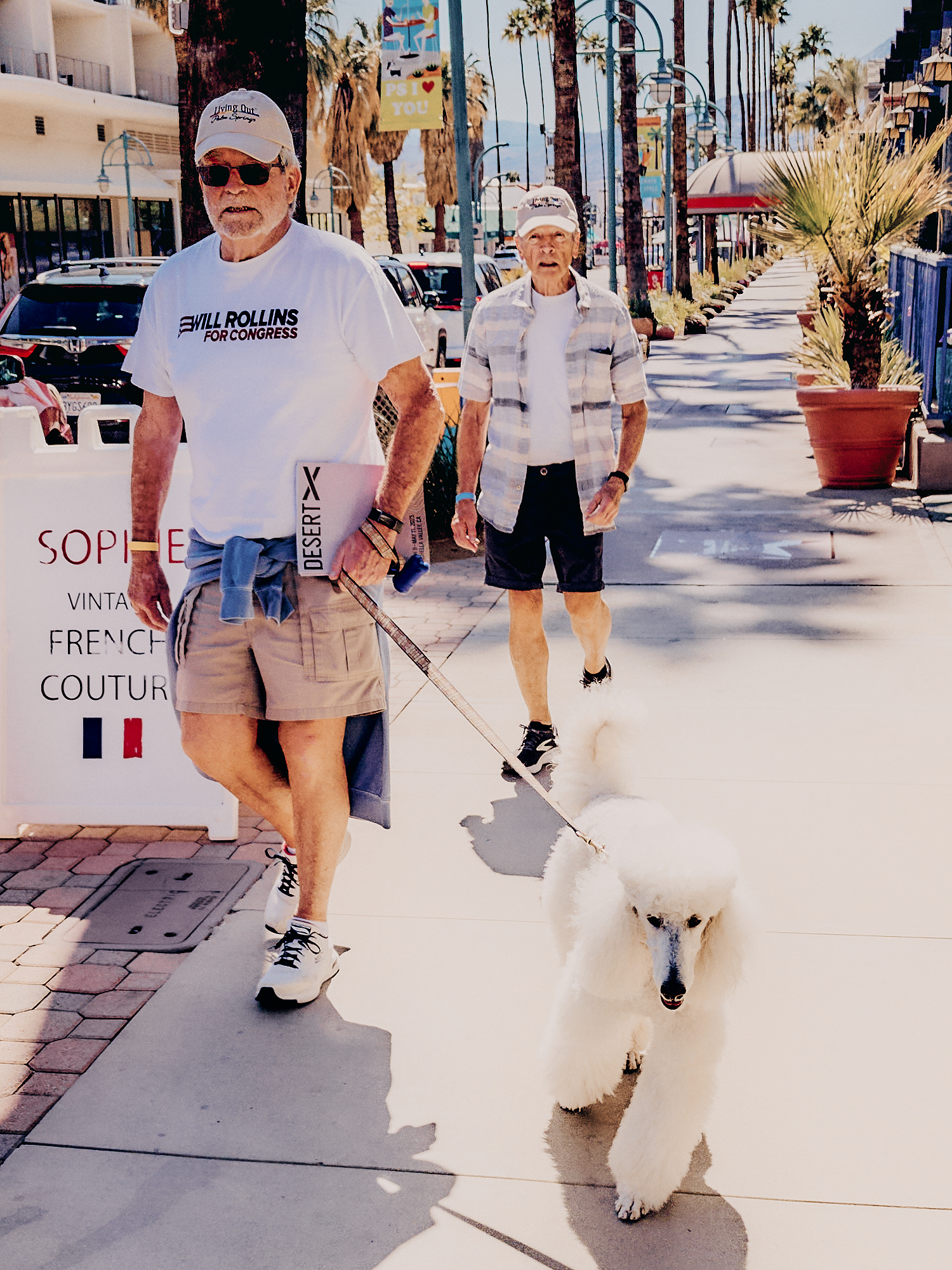
The few long streets that make up Palm Springs main shopping centre are dripping with vintage clothing and modernist design shops. A weekend could easily be spent slowly ambling up and down, popping in and out of independent shops, escaping into courtyards of cafés and restaurants, people watching, and discovering the unexpected.
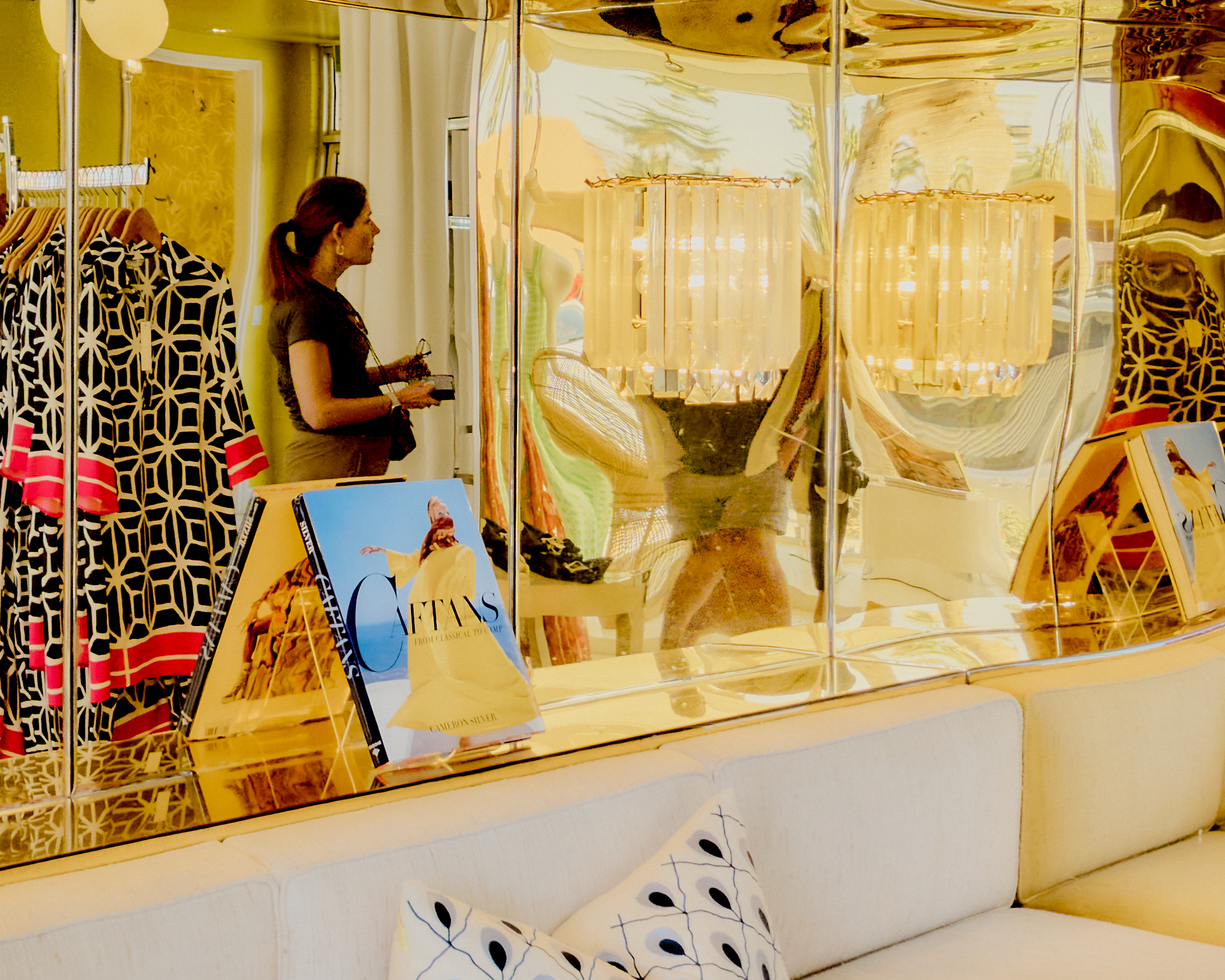
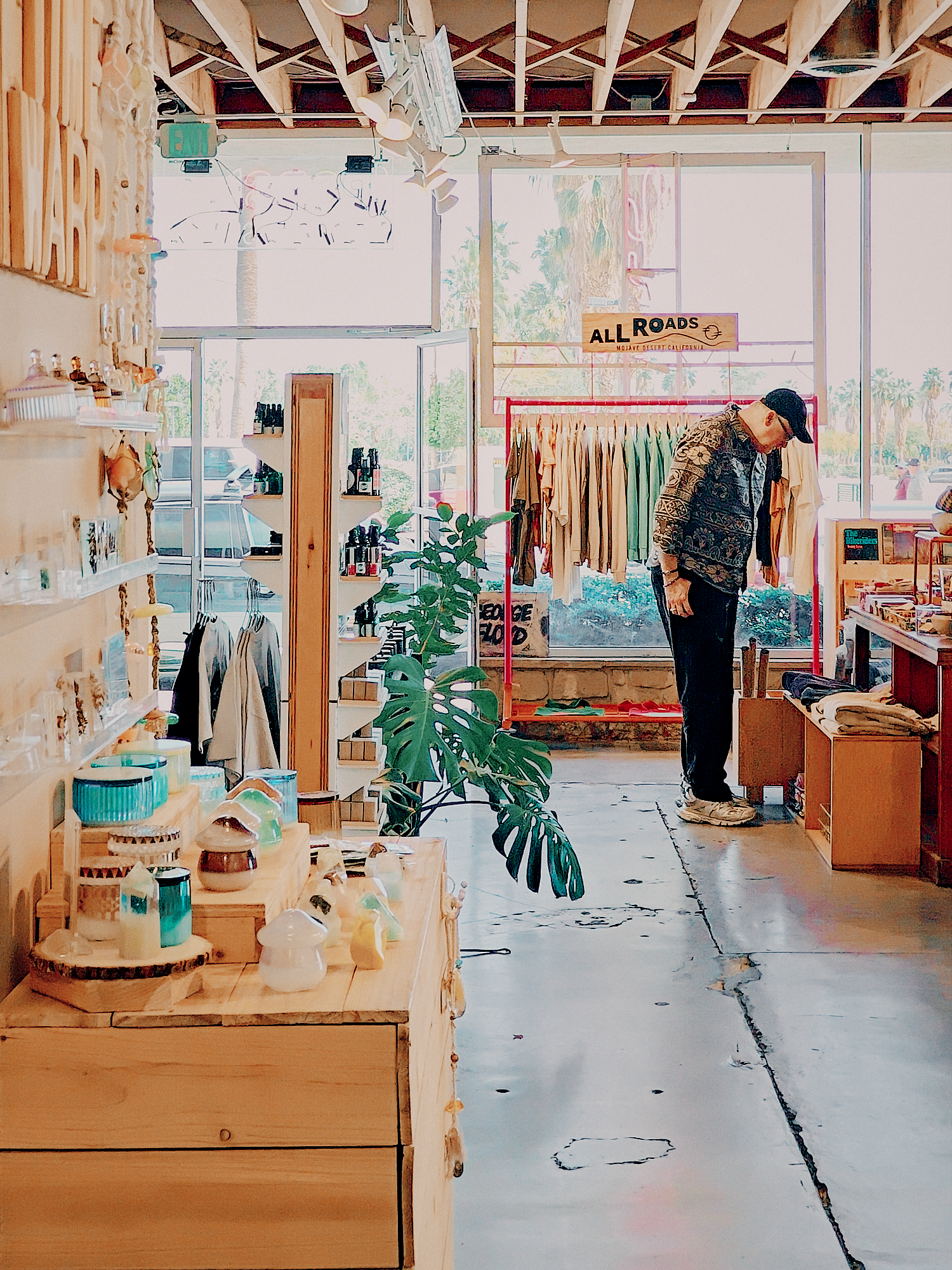
Trina Turk’s boutique is the perfect stop for a well-curated peruse the of colourful clothing, books, design, and other assorted randomness, but we also encourage going off the main drag to discover more diverse offers. The best of these is the Mojave Flea Trading Post, a large space occupied by countless diverse independent makers, artisans, and designers. It is rooted in platforming BIPOC and queer creatives who otherwise may find it hard to get a foothold in Palm Springs and who advocate for environmentalism, social activism, and nurturing a supportive network.
You will find hat makers, ceramicists, skateboard designers, and much more, with the wonderful Palm Springs Bottle Shop offering an excellent range of small-brand drinks.
The few long streets that make up Palm Springs main shopping centre are dripping with vintage clothing and modernist design shops. A weekend could easily be spent slowly ambling up and down, popping in and out of independent shops, escaping into courtyards of cafés and restaurants, people watching, and discovering the unexpected.
Trina Turk’s boutique is the perfect stop for a well-curated peruse the of colourful clothing, books, design, and other assorted randomness, but we also encourage going off the main drag to discover more diverse offers. The best of these is the Mojave Flea Trading Post, a large space occupied by countless diverse independent makers, artisans, and designers. It is rooted in platforming BIPOC and queer creatives who otherwise may find it hard to get a foothold in Palm Springs and who advocate for environmentalism, social activism, and nurturing a supportive network.
You will find hat makers, ceramicists, skateboard designers, and much more, with the wonderful Palm Springs Bottle Shop offering an excellent range of small-brand drinks.
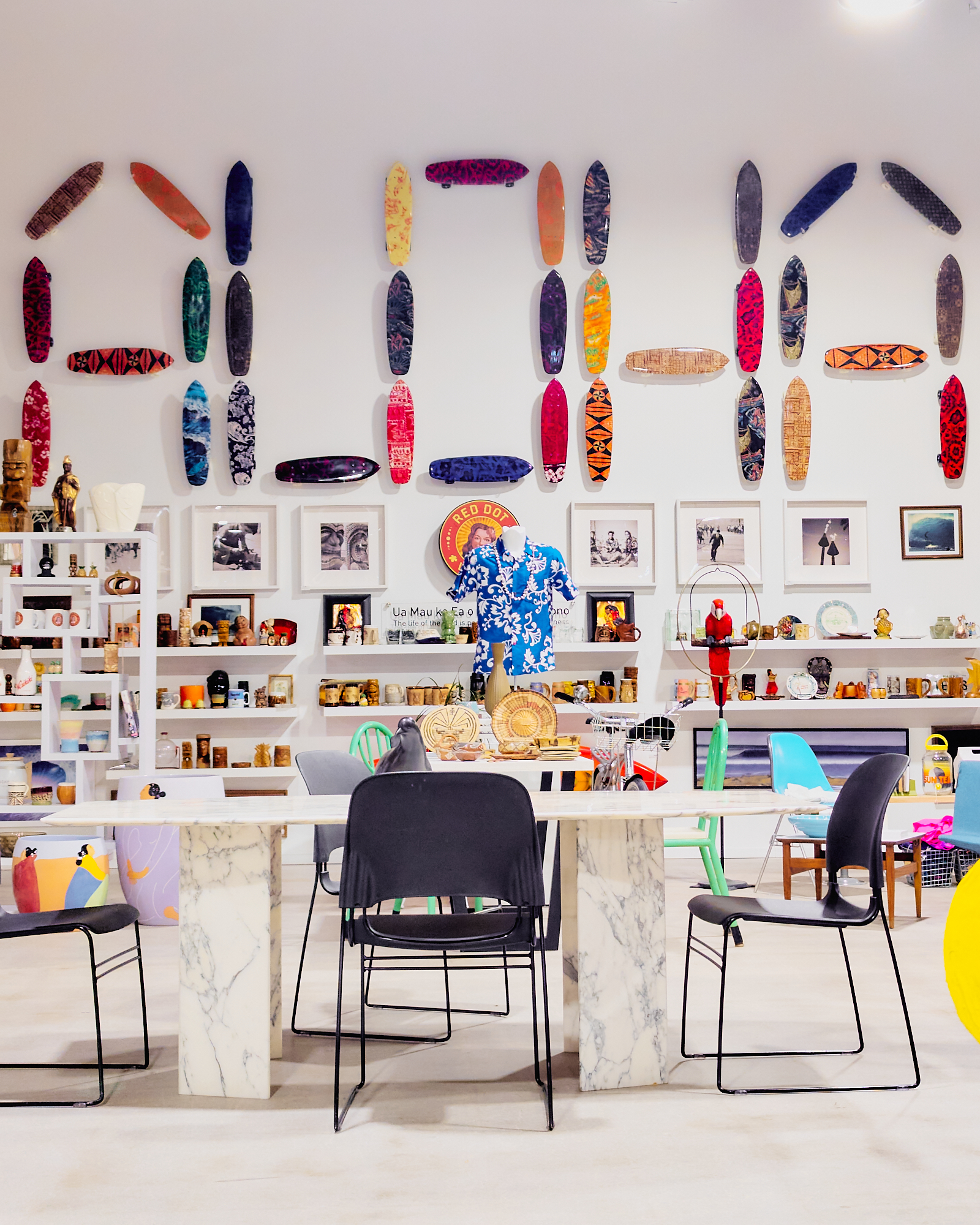
If you like that, you will also like the weekly Market Market,
nearly 4,000 square metres filled with 20th century design classics,
vintage clothes, and a crazily-wide assortment of design and art. Open all week
round, it comes alive at the weekend with regular themed events from car shows
to pet costume contests.
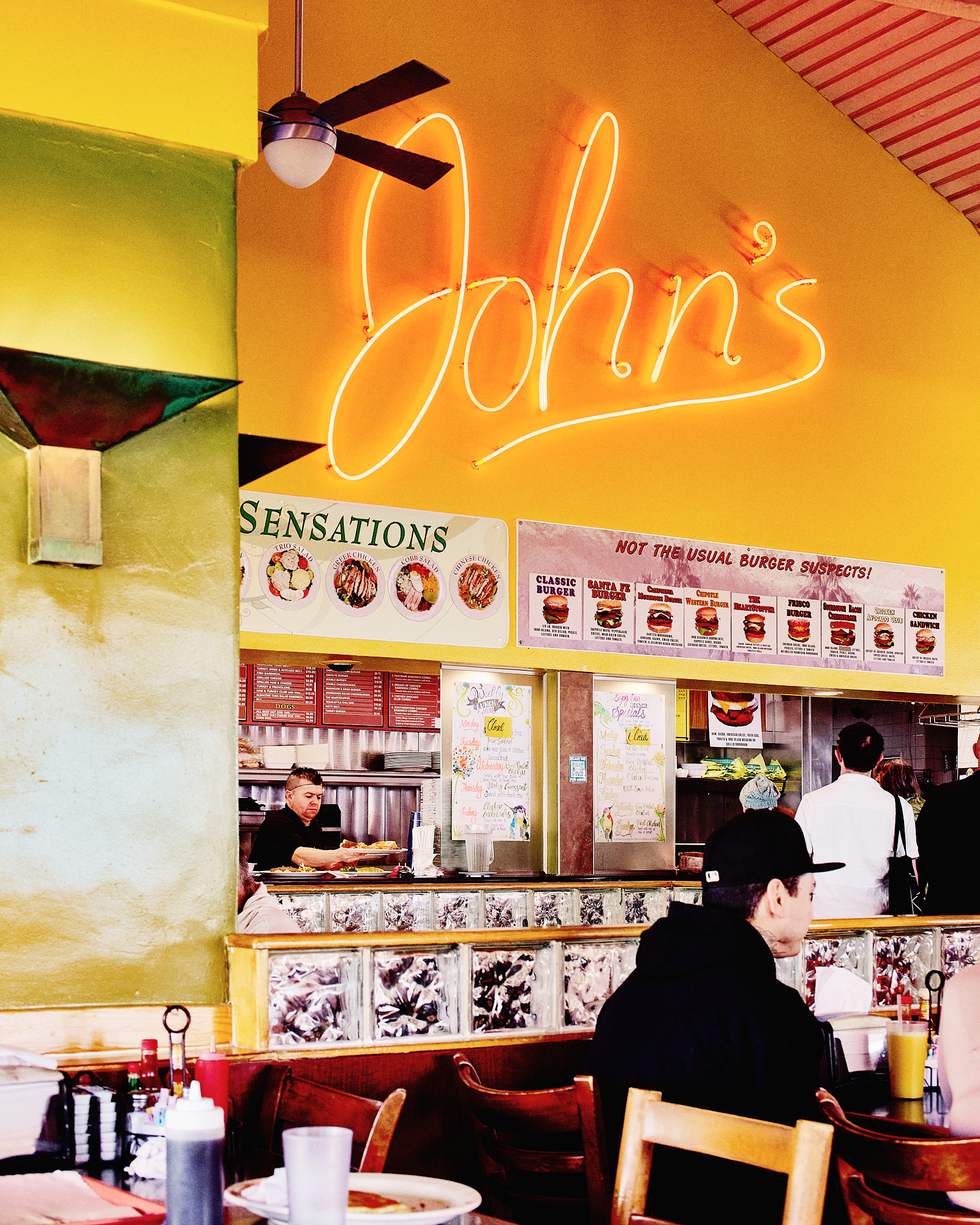
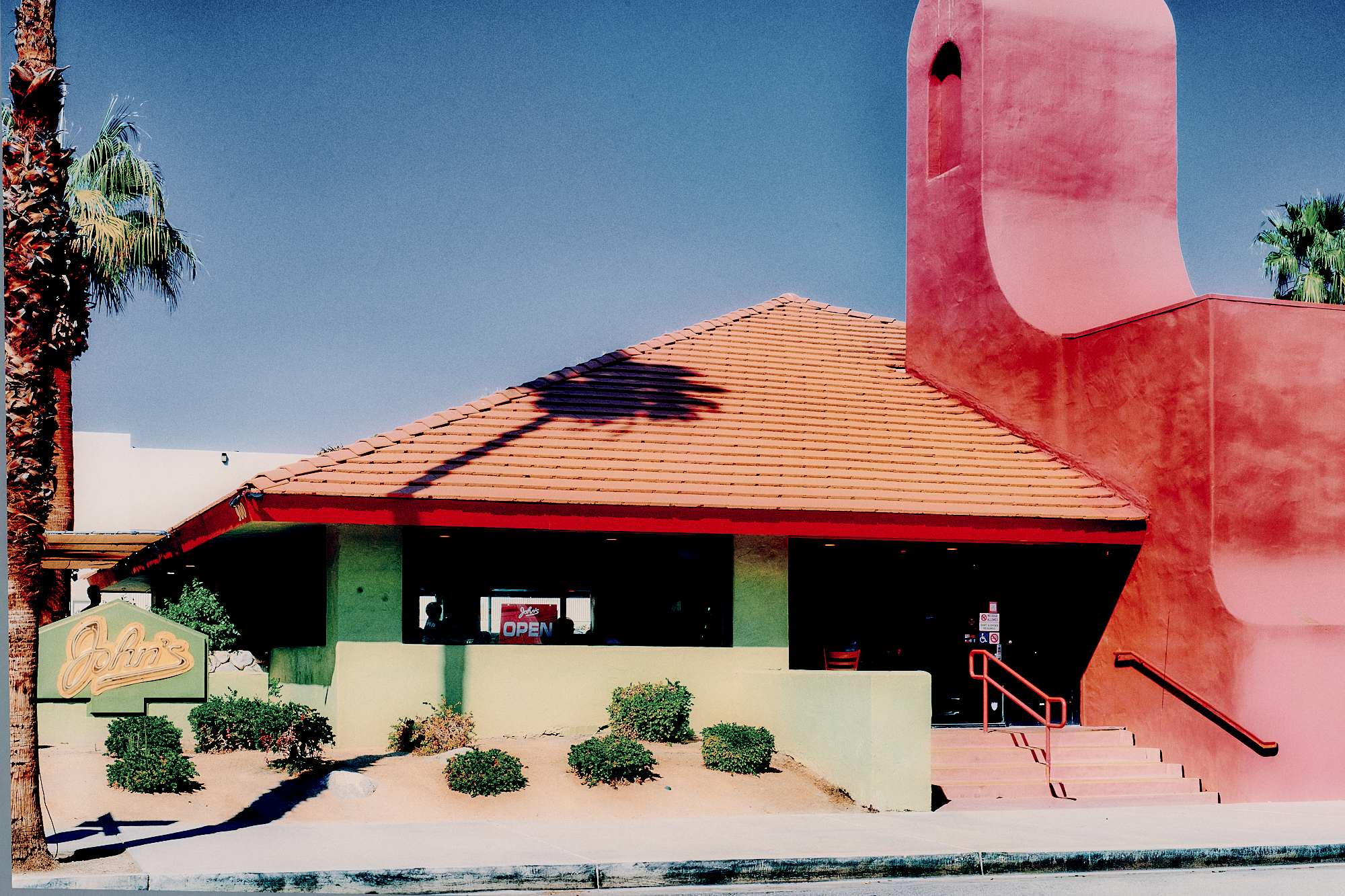
We recommend ensuring you have time for brunch or lunch in John’s, an unromanticised, genuine piece of postwar American culture. Portions are big, service is friendly, filter coffee is refillable, and the pancakes are divine. While perhaps not the kind of architecture that is captured in coffee-table books, the simple-shed with pueblo-infused modernist interruption is typically Palm Springs, speaking to the collision of cultures occurring across the city.
We recommend ensuring you have time for brunch or lunch in John’s, an unromanticised, genuine piece of postwar American culture. Portions are big, service is friendly, filter coffee is refillable, and the pancakes are divine. While perhaps not the kind of architecture that is captured in coffee-table books, the simple-shed with pueblo-infused modernist interruption is typically Palm Springs, speaking to the collision of cultures occurring across the city.
